Chocolate Orange Cake with Ganache and Grand Marnier

, Published Oct 28, 2026
This post may contain affiliate links. Please read our disclosure policy.
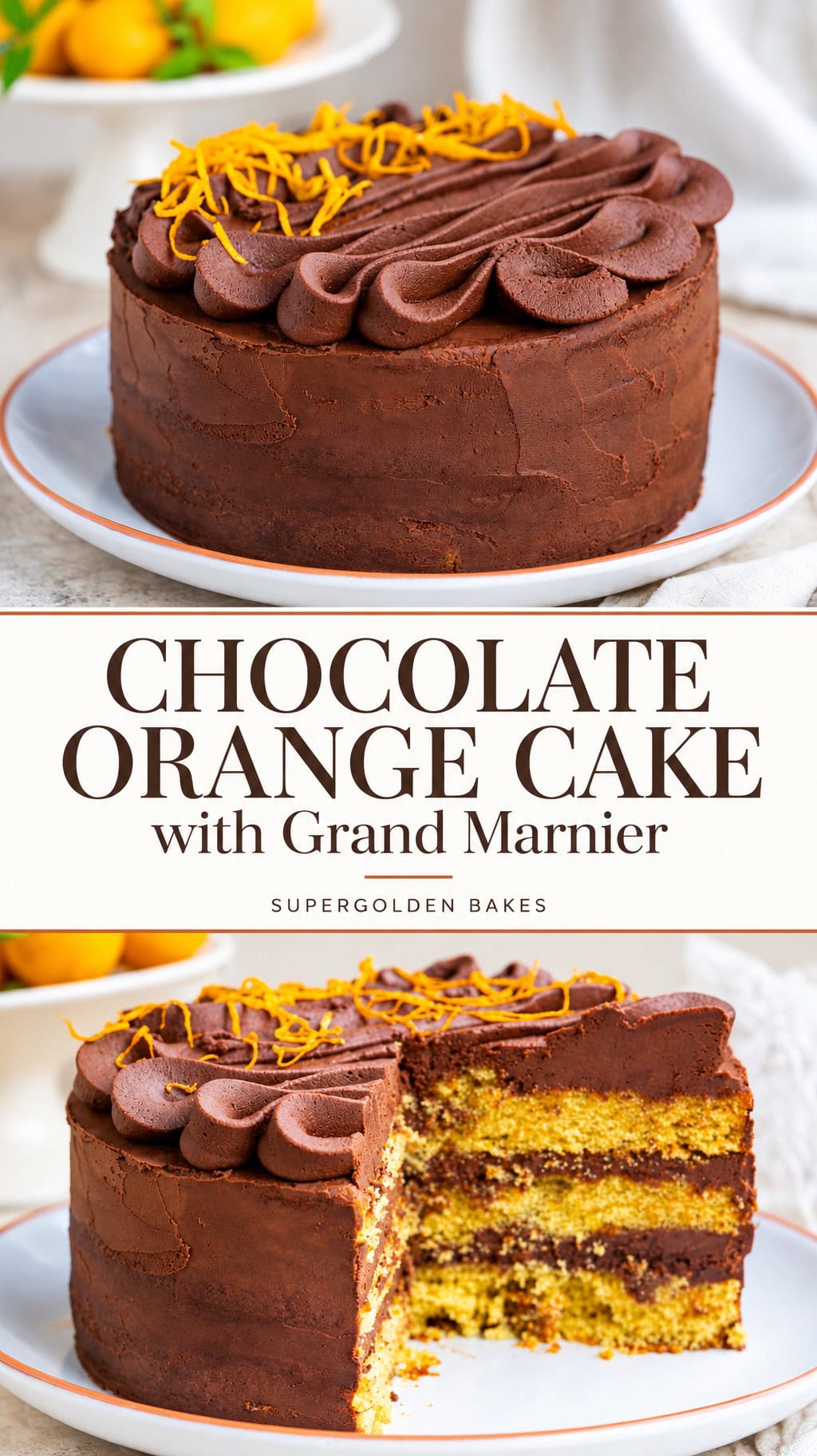
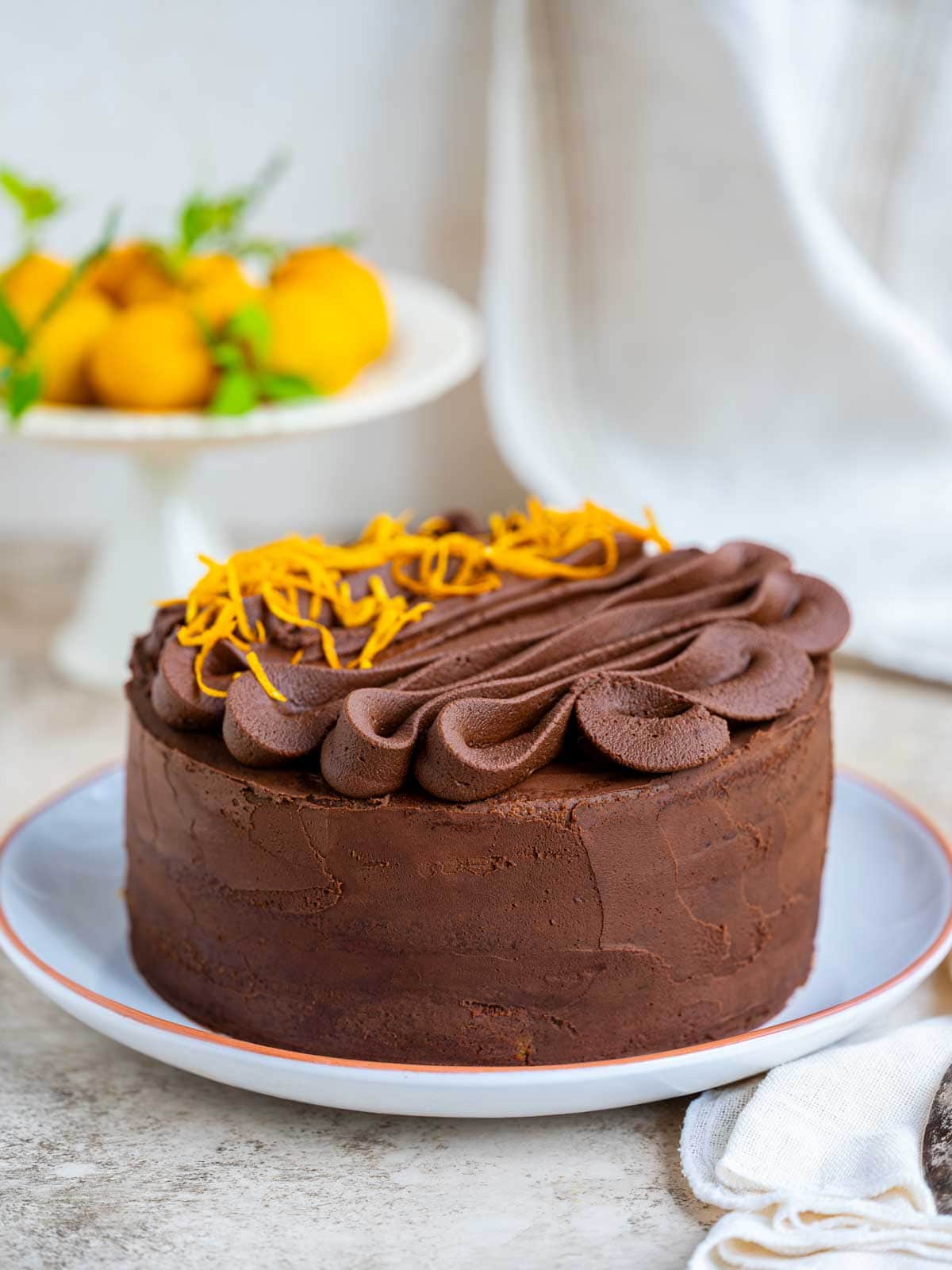
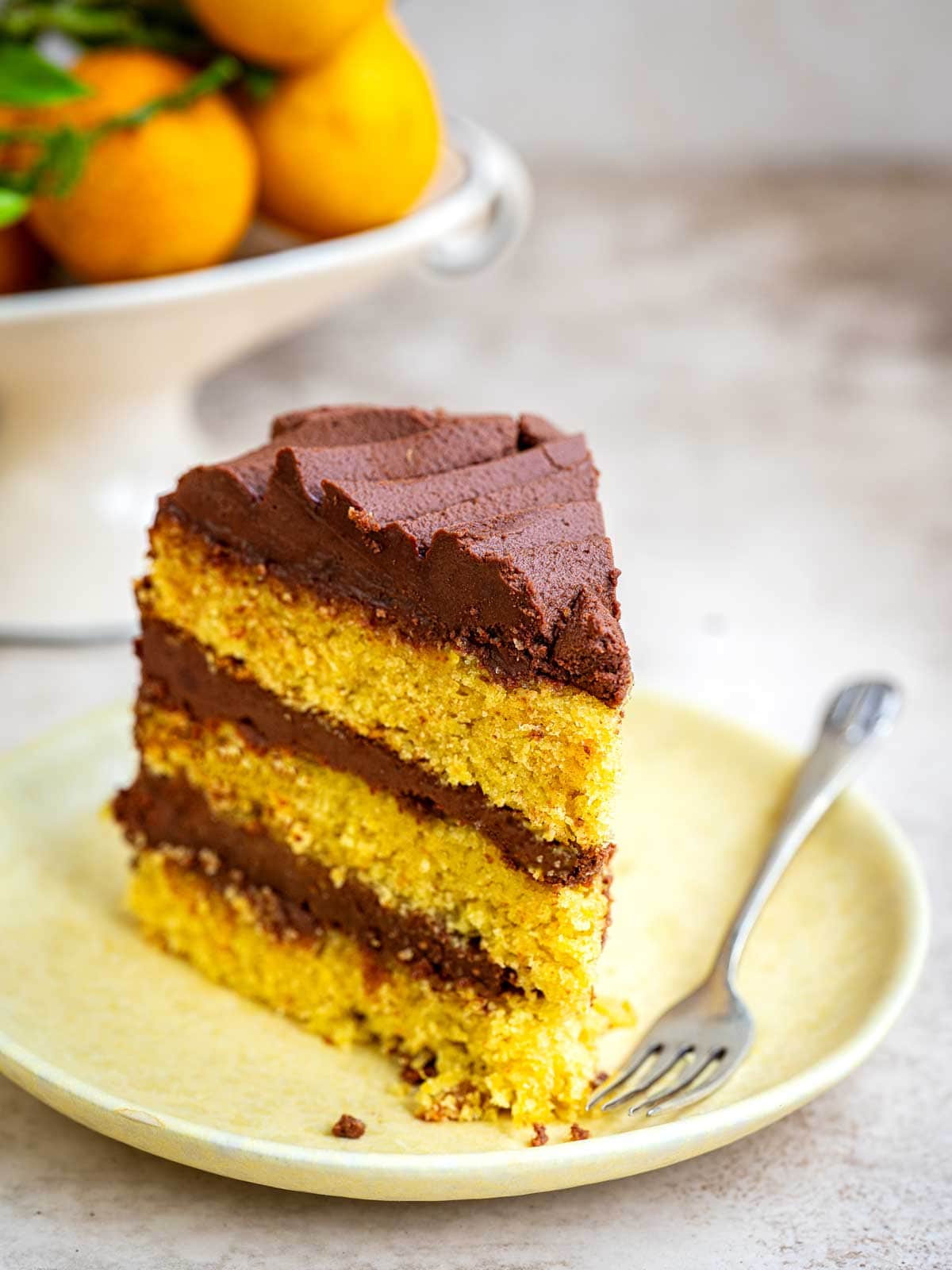
This Chocolate Orange Cake is made with a whole orange – peel, pith and all – boiled until soft and blended straight into the batter. The result is a fresh, zesty and incredibly moist orange sponge, brushed with Grand Marnier and layered with silky dark chocolate ganache.
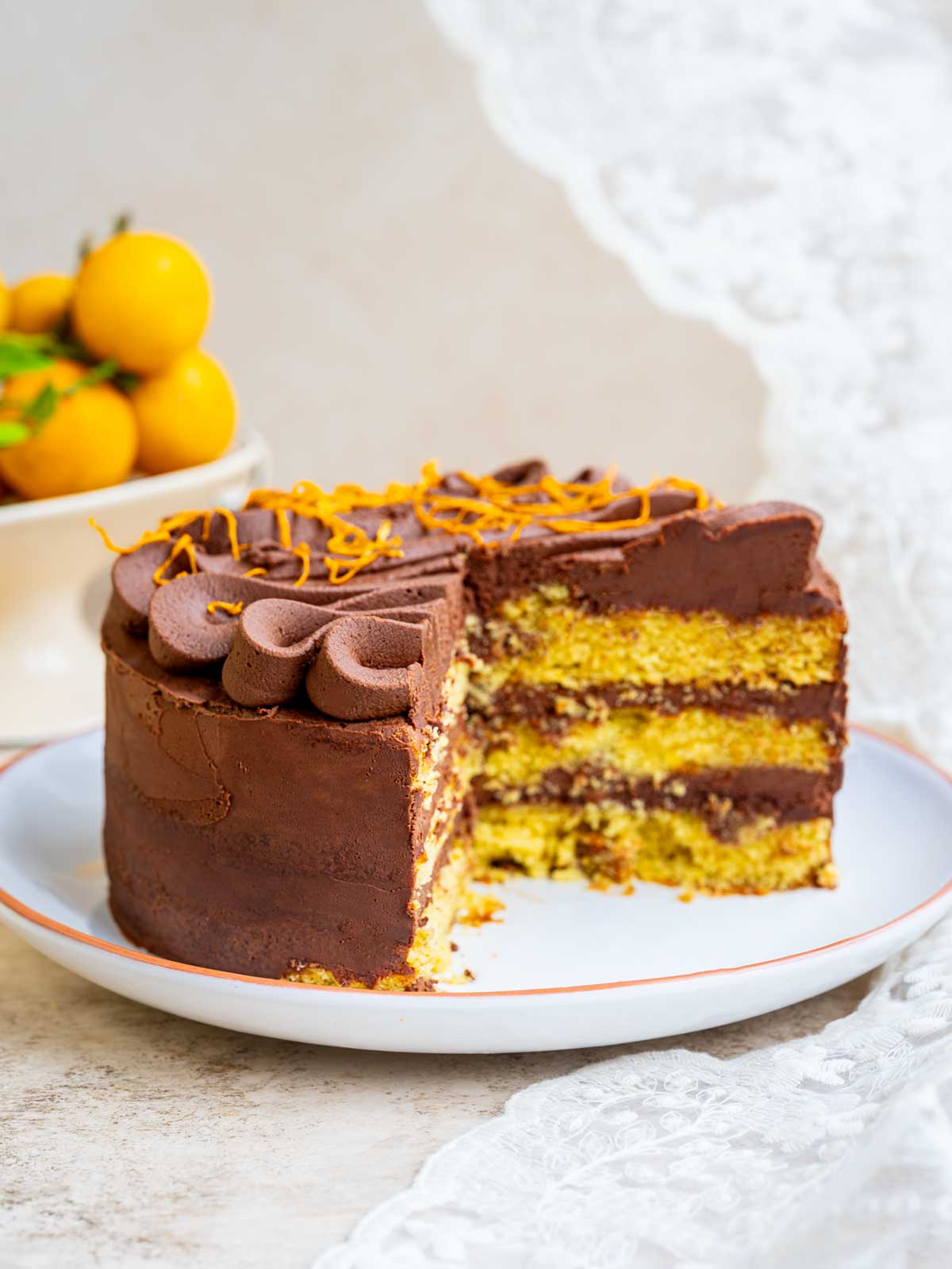
The idea comes from my Whole Lemon Cake, which uses the same boiled-fruit trick. Using the whole fruit captures all the fragrant oils in the peel, so the cake tastes of real orange rather than a faint hint of zest or the slightly artificial note of orange extract.
Chocolate and orange has been my favorite flavor pairing since childhood (blame the Terry’s Chocolate Oranges that found their way to Athens whenever someone visited England). This is the grown-up version: A tender golden sponge, a hint of orange liqueur and lots of rich chocolate. Perfect for birthdays, Christmas or any excuse really.
This amazing cake stays fresh and moist for days at room temperature so you can sneak a cheeky slice whenever you are in a mood for a treat.
Why You’ll Love It
- Real orange flavor: The whole boiled orange gives a fresh, zesty sponge – no extract needed.
- Seriously moist: Blended orange, buttermilk and ground almonds keep the crumb soft for days.
- Velvety crumb: Rubbing the butter into the dry ingredients first (the reverse-creaming method) gives a fine, even texture.
- Grown-up and festive: A brush of Grand Marnier and plenty of dark chocolate ganache make it a proper celebration cake.
- Make-ahead friendly: Boil the orange up to two days ahead and freeze the sponges if you like.
Here’s What You’ll Need
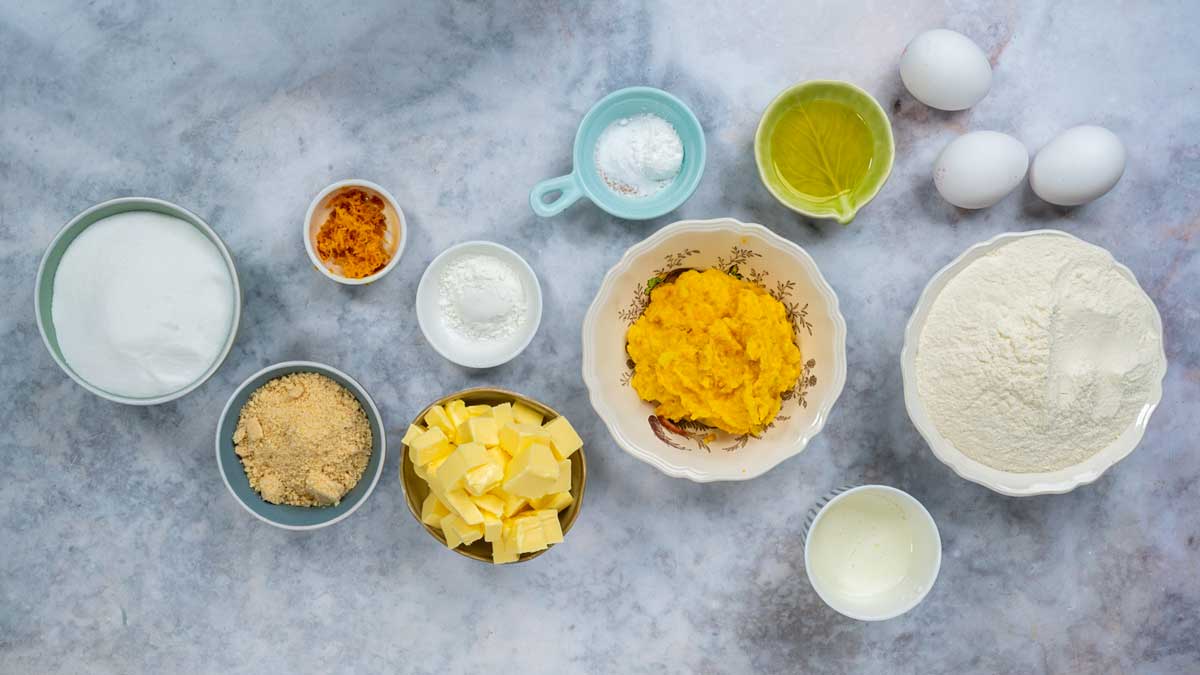
The sponge follows the same reliable base as my lemon cake. Full quantities are in the recipe card below – and if you need to convert between cups and grams, my baking conversion calculator has you covered.
- Orange – one medium organic / unwaxed navel orange (Jaffa orange in the UK), scrubbed. Navel oranges are seedless with a thin pith, which keeps the cake sweet rather than bitter.
- Butter – unsalted and cubed, at cool room temperature so it rubs into the flour without melting.
- Sugar – regular granulated sugar.
- All-purpose flour, almond flour and cornstarch – the almonds add moisture and the cornstarch softens the crumb, a little like using cake flour.
- Baking powder and baking soda – the baking soda balances the acidity of the orange and buttermilk, while the baking powder gives a steady, even rise.
- Buttermilk and eggs – both at room temperature so the batter stays smooth.
- Olive oil – just 2 tablespoons keeps the sponge extra moist and tender. Use a mild or light olive oil so it doesn’t overpower the orange.
- Grand Marnier – the cognac-based orange liqueur. Cointreau or triple sec work too, or see the alcohol-free option in the recipe notes.
- Chocolate chips, heavy cream (double cream), golden syrup and butter – for a glossy, silky ganache with a pinch of sea salt. For the golden syrup, I use Lyle’s Golden Syrup. Use good quality semi-sweet chocolate chips with around 50–70% cocoa solids.
Is Orange Peel Safe to Eat?
Most supermarket oranges are coated with wax after harvest, and many are also treated with fungicides such as imazalil to stop mold. UK packs list these treatments on the label (here’s a typical example). They are legal and regulated, but the limits assume we peel our oranges rather than eat the skin – which is why some packs say the peel isn’t suitable for eating.
- Best option: Buy organic or unwaxed oranges, as synthetic post-harvest fungicides are not allowed on organic fruit.
- Otherwise: Scrub the orange under warm water with a brush, which removes a good share of surface residues, and discard the first boiling water (see Boil the Orange below).
How to Make Chocolate Orange Cake
↓ For the full ingredients and detailed method, jump to the recipe card.
Make the Ganache
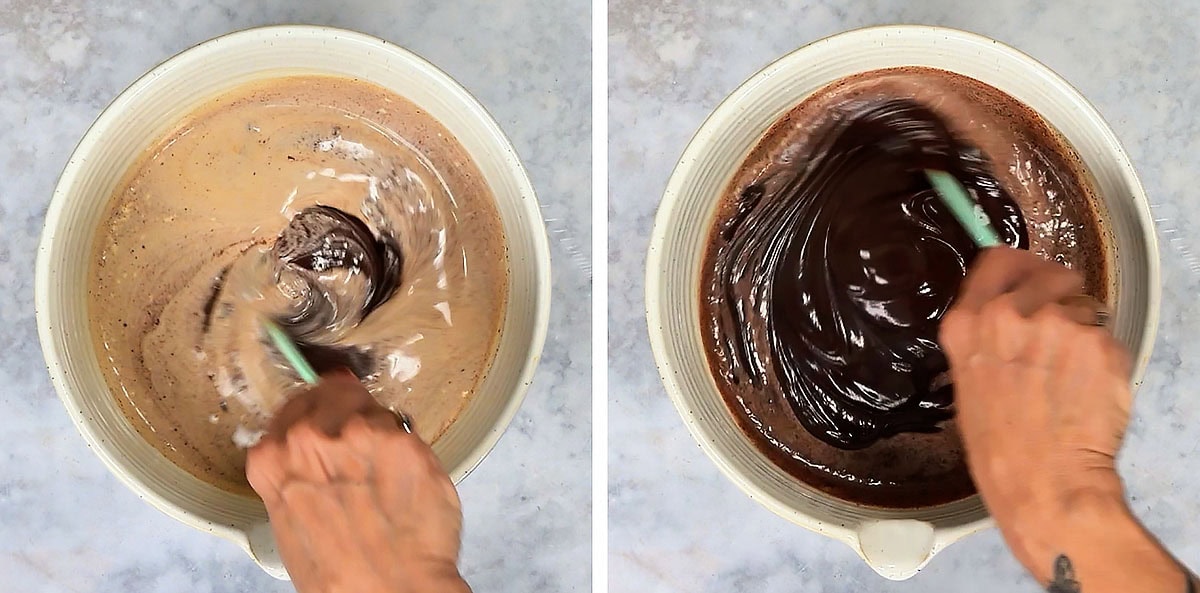
- Add the cream, golden syrup, chocolate chips and butter to a large mixing bowl. Microwave in short 30–40 second bursts until the cream is warm and the chocolate starts to melt, then leave to rest for a few minutes.
- Stir gently from the center outward with a long, narrow spatula, moving in very small circles, until the ganache is glossy and smooth. For an even glossier, thicker ganache, blend it with an immersion blender, keeping the head fully immersed so you don’t whisk in any air bubbles.
- Cover the surface of the ganache with plastic wrap and leave to cool at room temperature for 4–5 hours, or evn overnight, until thick and spreadable. Don’t refrigerate it, as this can make the ganache hard and dull its shine.
Baker’s tip
Give the ganache time
Ganache needs 4–5 hours at room temperature to thicken enough to spread and pipe, which is why it is made first – or even the day before. Warm ganache slides off the cake and squeezes out between the layers. If it sets too firm, warm it for a few seconds in the microwave and stir until smooth again.
Boil the Orange
- Preheat the oven to 320°F (160°C). Mist three 8-inch round cake pans with cake release and line the bottoms with parchment paper.
- Place the scrubbed orange in a pot of boiling water and simmer until it is completely soft all the way through, about 20 minutes. If you are using a conventional (waxed) orange, simmer it for 5 minutes first, then drain and start again with fresh water. Let cool.
- Cut it open and remove any seeds and the hard stem end.
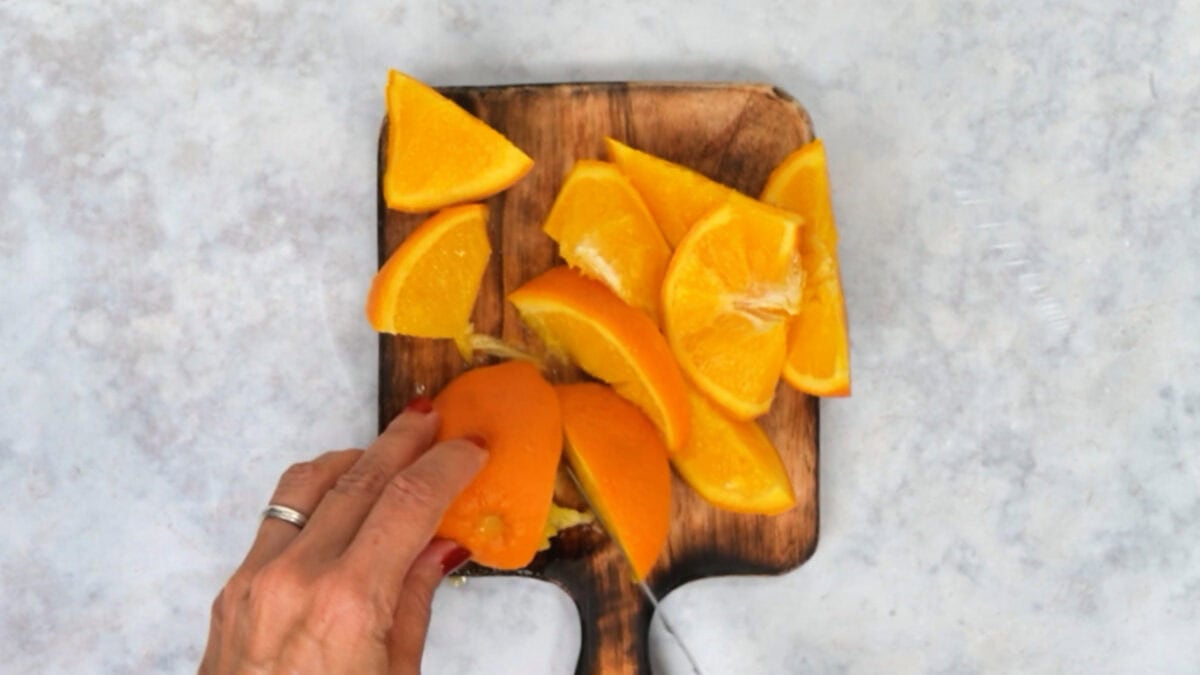
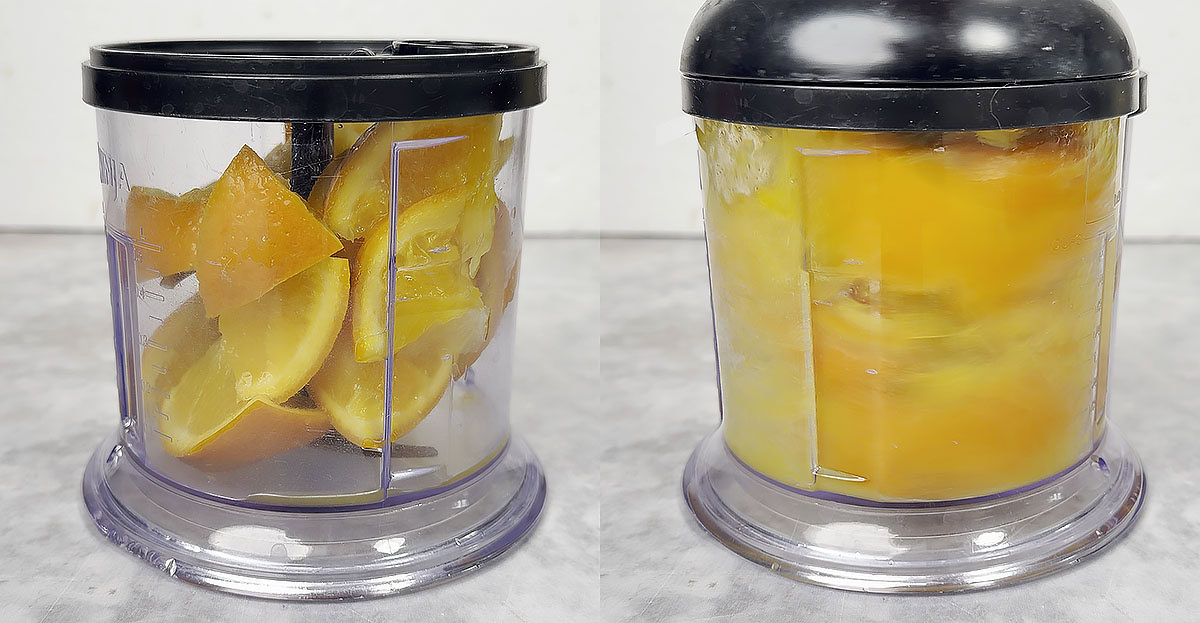
- Blend everything – peel and all – in a food processor until you have a smooth, bright orange paste. You will need scant 1 cup (200g) for the cake, so you may have a little left over.
Make the Batter
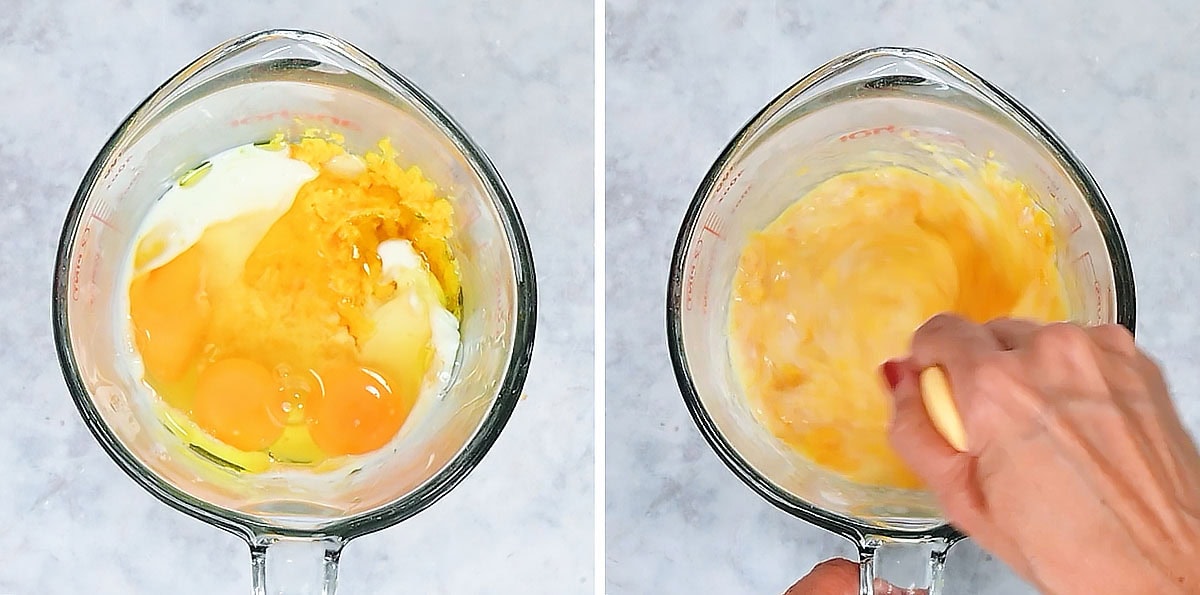
- Whisk the buttermilk, eggs, olive oil and blended orange together in a jug.
- In the bowl of a stand mixer fitted with the paddle (or a large bowl with a hand mixer), stir together the flour, sugar, ground almonds, cornstarch, baking powder, baking soda and salt.
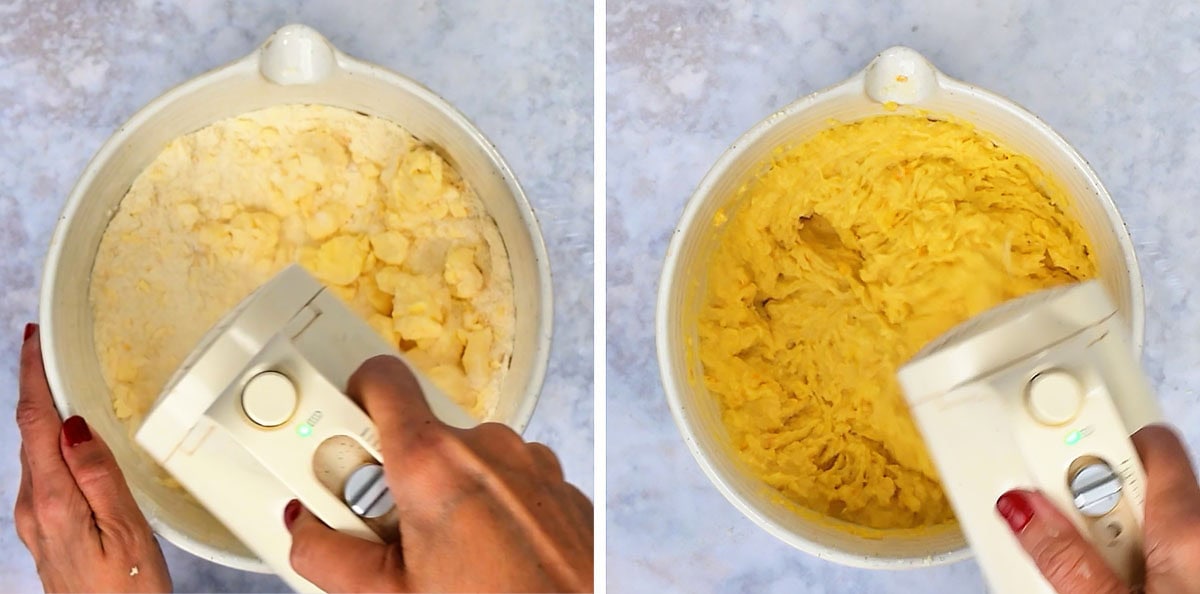
- Add the cubed butter and beat on low speed until the mixture looks like damp sand with no large lumps of butter.
- Pour in the wet ingredients and beat on low to medium speed until the batter is smooth, scraping down the bowl once or twice.
Bake the Cake Layers
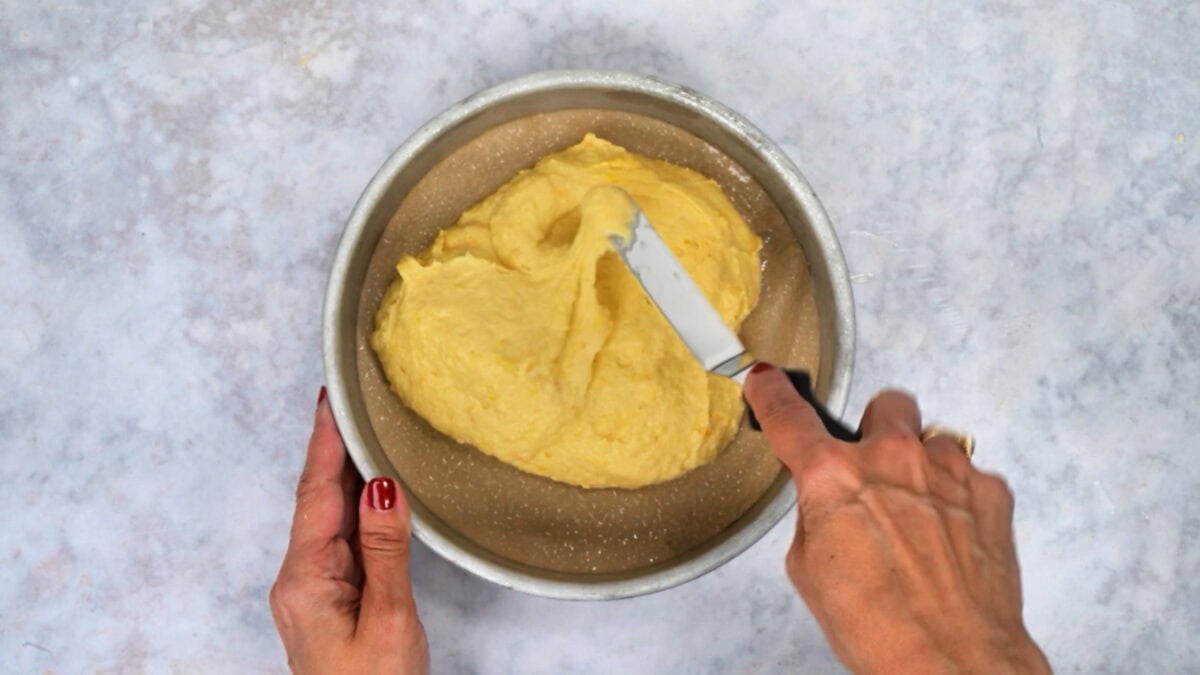
- Divide the batter evenly between the three prepared pans and level the tops. Bake for about 20 minutes, until a toothpick inserted in the center comes out clean.
- Cool in the pans for 5–10 minutes, then turn out onto a wire rack. Cover with plastic wrap while they cool to lock in the moisture.
Assemble the Cake
- Warm the Grand Marnier in a small saucepan, then brush it over the cooled cake layers so it soaks in.
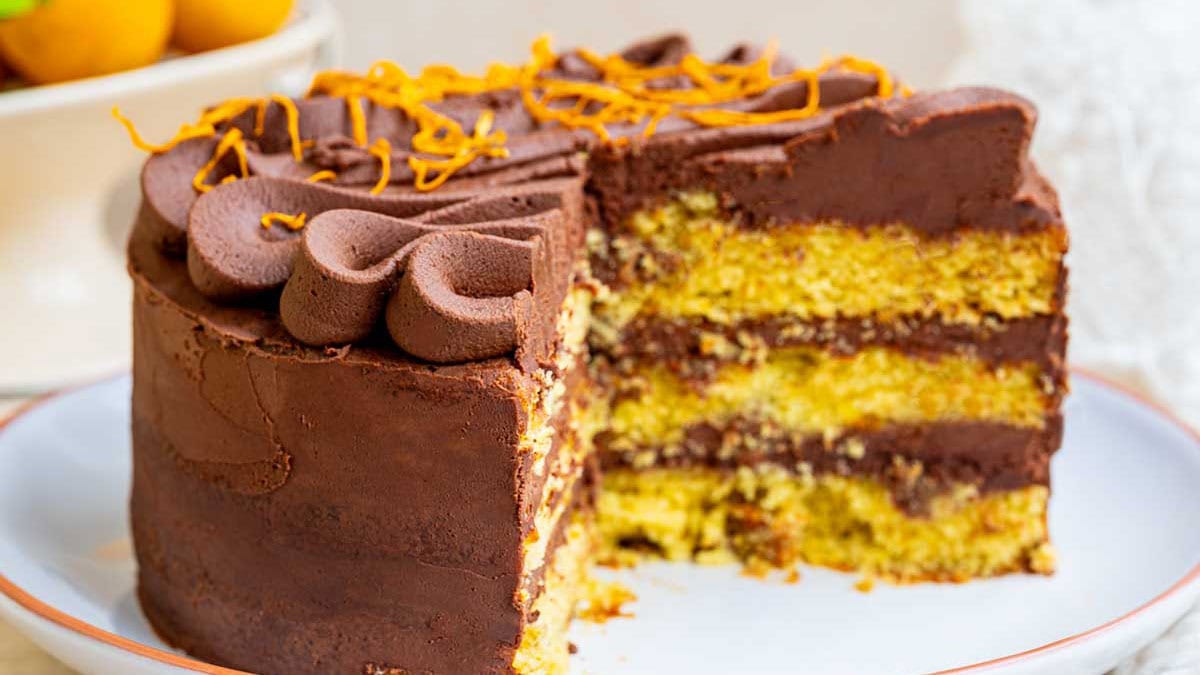
- Place the bottom layer on a serving plate and pipe or spread with a generous layer of ganache. Top with the second layer, pressing down gently, and repeat with the third.
- Cover the whole cake with a layer of ganache, smoothing the sides with a bench scraper or offset spatula.
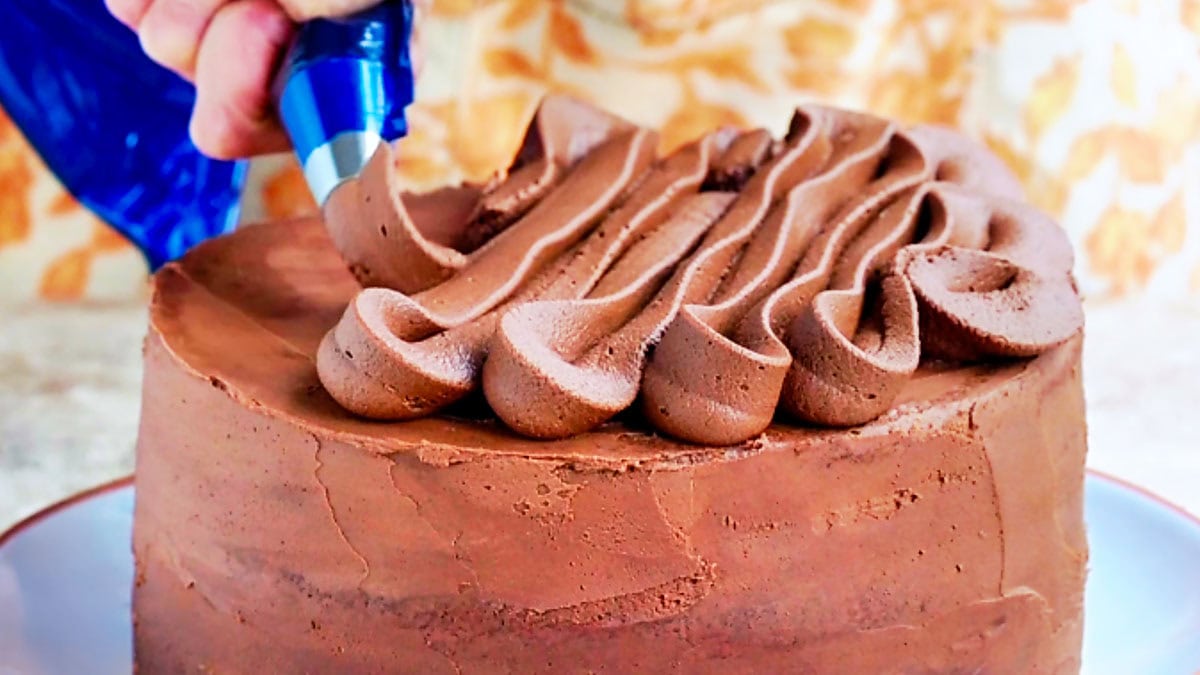
- Swirl or pipe the remaining ganache over the top using a piping bag and large tip, and decorate with the orange strips, if using.
Storage and Freezing
- Make ahead: Boil and blend the orange up to 2 days ahead and keep the paste in the fridge. The ganache can be made up to a day ahead and kept covered at room temperature.
- Store: Keep covered at cool room temperature for up to 4 days, or in the fridge for up to 6 days. Take it out 30 minutes before serving so the ganache softens.
- Freeze: Wrap the cooled, unfrosted sponges tightly in plastic wrap and foil and freeze for up to 3 months. Thaw overnight in the fridge, still wrapped, before assembling.
You’ll Also Love…
- Whole Lemon Cake: The same boiled-fruit method, with lemon curd and vanilla whipped cream.
- Chocolate Orange Cheesecake: A no-bake, make-ahead treat for Terry’s fans.
- Orange Drizzle Cake: A quick all-in-one sponge soaked in zesty orange syrup.
- Portokalopita (Greek Orange Phyllo Cake): Shredded phyllo soaked in orange syrup.
- Clementine Cake: Whole clementines and almonds in a naturally gluten-free cake.
Frequently Asked Questions
Yes, but most supermarket oranges are waxed and many are treated with post-harvest fungicides, with residue limits set on the basis that the peel is not eaten. For any recipe using the whole fruit, choose organic or unwaxed oranges, or scrub conventional oranges well and discard the first boiling water.
No. The whole orange goes into the cake – peel, pith and flesh. Just remove the seeds and the hard stem end after boiling.
Not if you use a thin-skinned navel orange and boil it until completely soft, which mellows the pith. Avoid Seville oranges, which are far too bitter for this cake.
Yes. Brush the sponges with a simple orange syrup made by simmering fresh orange juice with a little sugar.
Yes. Cointreau or triple sec work well. They are a little sharper and less rich than Grand Marnier, which is made with cognac.
Yes. Try two or three clementines or a blood orange instead. For the lemon version, see my Whole Lemon Cake.
Yes. Boil and blend the orange up to 2 days ahead and bake the sponges the day before. The assembled cake keeps for up to 5 days in the fridge.
Yes. Freeze the unfrosted sponges, well wrapped, for up to 3 months and thaw overnight in the fridge before filling and frosting.
It is fine at cool room temperature for up to 2 days. After that, or in a warm kitchen, keep it in the fridge and bring it back to room temperature before serving.
Please leave a comment and rating if you try this Chocolate Orange Cake, follow me on Pinterest for more easy recipes and don’t forget to tag me on @Instagram or TikTok so I can see your creations!
Chocolate Orange Cake with Grand Marnier
Equipment
Ingredients
For the Cake
- 1 medium orange , ideally seedless
- ¼ cup (60ml) buttermilk
- 2 tbsp olive oil
- 3 large eggs room temperature
- 1 ¾ cups (330g) sugar
- 2 cups (260g) all-purpose flour (= plain flour)
- ½ cup (60g) ground almonds or almond flour
- 1 tbsp cornstarch (= cornflour)
- 1 tsp baking powder
- 1 tsp baking soda (= bicarbonate of soda)
- ⅓ tsp salt
- ⅞ cup (200g) unsalted butter cold, cubed
For the Ganache
- 1 ½ cups (375ml) heavy cream (= double cream)
- 2 cups (370g) semi-sweet chocolate chips
- ⅓ cup (100g) golden syrup
- ¼ cup (65g) unsalted butter
- 1 pinch sea salt
Assembly and Decoration
- ⅓ cup (80ml) Grand Marnier or other orange liqueur
- 2 tbsp orange strips optional
Instructions
Make the Ganache
- Add the cream, golden syrup, chocolate chips and butter to a large mixing bowl. Microwave in short 30–40 second bursts until the cream is warm and the chocolate starts to melt. Rest for a few minutes.1 ½ cups (375ml) heavy cream, ⅓ cup (100g) golden syrup, 2 cups (370g) semi-sweet chocolate chips, ¼ cup (65g) unsalted butter, 1 pinch sea salt
- Use a long, narrow spatula to stir gently from the center outward, moving in very small circles, until the chocolate has melted and the ganache is glossy and smooth.
- For an even glossier, thicker ganache, blend it with an immersion blender, keeping the head fully immersed. Cover the surface with plastic wrap and leave to cool at room temperature for 4–5 hours or overnight. Do not refrigerate – this can make the ganache hard and dull its shine.
Boil the Orange
- Preheat your oven to 320°F (160°C). Mist three 8-inch round cake pans with cake release and line the bottoms with parchment paper.
- Place the orange in a pot of boiling water and simmer until it is completely soft all the way through, about 20 minutes. Let cool.1 medium orange
- Slice it open and remove any seeds. Transfer the pieces to a food processor and blend until you have a smooth paste. You will need scant 1 cup (200g) of the blended orange for the cake, so you may have some left over.
Prepare the Wet and Dry Ingredients
- In a small bowl, whisk together the buttermilk, oil, eggs and blended orange paste. Set aside.¼ cup (60ml) buttermilk, 2 tbsp olive oil, 3 large eggs
- In the bowl of a stand mixer fitted with the paddle attachment (or a large mixing bowl), combine the flour, sugar, ground almonds, cornstarch, baking powder, baking soda and salt. Stir briefly on low speed to combine.2 cups (260g) all-purpose flour, 1 ¾ cups (330g) sugar, ½ cup (60g) ground almonds, 1 tbsp cornstarch, 1 tsp baking powder, 1 tsp baking soda, ⅓ tsp salt
Mix and Bake
- Add the cubed butter to the dry ingredients. Beat on low speed until the mixture looks sandy and uniform, with no large chunks of butter remaining.⅞ cup (200g) unsalted butter
- Pour in the wet buttermilk mixture. Beat on low to medium speed until the batter is completely smooth, scraping the bottom and sides of the bowl with a spatula so everything is evenly mixed.
- Divide the batter evenly between the prepared pans and level the tops. Bake for about 20 minutes, or until a toothpick inserted into the center comes out clean.
- Cool the cakes in their pans for 5–10 minutes, then carefully turn them out onto a wire rack. Cover with plastic wrap while they cool to lock in the moisture.
Assemble and Decorate
- Warm the Grand Marnier in a small saucepan, then brush it over the cake layers so it soaks in.⅓ cup (80ml) Grand Marnier
- Place the bottom cake layer on a serving plate. Pipe or spread a generous layer of ganache over it.
- Top with the second cake layer, pressing down gently to secure, and repeat with the third. Cover the entire cake with a layer of ganache, smoothing the sides with a bench scraper.
- Swirl or pipe the remaining ganache over the top of the cake and decorate with the orange strips, if using. Keep the cake covered and store at room temperature for up to 4 days.2 tbsp orange strips
Notes
- Make ahead: The orange can be boiled and blended up to two days ahead. The ganache can be made up to a day ahead to allow plenty of time for it to cool and thicken.
- Alcohol-free: Swap the Grand Marnier for a quick orange syrup – simmer fresh orange juice with a spoonful of sugar for a few minutes and brush it over the sponges.
- Other liqueurs: Cointreau, triple sec or a splash of dark rum all work well.
- Milk chocolate ganache: For a sweeter, more kid-friendly cake, use milk chocolate and slightly less cream, as milk chocolate sets softer.
- Chocolate sponge: Prefer chocolate all the way through? Try my Terry’s Chocolate Orange Cake with a glossy chocolate orange glaze.
- No food processor: A stick blender does the job, or push the soft orange through a sieve.
Nutrition
Nutritional information is always approximate, and will depend on quality of ingredients and serving sizes.
Troubleshooting
| Problem | Cause | Fix |
|---|---|---|
| Cake tastes bitter | Thick pith, seeds left in, or the orange was not boiled long enough | Use a thin-skinned navel orange, remove every seed and boil until completely soft. Discarding the first batch of water helps too |
| Orange paste is lumpy | Orange not quite soft, or too little liquid to blend | Simmer a little longer, then blend with a spoonful of the cooking water |
| Cake is dense or heavy | Cold eggs or buttermilk, or the batter was overmixed | Bring everything to room temperature and mix only until smooth |
| Cake sank in the middle | Underbaked or the oven door was opened too early | Bake until a toothpick comes out clean and avoid opening the oven in the first 20 minutes |
| Sponge is soggy | Too much liqueur, or brushed onto a hot cake | Brush lightly onto slightly warm (not hot) sponges |
| Ganache is too runny | Not cooled long enough | Leave at room temperature to thicken, or chill for 10 minutes at a time, stirring in between |
| Ganache is grainy or oily | Cream too hot or the ganache was overworked | Whisk in a tablespoon of warm milk or cream to bring it back together |