
Portokalopita (Greek Orange Phyllo Cake)

, Published Aug 16, 2026
This post may contain affiliate links. Please read our disclosure policy.
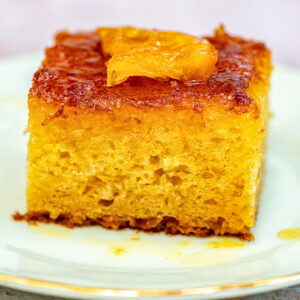
Portokalopita – this stunning Greek orange cake is made with shredded phyllo pastry and soaked in a sweet citrus syrup. It’s an easy, make-ahead dessert guaranteed to impress!
Love Greek desserts? Take a look at my Sokolatopita recipe!
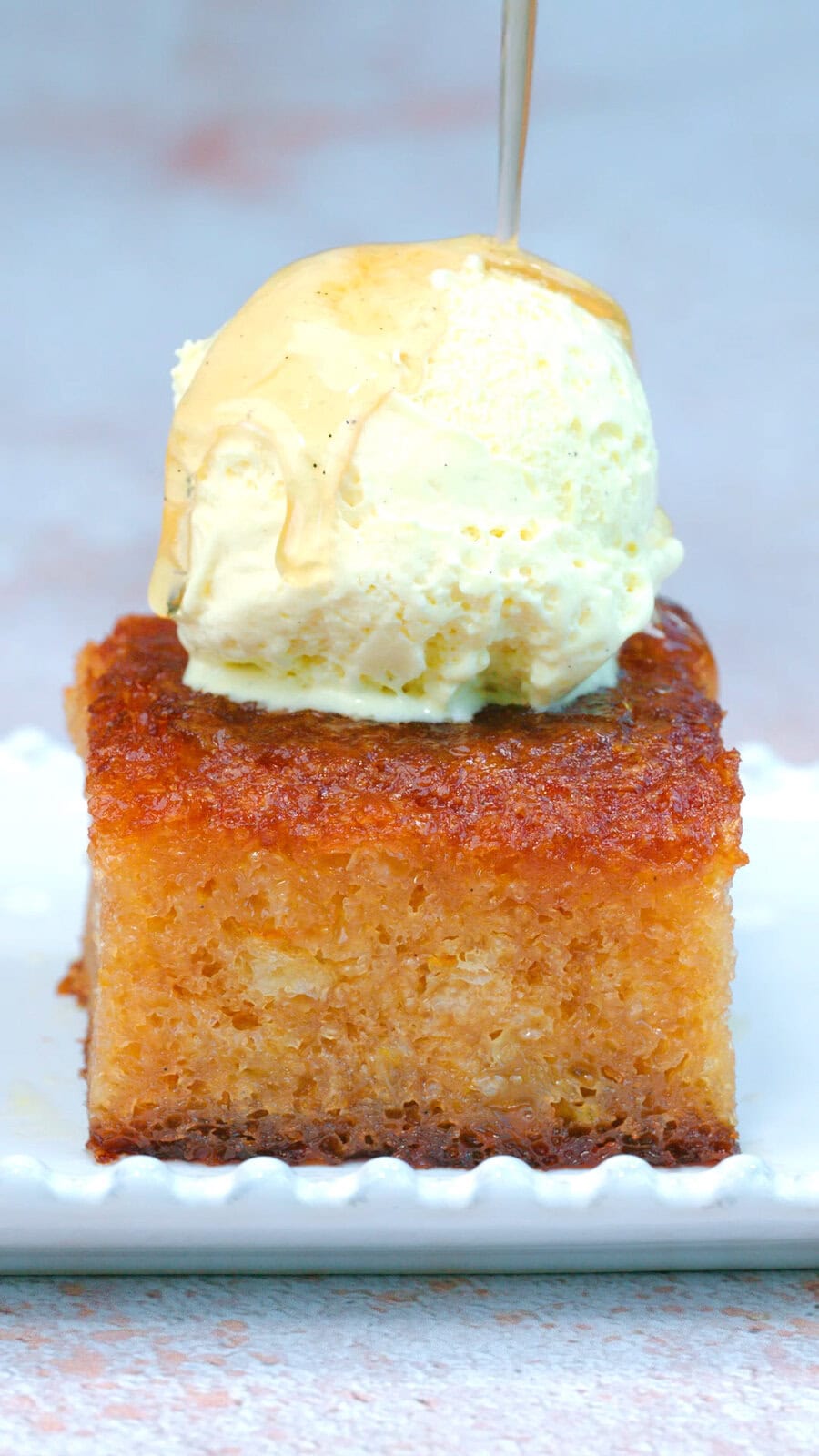
This traditional Greek orange cake is entirely unique. Instead of using a standard flour-based batter, the structure of the cake is built entirely out of shredded, dried phyllo pastry that gets folded into a rich, citrusy yogurt custard.
Once baked to a golden brown, the hot cake is drenched in zesty, sticky orange syrup that soaks into the crumb and creates baking magic!
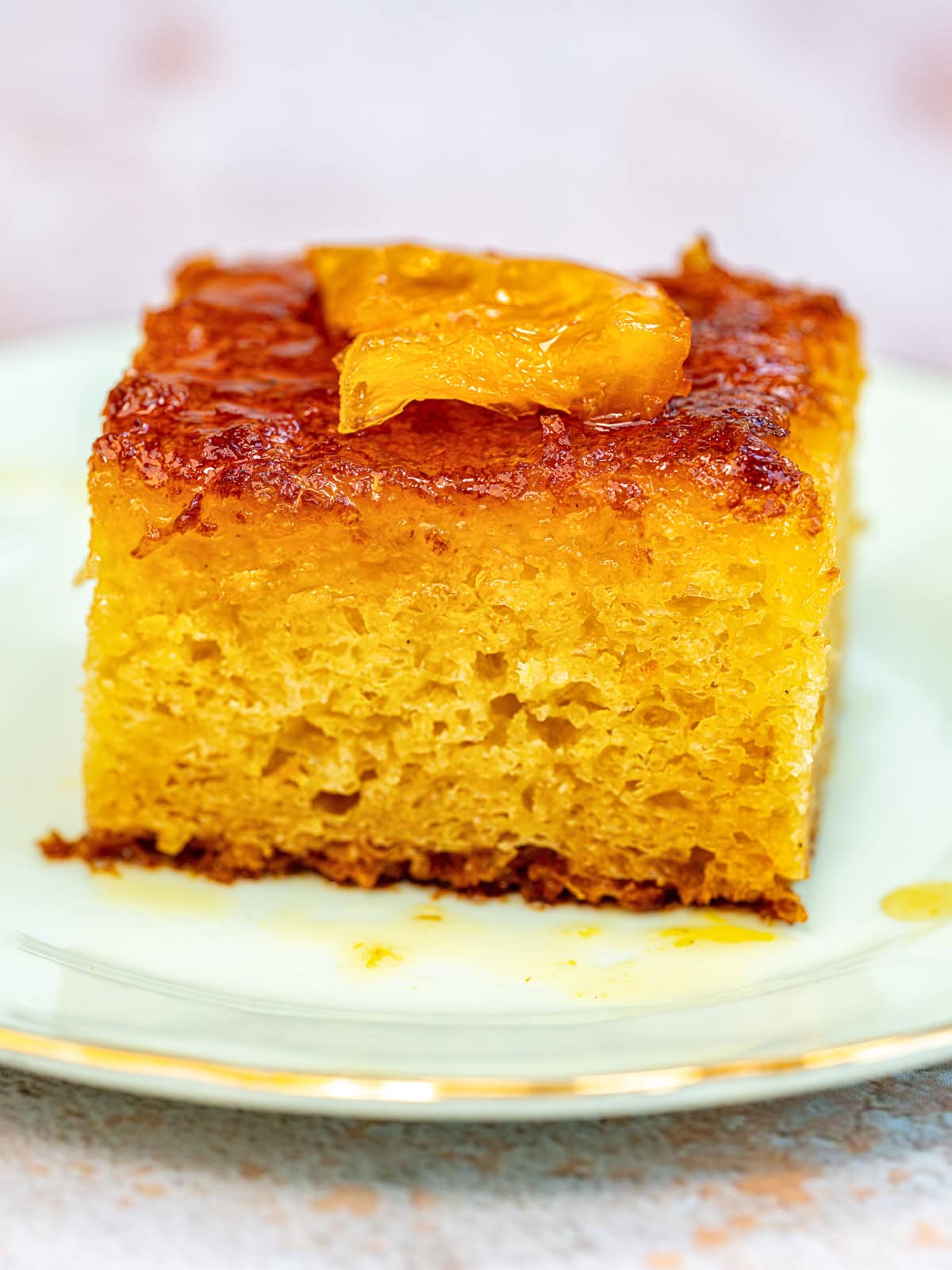
This result is unbelievably moist and dense, yet still fluffy and absolutely bursting with vibrant citrus flavor! It tastes amazing straight out of the fridge and even more so served slightly warm with a generous scoop of ice cream.
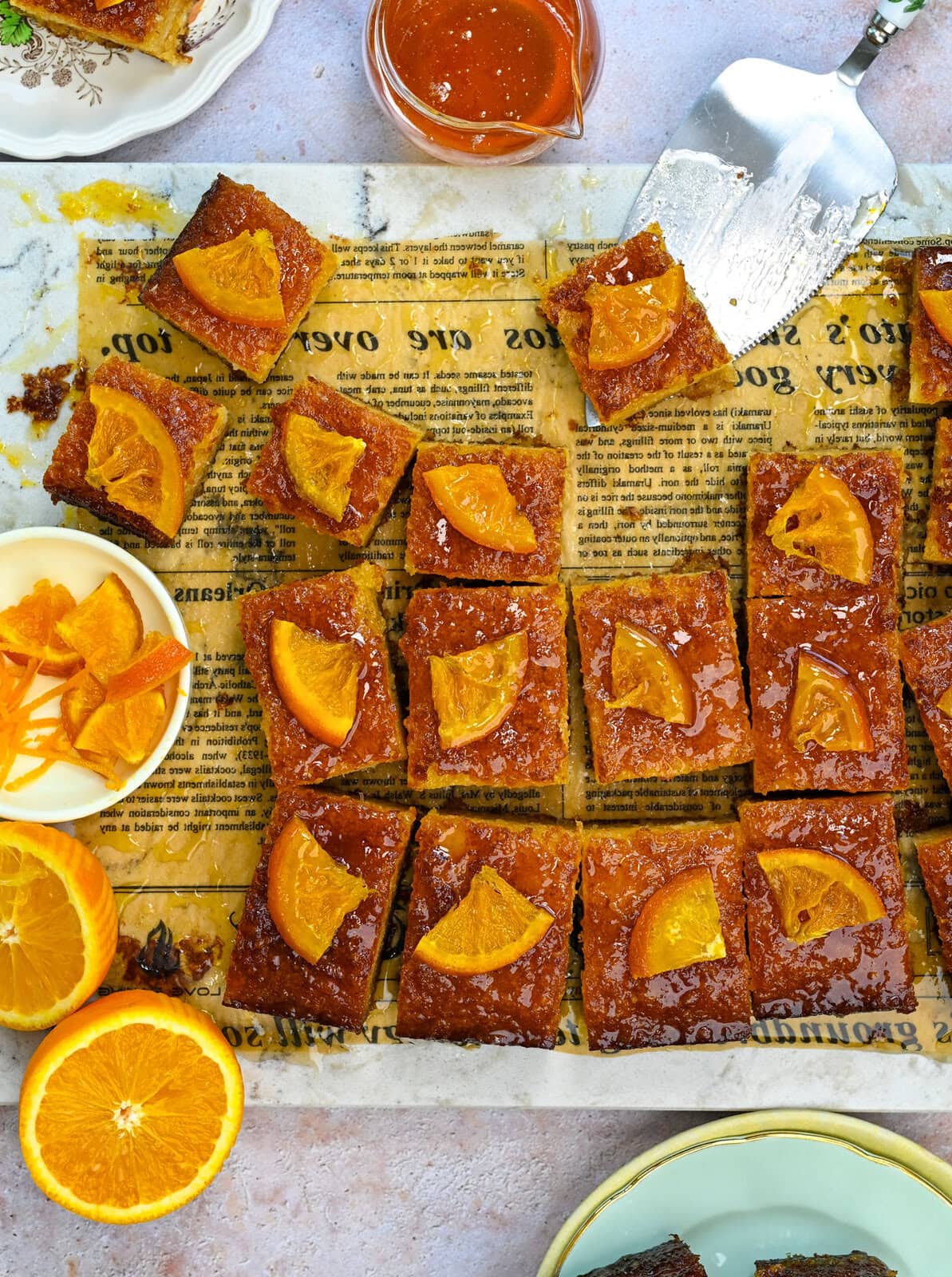
Tips for the Perfect Greek Portokalopita
Πορτοκαλόπιτα translates as orange pie (from portokali = orange + pita = pie). It is not actually a pie, but a cake made with phyllo pastry instead of flour. Here are the crucial techniques you need to know:
- Dry the Phyllo Completely: This is the most important step in the entire recipe! You cannot use fresh phyllo dough – the sheets must be torn into shreds and left out to dry until they are brittle. If the phyllo is too fresh, it will clump together and ruin the texture of the cake.
- The Golden Rule of Syrups: In Greek and Middle Eastern baking, there is a strict rule for syrup-soaked desserts: Cold syrup over hot cake (or hot syrup over cold cake). If you pour hot syrup over a hot cake, the pastry will turn to mush. In this recipe, we make the syrup first so it has plenty of time to cool.
- Fold Incrementally: When adding your dried, shredded phyllo into the wet custard, add it a handful at a time. Toss it gently to ensure every single piece of pastry is coated in the wet mixture before adding the next handful.
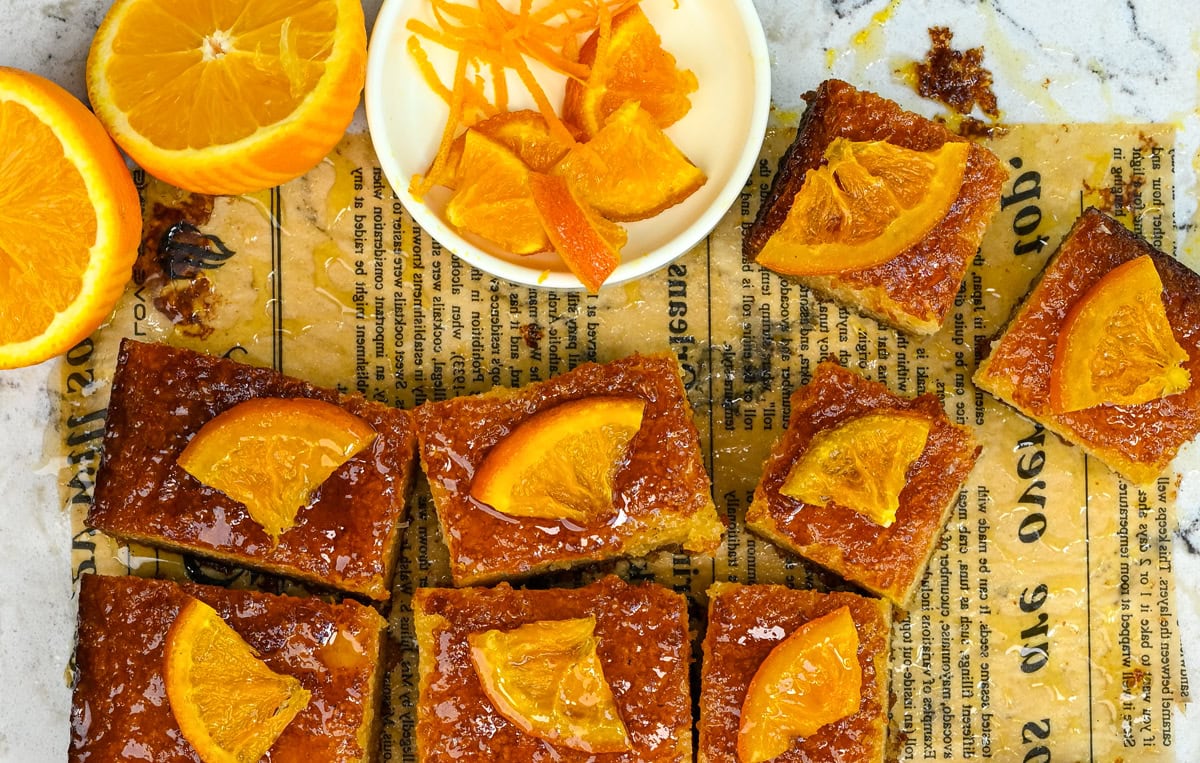
What You’ll Need
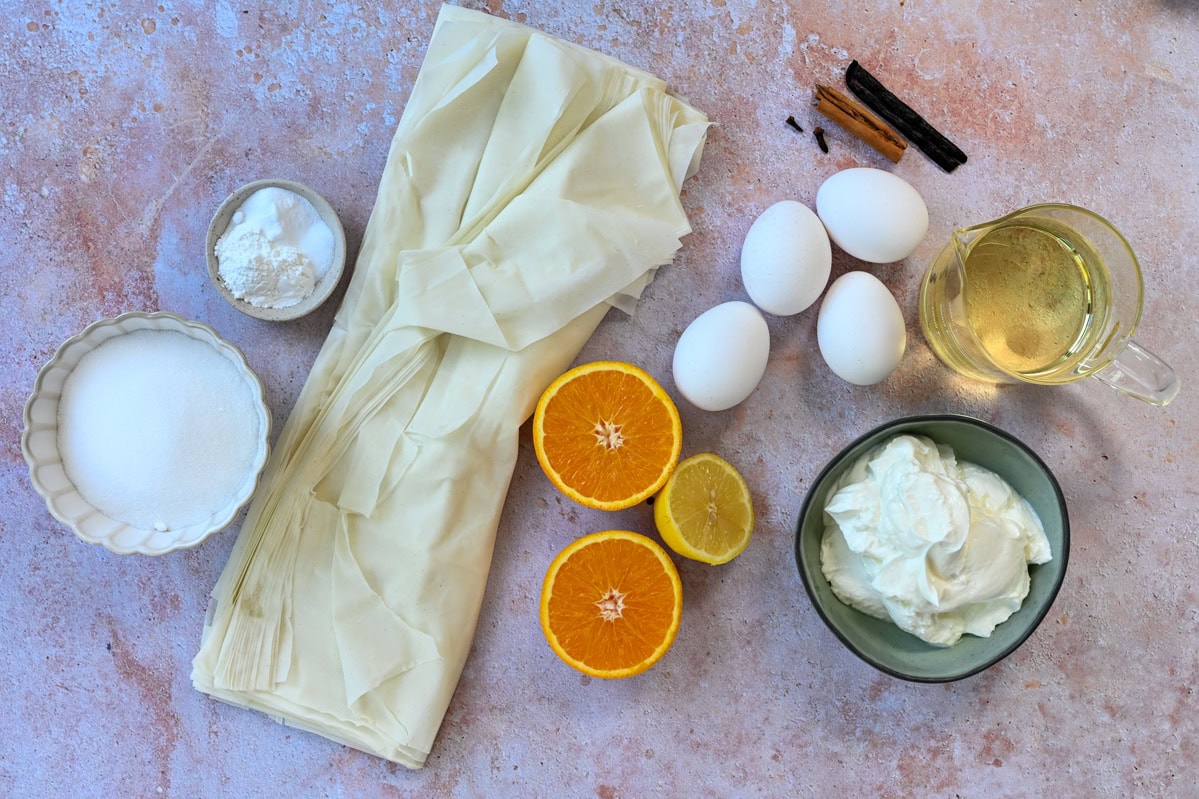
This recipe transforms standard pantry and fridge staples into something spectacular. Here is what you will need:
- Orange Juice & Zest: Do not use bottled juice here. The oils from fresh zest and the brightness of fresh juice are what make this cake so special. Zest the oranges first using a Microplane and then juice.
- Lemon Juice: The acidity cuts through the intense sweetness of the sugar and oranges.
- Phyllo (Filo) Pastry: One standard package. It doesn’t matter if it tears when you unroll it, because you’re going to shred it anyway!
- Greek Yogurt: Use full-fat, plain Greek yogurt. It adds a slight tang that cuts through the sweet syrup and creates a luxuriously thick custard.
- Eggs: These provide the structure and lift, which helps bind the shredded pastry together.
- Oil: Using a neutral oil (like canola, vegetable or sunflower) keeps the cake incredibly moist and allows the orange flavor to shine.
- Sugar: Greek syrup cakes use sugar in the syrup and batter.
- Vanilla Bean Paste: The flecks of vanilla bean add a beautiful visual touch and a deep, floral warmth that pairs perfectly with the orange. (Substitute: High-quality vanilla extract).
- Baking Powder and Baking Soda: Make sure these are fresh so they can provide the necessary lift, which prevents this dessert from becoming dense.
- Cinnamon stick, cloves and vanilla pod to flavor the syrup.
How to Make Portokalopita
Dry the Phyllo
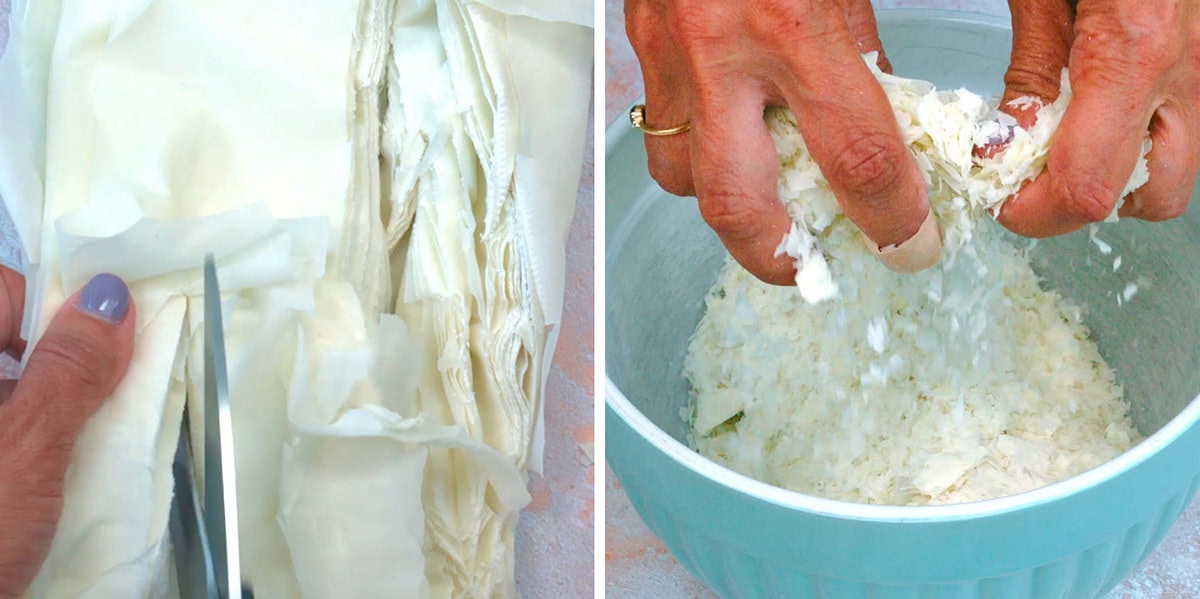
- Remove your phyllo pastry from the packaging and unroll it. Use scissors to roughly cut the sheets into thin ribbons.
- Spread them out in a loose single layer on two large baking sheets. Leave them on the counter for a few hours to dry out, tossing them occasionally.
- Alternatively, place the baking sheets in a very low temp oven (200°F / 90°C) for 10-15 minutes, giving an occasional stir, until the pastry is completely dry and brittle.
- Once the phyllo is fully dry, break it up into very small pieces using your hands. The result should have a slightly rough texture.
Make the Orange Syrup
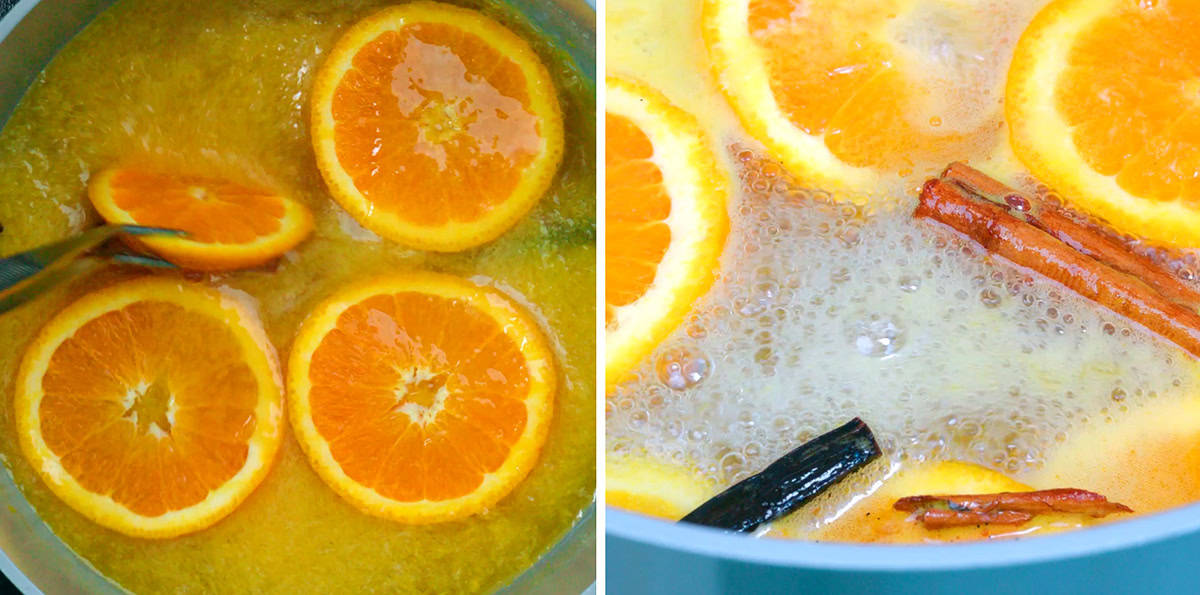
- Make the syrup while the phyllo is drying, so it has time to cool. In a saucepan, combine the sugar, orange juice, lemon juice, cinnamon, cloves, vanilla and orange slices.
- Bring the mixture to a boil over medium-high heat. Once boiling, reduce the heat and simmer for 10 minutes until the syrup thickens slightly.
- Remove the orange slices and set them aside on a piece of parchment paper to dry – you can use them to decorate the cake. Let the syrup cool completely before removing the cinnamon stick and vanilla pod.
Prepare the Portokalopita
- Preheat your oven to 350°F (180°C). Mist a 9×13-inch baking dish with cake release and line it with baking paper.
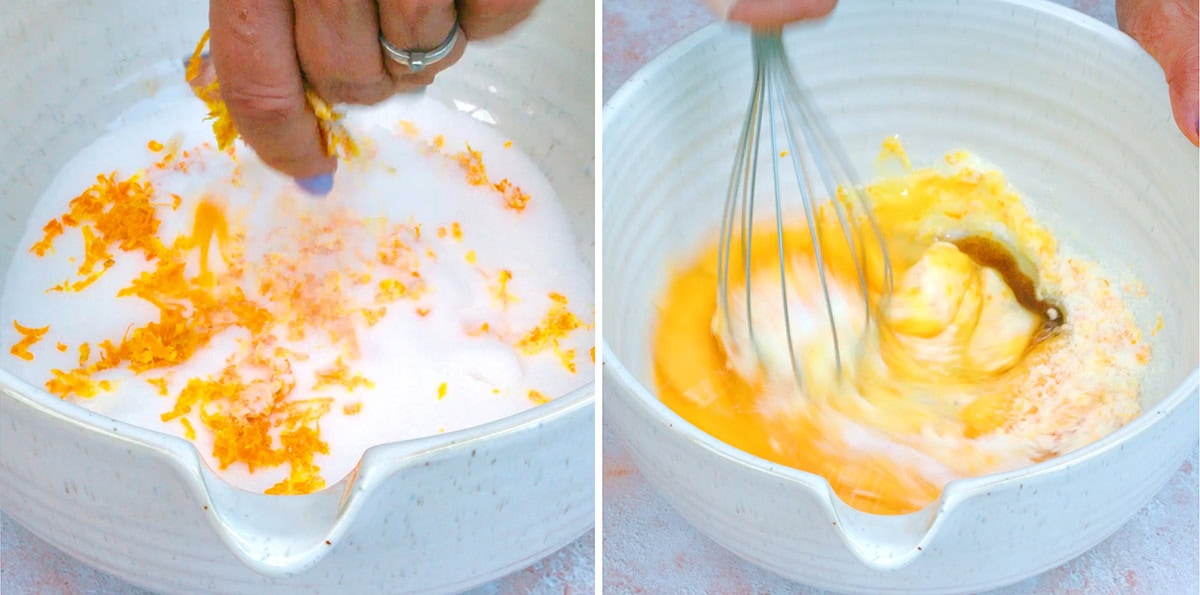
- Add the sugar and orange zest to a large mixing bowl. Use your fingertips to rub the zest into the sugar to release the beautifully aromatic oil contained within.
- Add the eggs and vanilla bean paste and use a balloon whisk or a mixer to whisk everything together until pale and frothy.
- Whisk in the yogurt, fresh orange juice, lemon juice and the oil. Stir in the baking powder and baking soda until the batter is completely smooth and creamy.
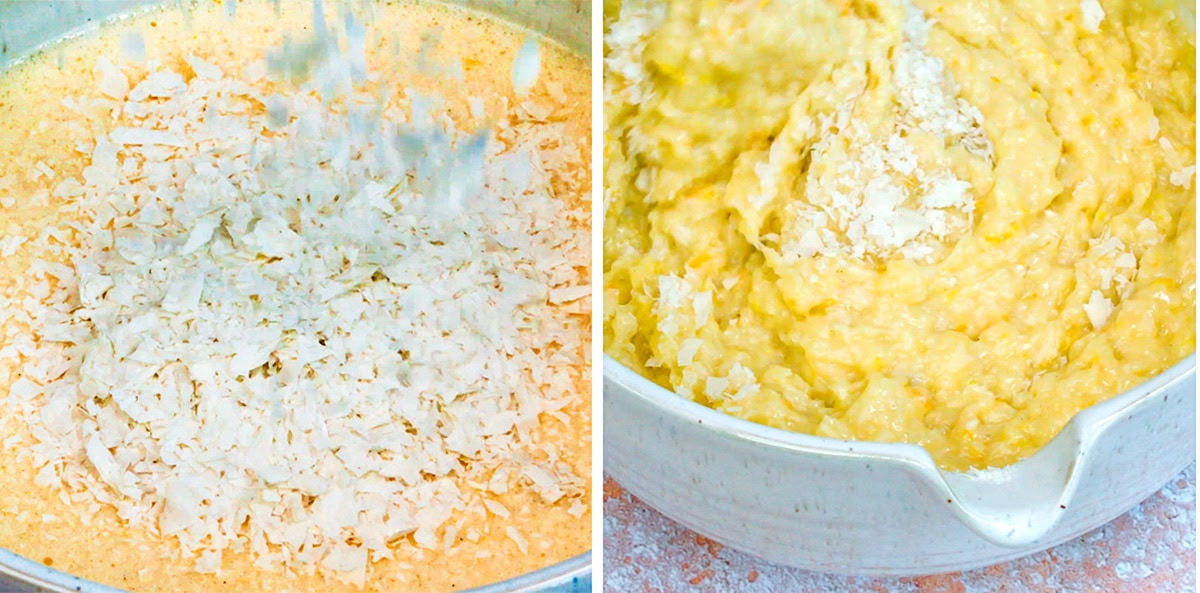
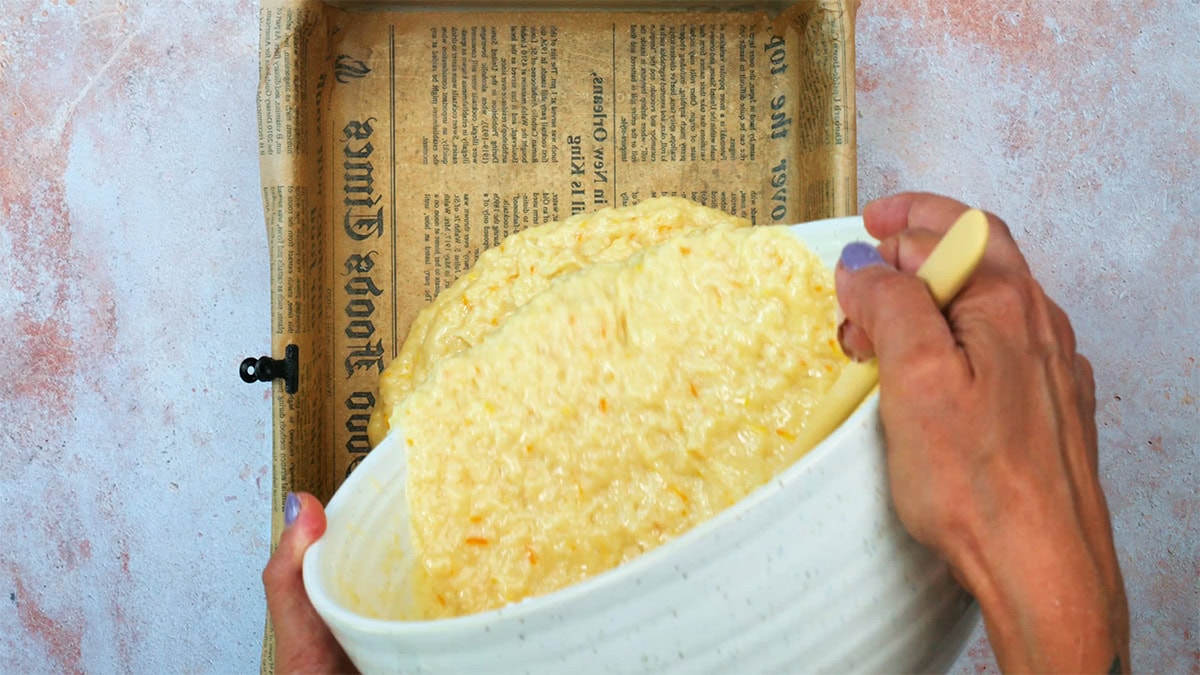
- Gradually fold the crushed phyllo into the batter in 3-4 stages, making sure each addition is fully incorporated before adding more.
- Repeat until all the phyllo is fully moistened and there are no clumps of phyllo in the batter.
- Pour the mixture into your prepared baking dish and smooth the top. Bake for 40–50 minutes or until the cake is puffed, set in the center and golden brown on top (check whether you need to tent the cake with foil after 20-30 minutes so that it doesn’t color too deeply).
Add the Syrup, Chill and Serve
- Remove the hot cake from the oven. Ladle the cooled orange syrup evenly over the surface of the hot cake, allowing it to soak in. Let the cake cool down, then transfer it to the fridge for a few hours or overnight to set.
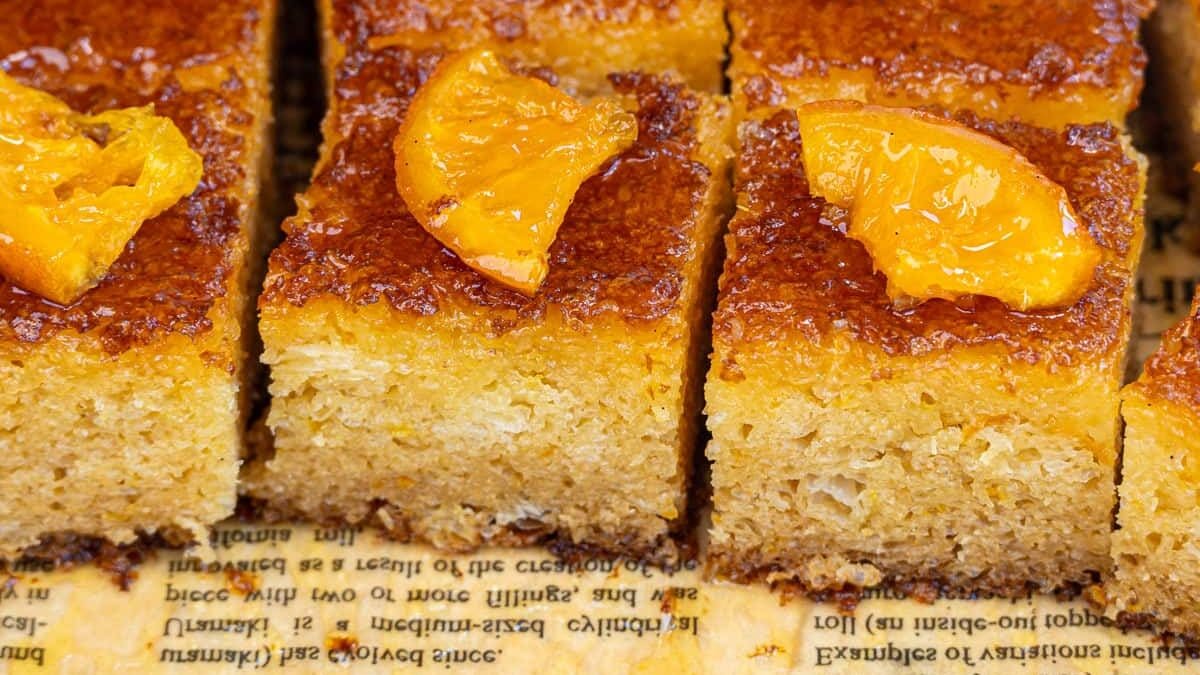
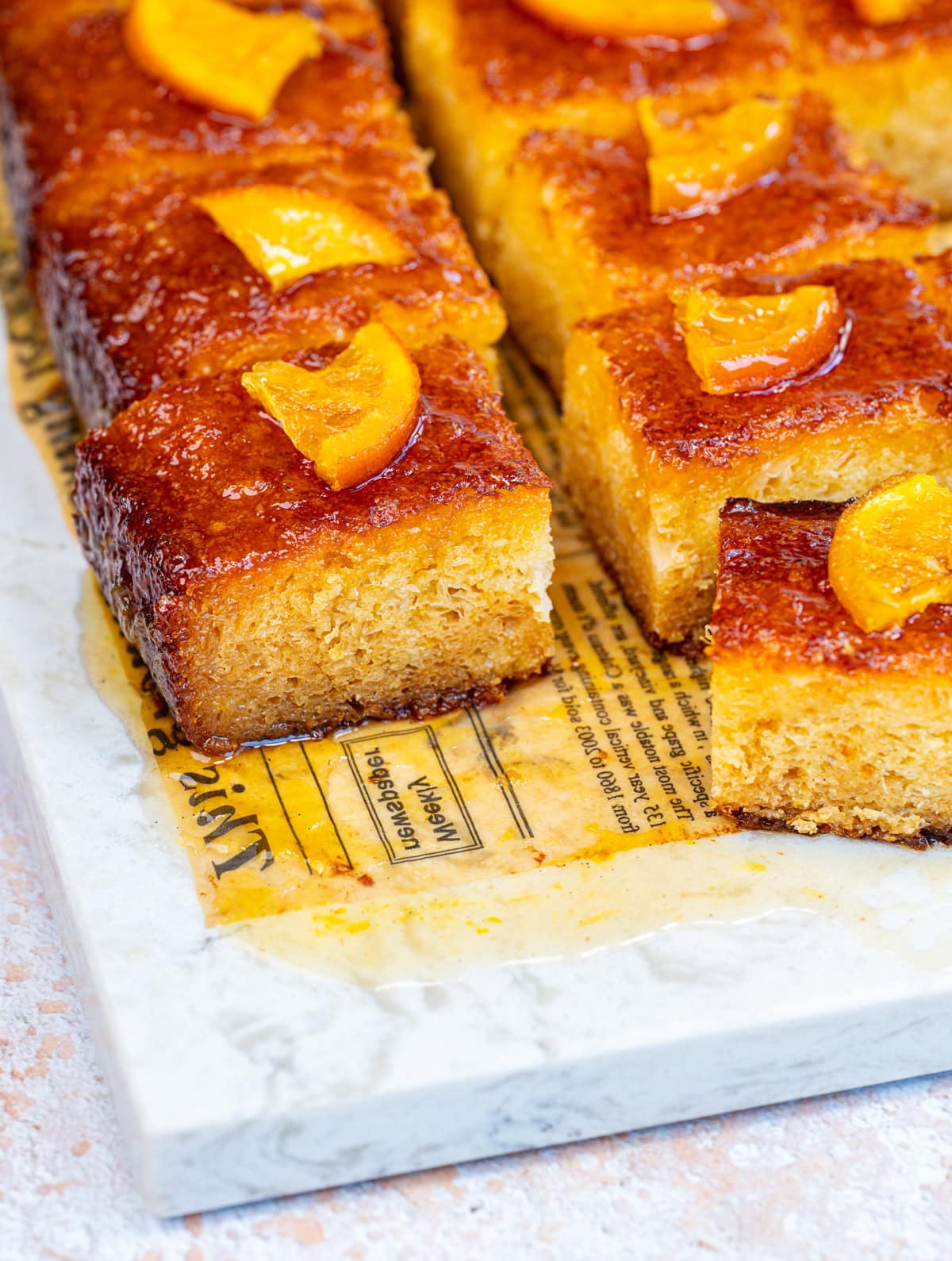
- Slice the portokalopita into squares and decorate with the candied oranges if you like. Serve cold or warm it for a few seconds in the microwave and serve with a scoop of vanilla ice cream, whipped cream or Greek yogurt – swoonworthy!
Tips, Variations and Substitutions
- Waste Not… I think this recipe was created by thrifty Greek cooks as a way to use every last scrap of phyllo pastry that was leftover from other recipes or too dry to use. You can freeze leftover phyllo to use in this recipe.
- Customise Your Syrup: You can experiment with a variety of aromatic spices to infuse your syrup with different flavors. A few drops of orange blossom water add a wonderful floral note.
- Use Olive Oil: If you prefer a more robust, traditionally Mediterranean flavor profile, you can swap some of the neutral oil for a mild, fruity extra virgin olive oil. I would recommend using only olive oil however – it can overwhelm the citrus flavor.
- Individual Portions: Instead of a large 9×13-inch pan, you can bake this mixture in a muffin tin to create mini Portokalopita! Make sure to reduce the baking time to about 20–25 minutes.
Storing and Freezing
This is one of the rare cakes that actually tastes better on the second or third day, once the flavors have had time to mature and the syrup has completely permeated the pastry.
Keep the cake stored in the refrigerator. Cover the baking dish tightly with plastic wrap or transfer slices to an airtight container. It will keep beautifully for up to a week.
This recipe makes a large cake so if you don’t manage to demolish all the slices in one sitting, you can always freeze leftovers for dessert emergencies!
In Greece, you can find frozen trays of portokalopita in most supermarkets – that’s how popular it is and how easy it is to freeze. Wrap each square in plastic wrap, place them in a freezer-safe bag and freeze for up to 2 months. Thaw overnight in the fridge before serving.
Frequently Asked Questions
This happens when the phyllo pastry was not dried out completely before being added to the custard. You want the pastry to be dry and brittle so that it breaks into tiny pieces when scrunched. If the pastry is not fully dry, small pieces will clump together instead of baking into a light, airy cake structure.
Short answer? Yes! Standard plain yogurt contains too much water, which will thin the batter and make it watery. Full-fat Greek yogurt is strained so it won’t alter the texture of the bake.
Definitely! Making the syrup a day in advance and keeping it in the fridge ensures that it is perfectly cold when your cake comes out of the oven, guaranteeing that crucial hot-cake-meets-cold-syrup reaction! Any leftover syrup can be used as a drizzle when serving.
If you loved this gloriously sticky-sweet Greek Portokalopita, please leave a star rating and comment below! Tag me on Instagram @supergolden88 or TikTok @supergoldenbakes when you share it – I can’t wait to see your sweet creations!
Portokalopita (Greek Orange Cake)
Video
Ingredients
For the Orange Syrup
- 1 cup (250ml) fresh orange juice
- ¼ cup (60ml) fresh lemon juice
- 1 ½ cups (300g) sugar , granulated
- 1 large orange , sliced
- ½ stick cinnamon (optional)
- 2 whole cloves (optional)
- ½ pod vanilla (optional)
For the Portokalopita
- 1 lb (450g) phyllo pastry
- 1 cup (200g) sugar , granulated
- 2 tbsp orange zest
- 4 large eggs , room temperature
- 1 tsp vanilla bean paste
- 1 cup (240g) Greek yogurt , full-fat
- ½ cup (125ml) fresh orange juice
- ¼ cup (60ml) lemon juice
- 1 cup (240ml) neutral oil (eg. vegetable / sunflower / canola)
- 3 tsp baking powder
- 1 tsp baking soda (= bicarbonate of soda)
- ¼ tsp salt
Instructions
Dry the Phyllo
- Remove your phyllo pastry from the packaging and unroll it. Use scissors to roughly cut the sheets into thin ribbons.1 lb (450g) phyllo pastry
- Spread them out in a loose single layer on two large baking sheets. Leave them on the counter for a few hours to dry out, tossing them occasionally. Alternatively, place the baking sheets in a very low-temp oven (200°F / 90°C) for 10-15 minutes, giving an occasional stir, until the pastry is completely dry and brittle.
- Once the phyllo is fully dry, break it up into very small pieces using your hands. The result should have a slightly rough texture.
Make the Orange Syrup
- Make the syrup while the phyllo is drying, so it has time to cool. In a saucepan, combine the sugar, orange juice, lemon juice, cinnamon, cloves, vanilla and orange slices.1 cup (250ml) fresh orange juice, ¼ cup (60ml) fresh lemon juice, 1 ½ cups (300g) sugar, 1 large orange, ½ stick cinnamon , 2 whole cloves, ½ pod vanilla
- Bring the mixture to a boil over medium-high heat. Once boiling, reduce the heat and simmer for 10 minutes until the syrup thickens slightly.
- Remove the orange slices and set aside on a piece of parchment paper to dry – you can use them to decorate the cake. Let the syrup cool completely before removing the cinnamon stick and vanilla pod.
Prepare the portokalopita
- Preheat your oven to 350°F (180°C). Mist a 9×13-inch baking dish with cake release and line with baking paper.
- Add the sugar and orange zest to a large mixing bowl. Use your fingertips to rub the zest into the sugar to release the beautifully aromatic oil contained within.1 cup (200g) sugar, 2 tbsp orange zest
- Add the eggs and vanilla bean paste and use a balloon whisk or a mixer to whisk everything together until pale and frothy.4 large eggs, 1 tsp vanilla bean paste
- Whisk in the yogurt, orange juice, lemon juice and the neutral oil. Stir in the baking powder and baking soda until the batter is completely smooth and creamy.1 cup (240g) Greek yogurt, ½ cup (125ml) fresh orange juice, ¼ cup (60ml) lemon juice, 1 cup (240ml) neutral oil
- Stir in the baking powder, soda and salt.3 tsp baking powder, 1 tsp baking soda, ¼ tsp salt
- Gradually fold in the crushed phyllo into the batter in 3-4 stages, making sure each addition is fully incorporated before adding more.
- Repeat until all the phyllo is fully moistened and there are no clumps of phyllo in the batter. Pour the mixture into your prepared baking dish and smooth the top. Bake for 40–50 minutes, or until the cake is puffed, set in the center and golden brown on top (check whether you need to tent the cake with foil after 20-30 minutes so that it doesn’t color too deeply).
Add the syrup, chill and serve
- Remove the hot cake from the oven. Ladle the completely cooled orange syrup evenly over the surface of the hot cake, allowing it to soak in. Let the cake cool down then transfer it to the fridge for a few hours or overnight to set.
- Slice the portokalopita into squares and decorate with the candied oranges if you like. Serve cold or warm for a few seconds in the microwave and serve with a scoop of vanilla ice cream, whipped cream or Greek yogurt – swoonworthy!
Notes
- Storing: Cover the baking dish tightly with plastic wrap or transfer slices to an airtight container. It will keep beautifully in the fridge for up to a week.
- Freezing: Wrap each square in plastic wrap, place them in a freezer-safe bag and freeze for up to 2 months. Thaw overnight in the fridge before serving.
Nutrition
Nutritional information is always approximate, and will depend on quality of ingredients and serving sizes.


Lovely and moist, deliciously orangey, a sweet treat to remind me of my recent holiday to Cyprus. Absolutely loved it.
So glad you enjoyed it!
This was honestly one of the nicest cakes I’ve eaten – I love that kind of syrupy citrusy flavour profile and it hit every spot. You don’t need massive slices so it goes far too. Would 100% have this again!
Thanks Hannah 🙂