
Braised Ham Hock with Maple Mustard Glaze

, Published Oct 03, 2026
This post may contain affiliate links. Please read our disclosure policy.
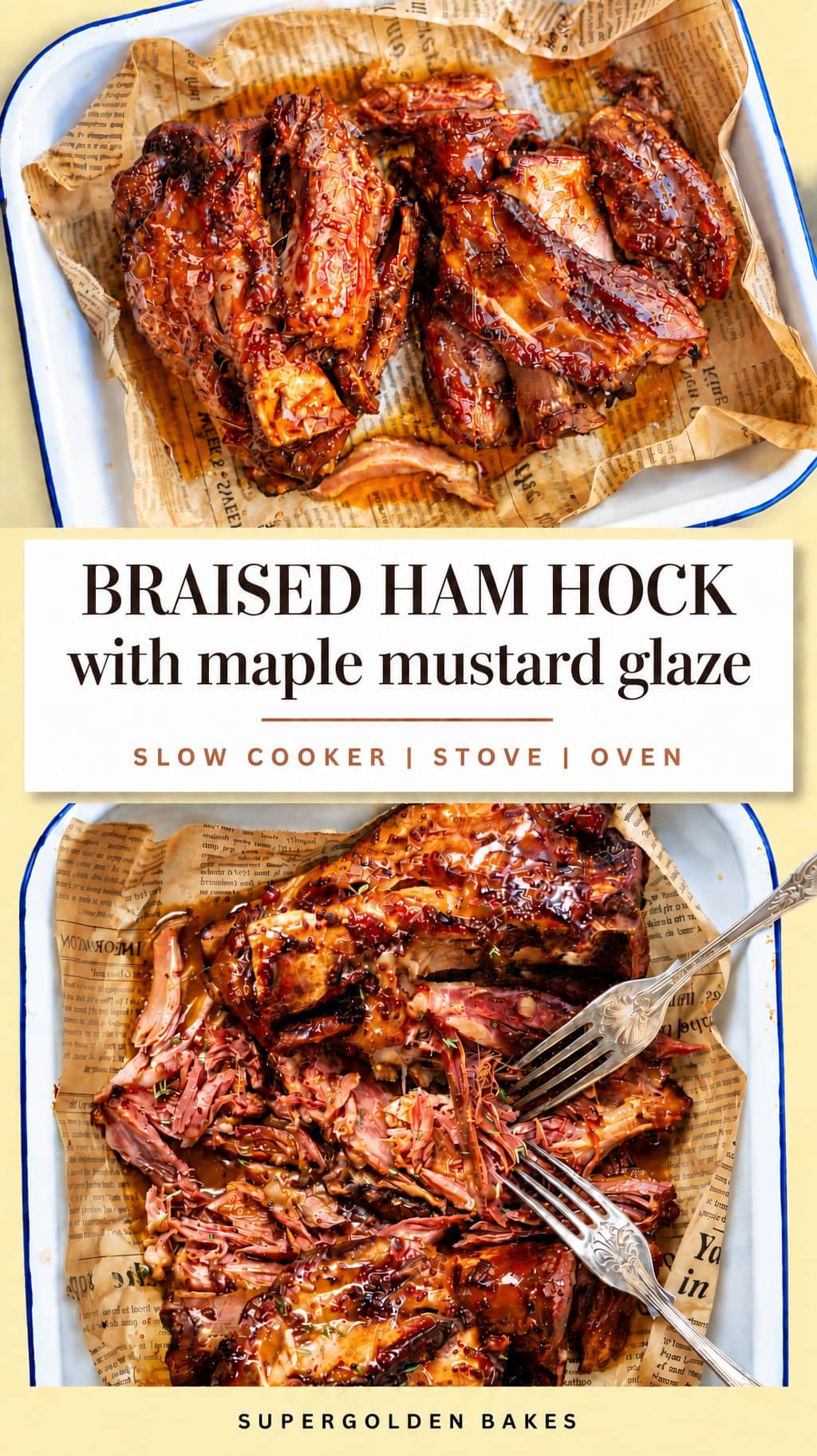
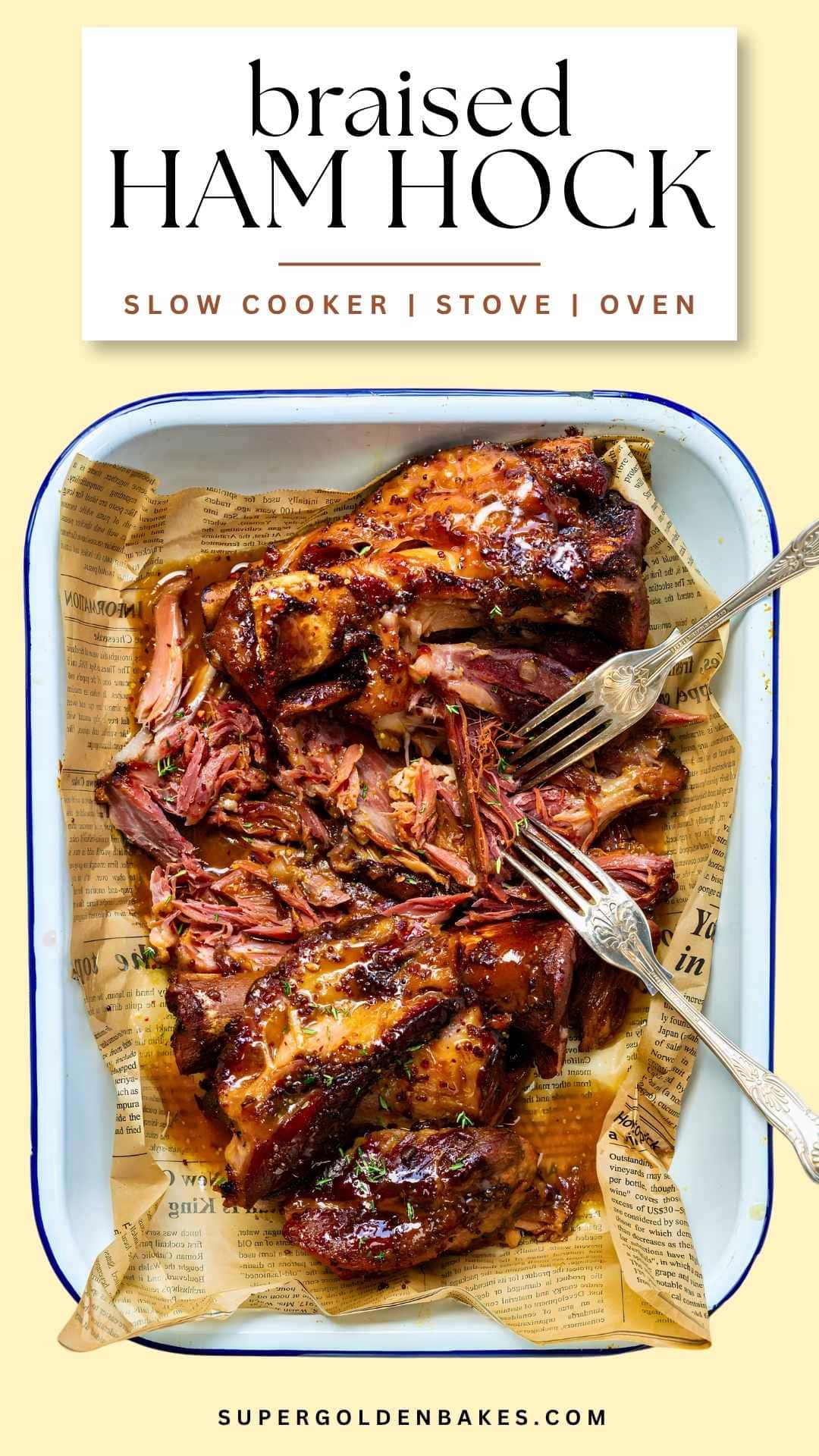
This delicious Braised Ham Hock dish is one of those recipes that makes you wonder why you ever walked past this cut at the butcher.
It’s true that ham hocks usually get a supporting role – tossed into a pot of soup or beans to lend their flavor, then fished out and forgotten. That has always seemed a bit unfair to me. Treated properly, a hock is every bit as good as a glazed holiday ham at a fraction of the price!
So what’s the secret? Cook it twice! First, you treat the meat to a long, gentle braise in a mix of cider and spices until it practically slides off the bone and leaves the makings of a seriously good gravy. Then it’s topped with a sticky maple, mustard and bourbon glaze, giving it a powerful punch of flavor. Finally, a short, fierce blast of heat in the oven or air fryer gives that glaze a perfectly glossy and caramelized coat you can’t resist!
Braise on the stove, in the oven or the slow cooker – I have included all three methods, along with my honest opinion on which is best.
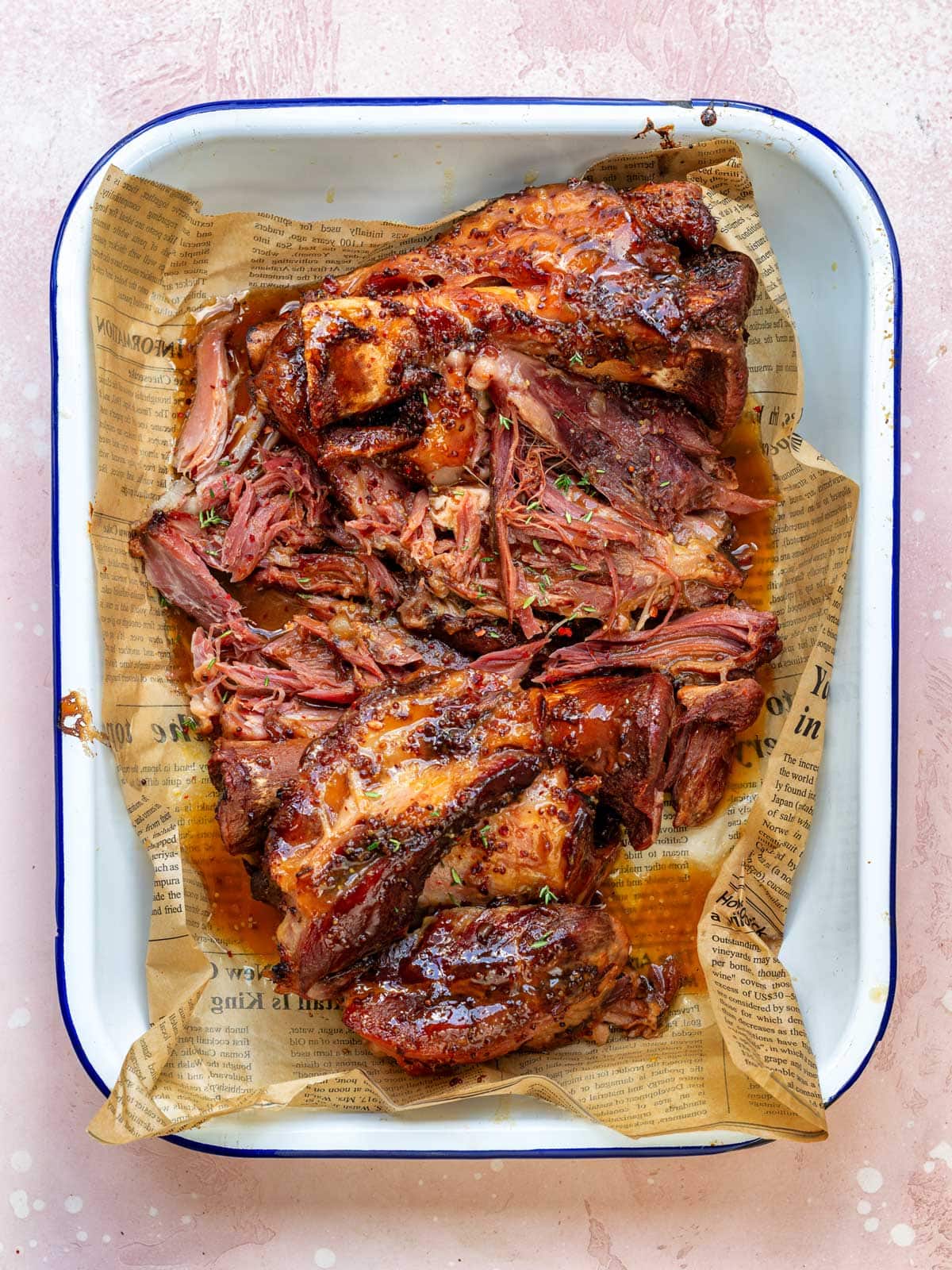
Table of Contents
- What Is a Ham Hock?
- Why You Will Love It
- Here’s What You’ll Need
- Which Braising Method Is Best?
- How to Make Braised Ham Hock
- Serving Suggestions
- What to Do With Leftovers
- Make Ahead, Storage and Freezing
- Glaze Variations
- More Slow-Cooked Pork Recipes
- Braised Ham Hock with Maple Mustard Glaze Recipe
- Frequently Asked Questions
- Troubleshooting
- More About Ham Hocks
- Is Ham Hock Cured or Smoked?
- Ham Hock vs Ham Shank
- What Does Ham Hock Taste Like?
- What Is Ham Hock Used For?
- What Is It Called in Other Countries?
- Where to Buy Ham Hocks
What Is a Ham Hock?
If you’ve never cooked one, a ham hock can look intimidating – a chunky, knobbly joint covered in a thick layer of skin. It’s the bottom section of a pig’s leg, between the meaty part of the leg and the foot (the trotter).
Because it’s a joint that does a lot of work, it’s packed with connective tissue and built around a central bone, with a thick layer of rind on the outside. That may not sound appealing, but it’s exactly what makes a hock so good. Given enough time and gentle heat, the connective tissue melts into the meat and the cooking liquid, so you end up with tender, juicy meat and a braising liquid with real body.
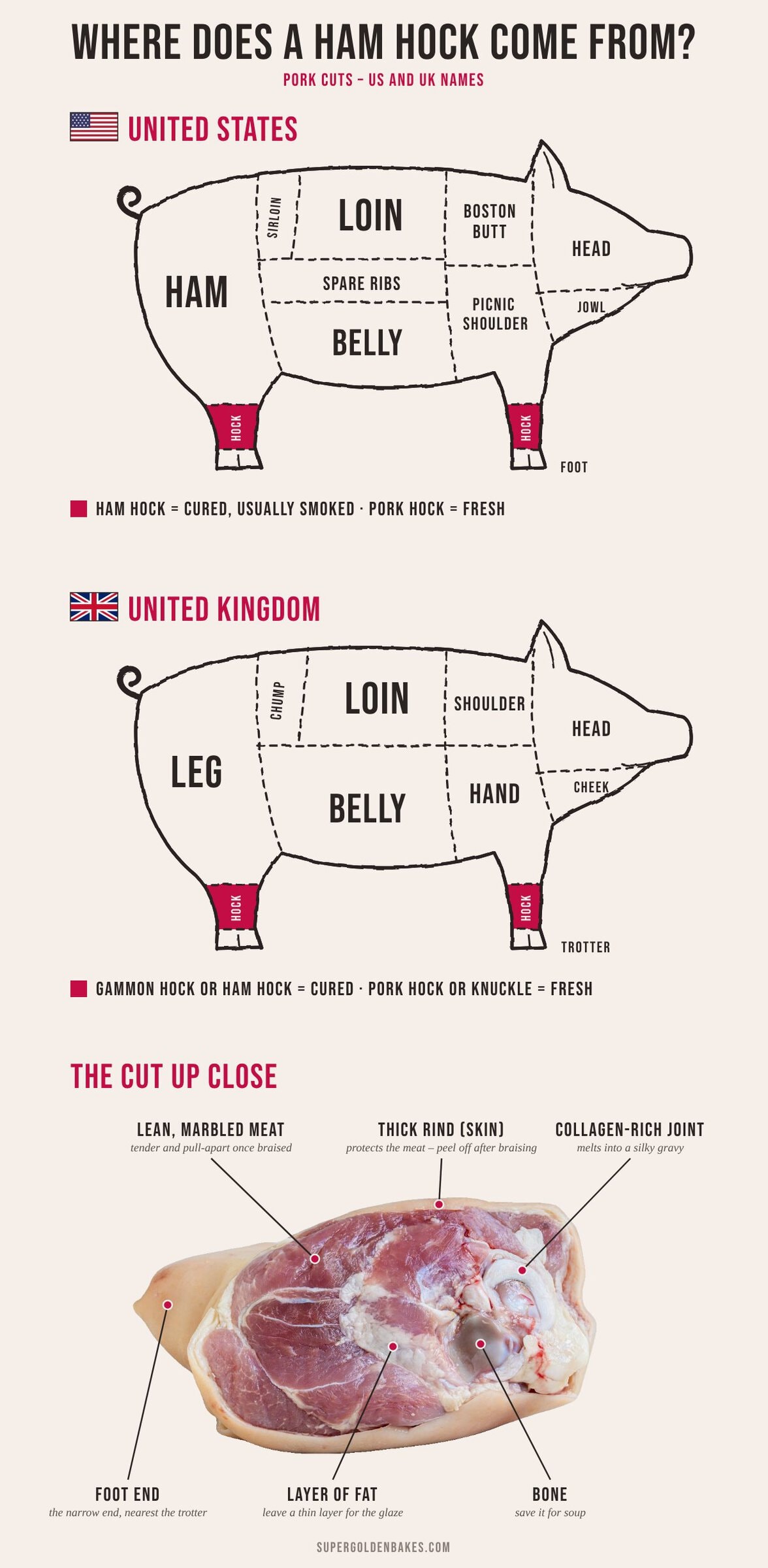
Want to know more about this cut? Jump to cured or smoked, ham hock vs ham shank, what it tastes like, what it is called in other countries and where to buy – all further down the page, below the recipe card.
Why You Will Love It
- Good value: Ham hocks are one of the most inexpensive cuts you can buy, and one large hock feeds two to three people.
- So easy: Once everything is in the pot, there is very little to do, especially if you use the slow cooker.
- Versatile: Braise on the stove, in the oven or in the slow cooker, then finish in the oven or the air fryer.
- Zero waste: The vegetables are used in the gravy, and any leftover liquid is ready-made ham stock, perfect for soup.
- It works around you: Braise it a day or two ahead and glaze it just before you want to eat.
Here’s What You’ll Need
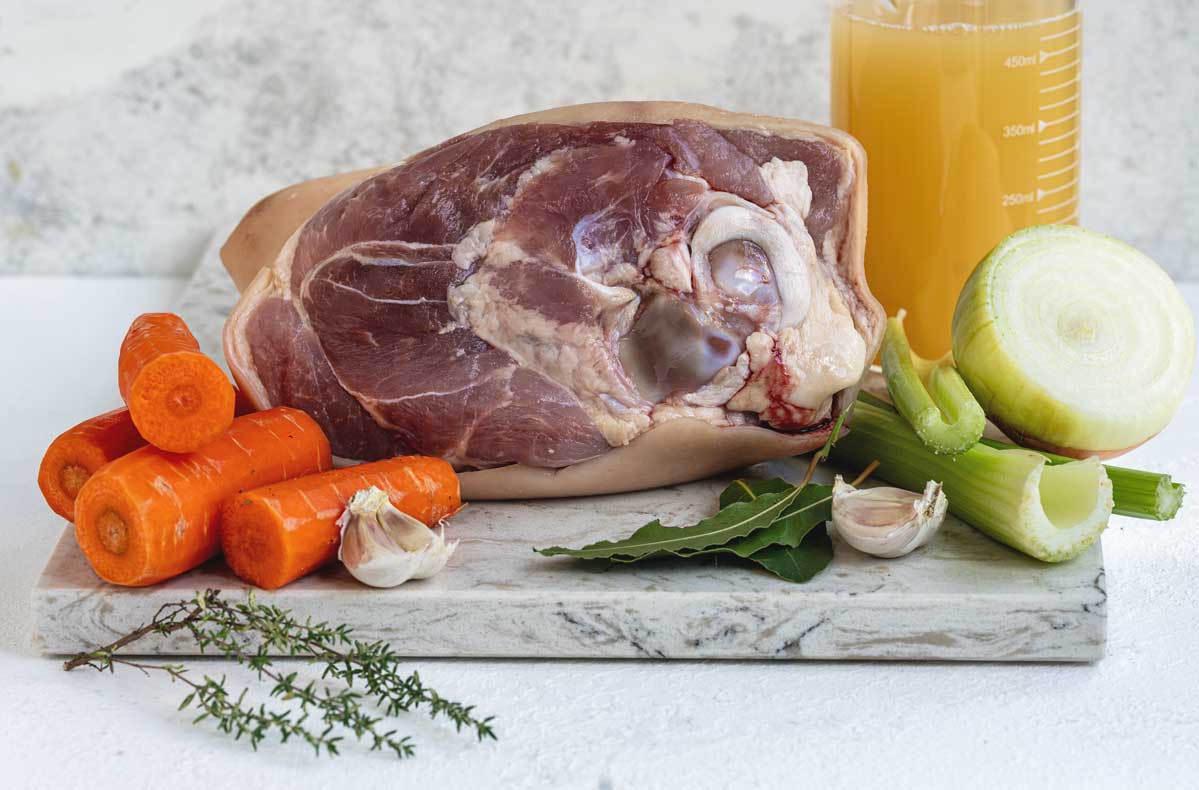
- Ham hocks (gammon hocks) – Look for a large plump hock with plenty of meat around the bone and the rind still on. Sizes vary enormously, so check the weight – small hocks of about 1 lb (450g) are suitable for one person, while a large hind hock 2¾–3¼ lb (1.2–1.5kg) serves two to three.
- Braising liquid – Cider ( = unsweetened cloudy apple juice in the UK), or low sodium chicken stock. Half cider and half stock is a happy middle ground.
- Carrots, onion, celery and garlic – these flavor the braise and then get a second life in the gravy, so nothing is thrown away.
- Allspice berries, cloves, black peppercorns and bay leaves – the classic warm spices for ham. Use whole spices so the liquid stays clear and they are easy to fish out.
- Whole grain mustard (grainy mustard) – the backbone of the glaze. The little seeds give it texture and look beautiful once it caramelizes.
- Maple syrup and brown sugar – together they give you the stickiness and that deep mahogany color.
- Apple cider vinegar – keeps the glaze from being too sweet.
- Bourbon – only a splash, stirred in at the end, totally optional.
- Cornstarch (cornflour) – to thicken the gravy.
Which Braising Method Is Best?
The good news is that all three methods give you gorgeous tender meat, so choose whichever suits your day. My top choice would be the crockpot – it’s the most economical to run, hands off, and you can simply set it to cook overnight.
| Method | Time | Best For | Worth Knowing |
|---|---|---|---|
| Slow cooker (my pick) | 8 hours on low or 6 hours on high | Hands off, and the cheapest to run | No topping up or checking needed |
| Stove | 2½–3 hours depending on weight | The fastest route | Keep it at a bare simmer and top up the liquid |
| Oven | 3–3½ hours at 325°F (160°C) | Steady, even heat | Uses the most energy – best if the oven is on anyway |
How to Make Braised Ham Hock
Soak
- Put the hocks in a large bowl or pot, cover with cold water and leave to soak in the fridge to draw out some of the salt from the cure. Allow 2 hours for a mild supermarket hock, and up to overnight for a smoked or traditionally cured butcher’s hock. Drain and discard the water.
Braise Until Tender
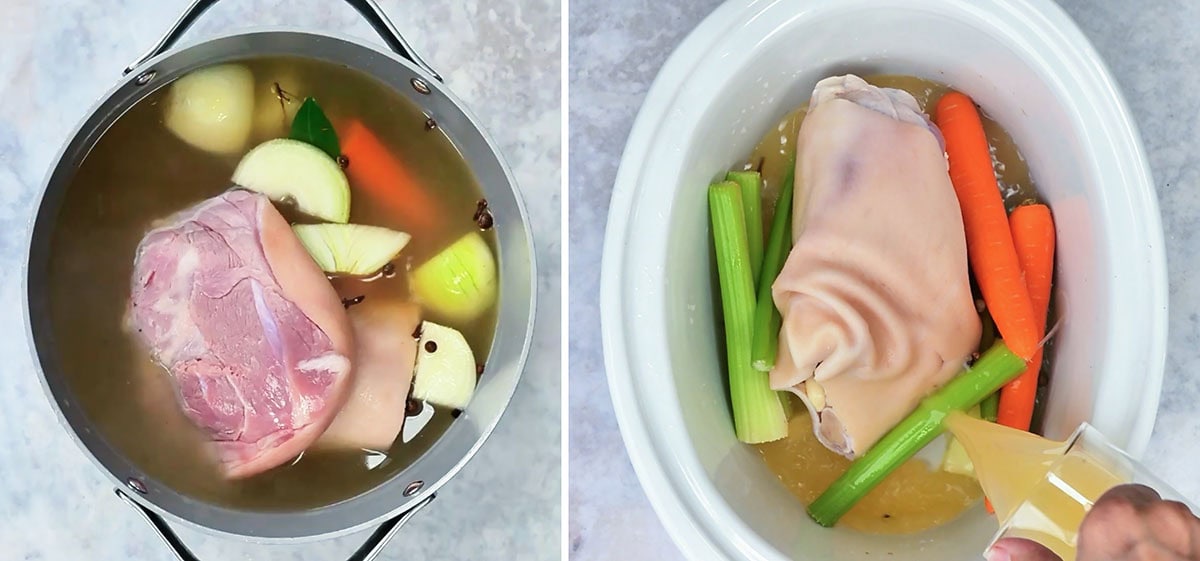
- Put the hocks in your slow cooker, a large Dutch oven or large pot. Tuck the carrots, onion, celery and garlic around them and add the allspice, cloves, peppercorns and bay leaves.
- Pour in the cider or stock, then add enough cold water to almost cover the hocks.
- Slow cooker method: Cover and cook on low for 8 hours or on high for at least 6 hours.
- Stove method: Bring to a boil and skim off any foam that rises. Turn the heat down to the lowest possible simmer, cover and cook for 2½–3 hours. Turn the hocks over once, and top up with hot water if the level drops.
- Oven method: Bring to a simmer on the stove, cover with a tight-fitting lid and transfer to a 325°F (160°C) oven for 3–3½ hours.
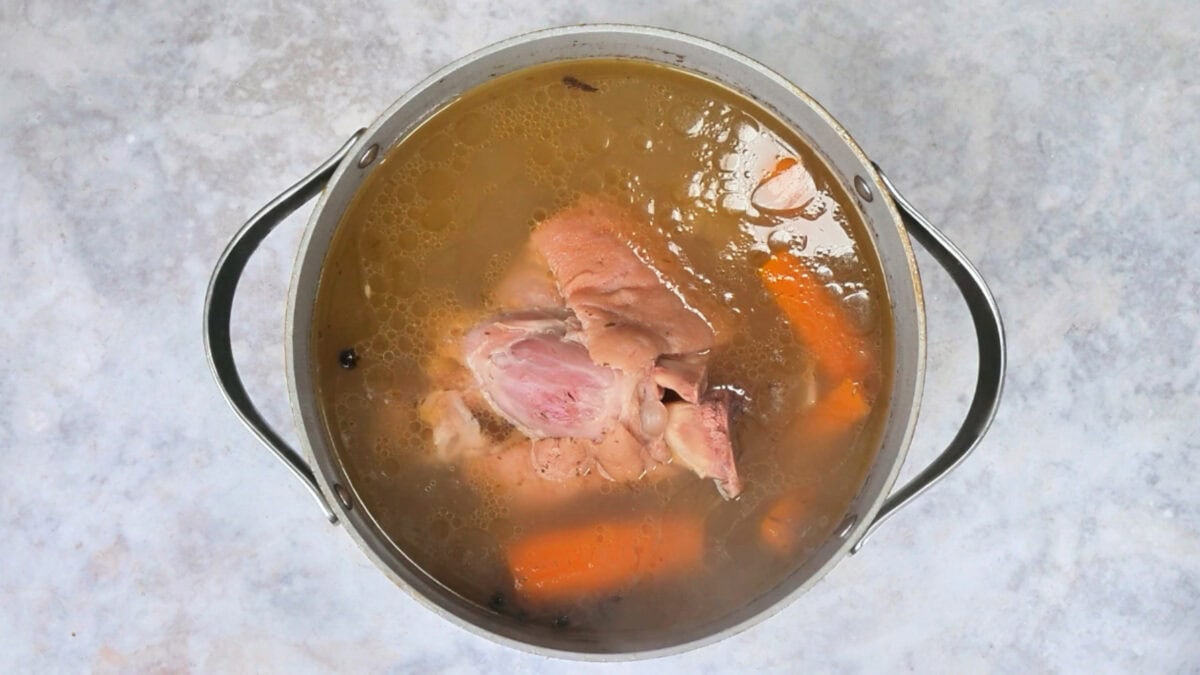
- You’ll know the hocks are ready when the meat has shrunk back from the bone and a fork slides in with no resistance at all. If there is any tug, give them longer – you can’t really overcook a hock at this stage.
Remove the Rind
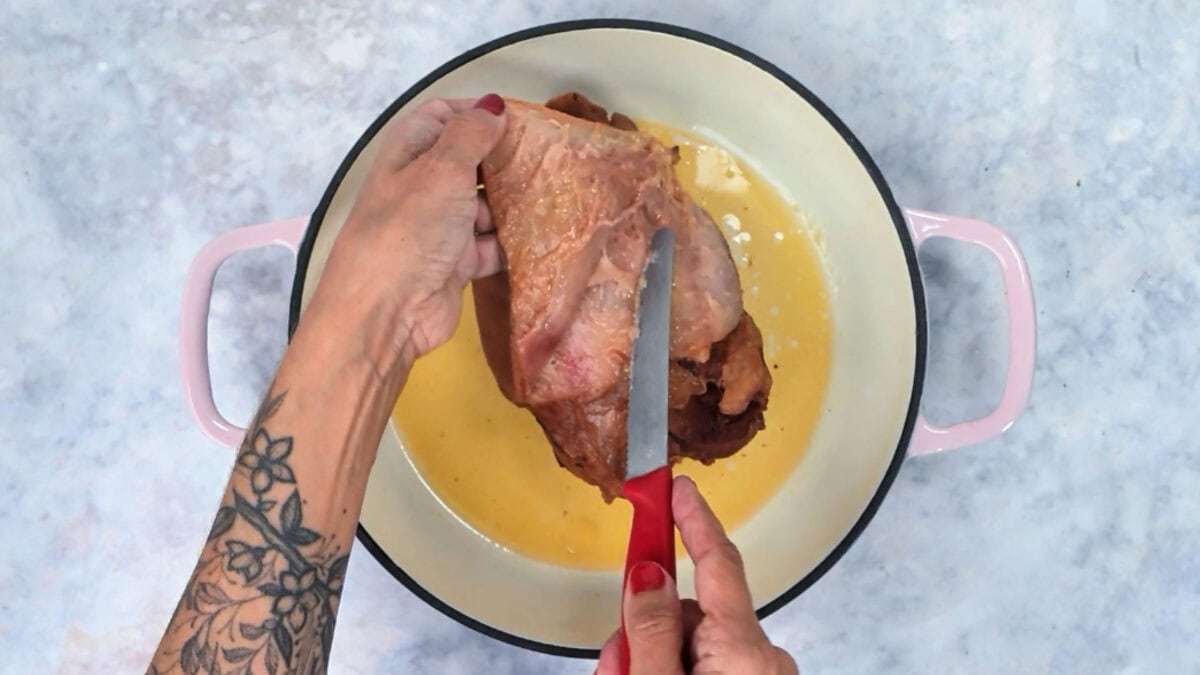
- Carefully lift the hocks onto a tray. They’ll be very soft, so use a slotted spoon and tongs to avoid them collapsing completely. Let cool for 10–15 minutes or until you can handle them comfortably.
- Peel away the rind with your fingers or a small knife. It should come off easily in large pieces. This leaves a thin layer of fat on the meat, which is what the glaze clings to and caramelizes.
Make the Gravy
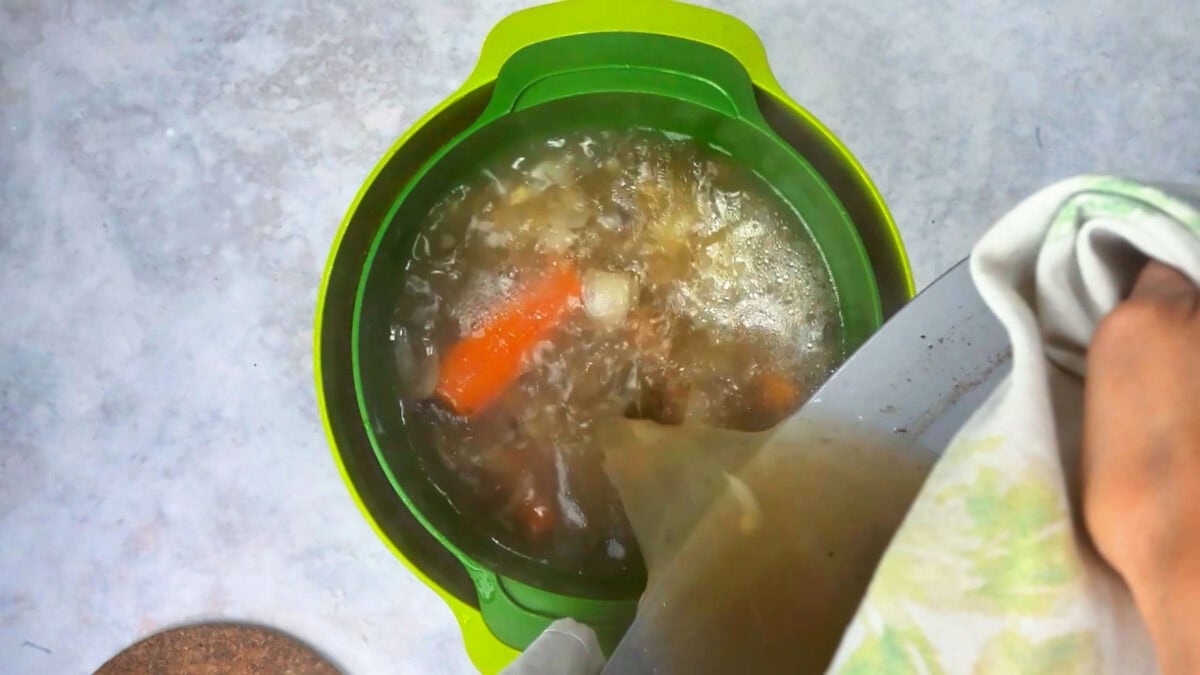
- Strain the braising liquid into a jug. Pick out and discard the bay leaves and whole spices.
- Blend the soft carrots, onion and celery with about 1 cup (250ml) of the braising liquid and ½ cup (125ml) hot water using an immersion blender.
- Pour into a saucepan and bring to a simmer. Stir the cornstarch with a little cold water to make a slurry, whisk it in and simmer for 2–3 minutes, until the gravy coats the back of a spoon.
- Taste – it almost certainly will not need salt! If it tastes too salty, thin it with water or a splash of cream.
Glaze and Finish
- Put the mustard, maple syrup, brown sugar and vinegar in a small saucepan. Simmer over low heat for 3–5 minutes, until syrupy, then take off the heat and stir in the bourbon.
- Sit the hocks on a lined tray or in the air fryer basket, and brush them generously with the glaze, getting it into every crevice.
- Oven method: Roast at 425°F (220°C) for 10–15 minutes, brushing with more glaze halfway through.
- Air fryer method: Cook at 400°F (200°C) for 8–10 minutes, brushing with more glaze halfway through.
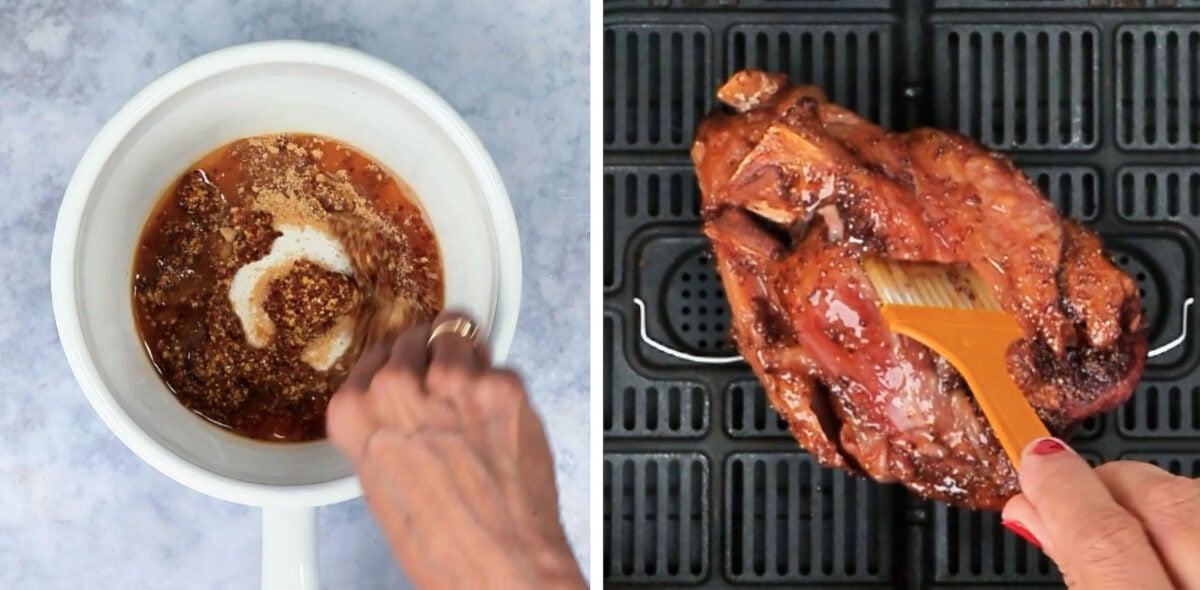
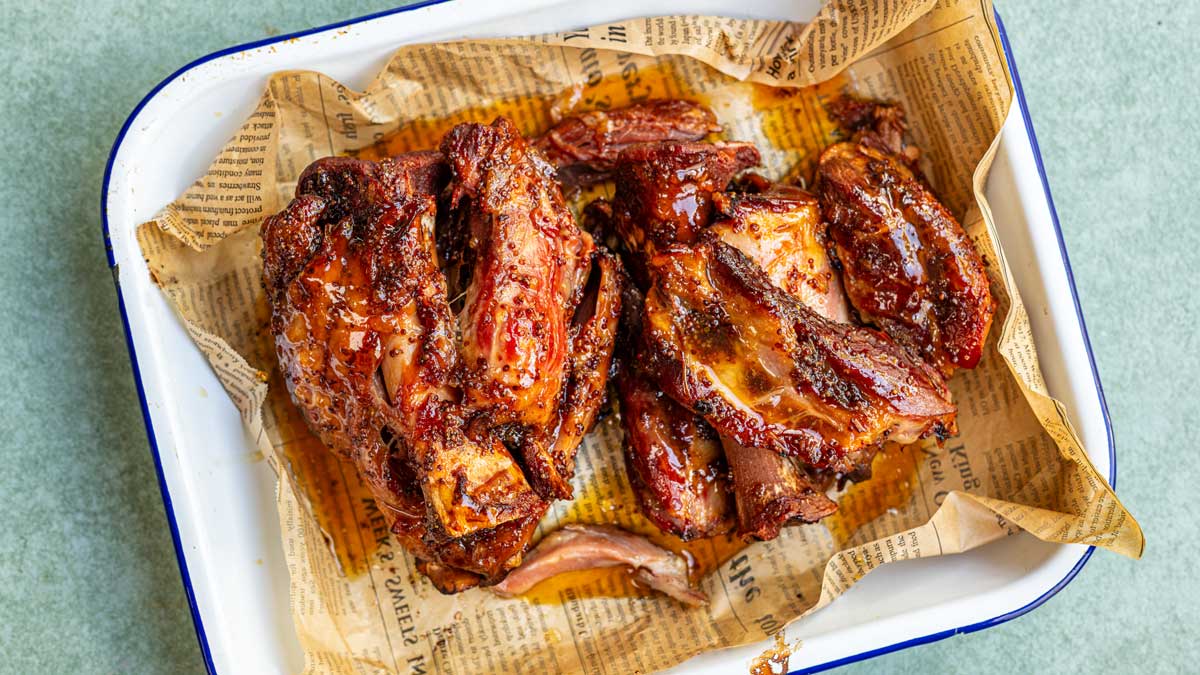
- The hocks are done when they’re dark, glossy and just catching at the edges. Rest for 5 minutes, then serve the hocks whole for everyone to dig into, or pull the meat into big, juicy pieces.
Chef’s tip
Line the Tray
The glaze sets like toffee as it cools. Line your tray or air fryer basket with parchment paper (baking paper) and you will save yourself a lot of scrubbing later.
Serving Suggestions
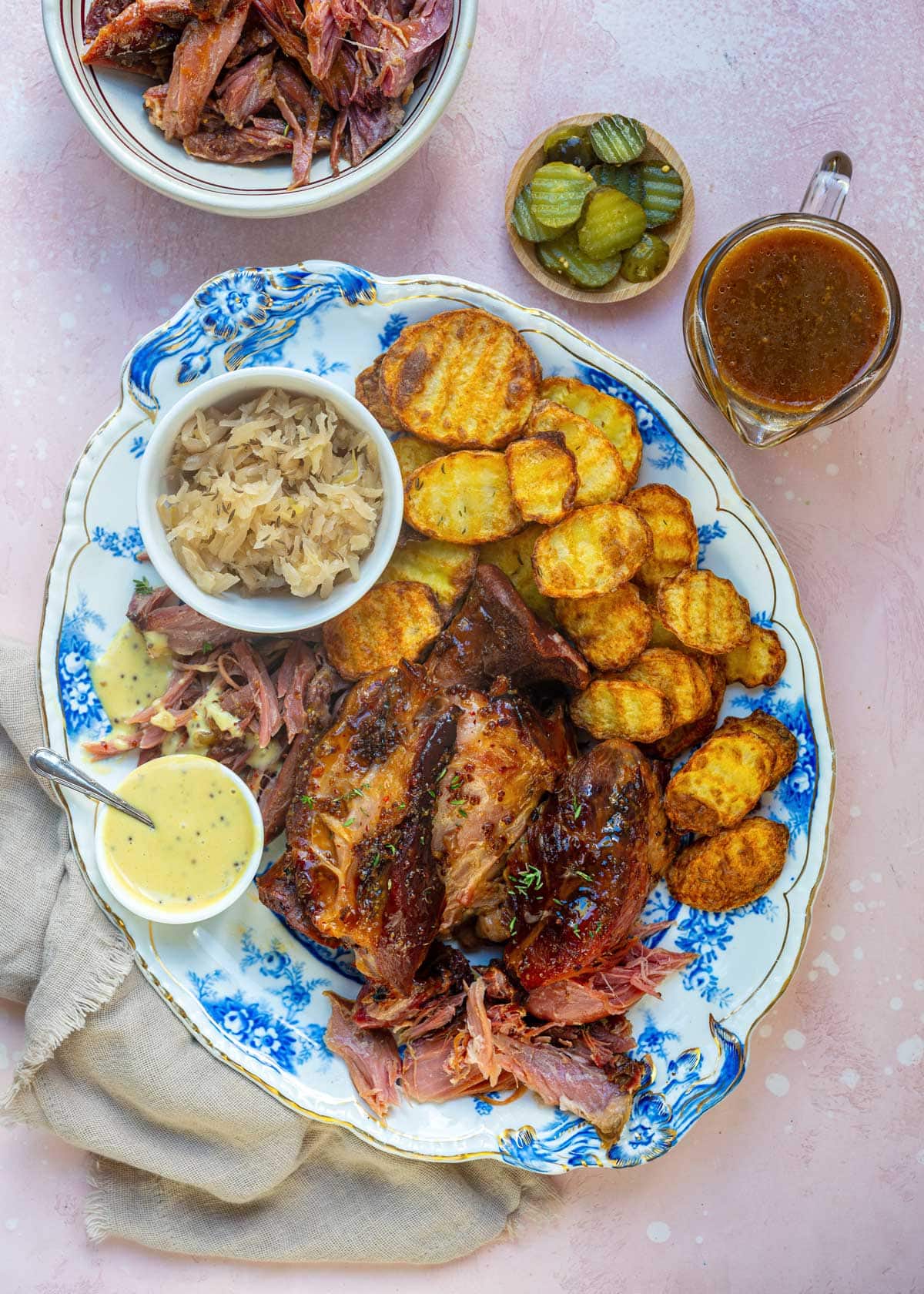
I like to serve this German-style, as a big sharing platter with plenty of sharp, tangy things to cut through the richness of the meat. But there are loads of options:
- Crispy potatoes – Air Fryer Roast Potatoes or Goose Fat Roast Potatoes. If you would rather have something soft to soak up the gravy, go for Slow Cooker Mashed Potatoes.
- Cabbage – sauerkraut is the classic, but Braised Red Cabbage or Colcannon are just as good.
- Pickles and mustard – dill pickles and a pot of mustard or a creamy mustard sauce. For sweetness, serve with a little Apple Butter.
- Bread – Guinness Bread, Quick Sourdough Bread or Air Fryer Dinner Rolls for mopping up.
- The gravy – in a jug on the side, so everyone can help themselves.
What to Do With Leftovers
If you’re lucky enough to have leftovers, you’re in for a treat. Pull the meat off the bone while it’s still warm – it’s much easier than when it’s cold – and use it in:
- Slow Cooker Pea and Ham Soup
- Add some shredded ham to the Easy Leftover Turkey Pie or my Chicken and Leek Pie
- Use in Carbonara Sauce, in place of the bacon (watch the salt!)
- Air Fryer Mac and Cheese
- Healthy Crustless Quiche or an Air Fryer Frittata
- Sandwiches on Sourdough Sandwich Bread, with mustard and pickles
- Braising liquid – this rich ham stock is a great base for the best soup, beans or lentils you have had in a long time (but taste it first, as it can be salty).
Make Ahead, Storage and Freezing
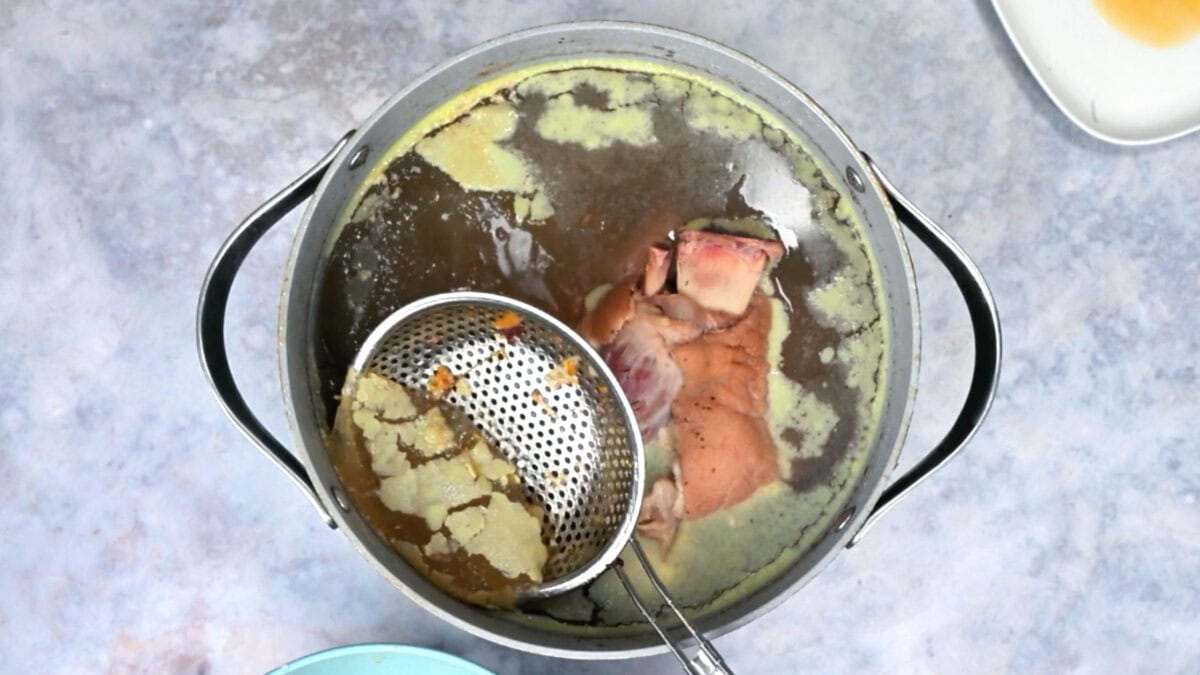
- Make ahead: This is a great recipe for entertaining. Braise the hocks up to 2 days ahead and keep them whole in the fridge, covered with a little of the liquid so they stay moist. This also allows you to skim excess fat that solidifies on top (pictured below). Bring back to a low simmer to warm the ham through before glazing.
- Fridge: Store leftover meat and gravy in separate airtight containers for up to 3 days.
- Freezer: Freeze the pulled meat with a spoonful of stock for up to 3 months. Freeze the braising liquid in portions for soup, thaw overnight in the fridge or pop into the pot from frozen.
- Reheat: Warm the meat, covered, with a splash of stock or gravy until piping hot.
- Save the jelly: Once chilled and skimmed, the leftover braising liquid sets into a jellied ham stock. Use it for soup, beans or gravy – or simmer it down by half and use it to set a ham hock terrine with the leftover meat.
Glaze Variations
The maple mustard glaze is my favorite, but the method works with almost anything sweet, sharp and sticky. A few ideas:
- Honey mustard: Swap the maple syrup for honey and use Dijon for a smoother, slightly hotter glaze.
- Marmalade: Replace the maple syrup and sugar with orange marmalade and add a squeeze of orange juice – a very British pairing with ham.
- Beer and brown sugar: Use a dark beer in place of the vinegar and bourbon for a proper Oktoberfest feel.
- Hot honey: Add a pinch of chili flakes or a spoonful of hot honey if you like some heat with your sweet.
- Cola: Simmer a cup (250ml) of cola with the brown sugar and mustard until syrupy.
- Alcohol free: The bourbon is completely optional, so simply leave it out.
More Slow-Cooked Pork Recipes
Please leave a comment and rating if you try this recipe, follow me on Pinterest for more easy recipes and don’t forget to tag me on @Instagram or TikTok so I can see your creations.
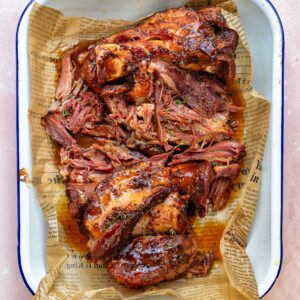
Braised Ham Hock with Maple Mustard Glaze
Equipment
Ingredients
For the braise
- 2 large ham hocks (= gammon hocks), about 2¾–3¼ lb (1.2–1.5kg) each, smoked or unsmoked
- 2 large carrots peeled
- 1 large onion halved
- 2 stalks celery
- 3 cloves garlic roughly chopped
- 8 whole cloves
- 6 allspice berries
- 2 tsp black peppercorns
- 2 bay leaves
- 4 cups (1 liter) cider (= unsweetened cloudy apple juice) or low-sodium chicken stock
- water as needed, to almost cover
For the gravy
- 1 cup (250ml) braising liquid plus the cooked carrots, onion and celery
- ½ cup (125ml) hot water
- 1 tbsp cornstarch (= cornflour), mixed with 2 tbsp cold water
For the glaze
- 3 tbsp whole grain mustard (= grainy mustard)
- 3 tbsp maple syrup
- 3 tbsp light brown sugar
- 1 tbsp apple cider vinegar
- 1 tbsp bourbon optional
Instructions
Soak and rinse
- Put the hocks in a large bowl or pot, cover with cold water and soak in the fridge to draw out some of the salt. Allow 2 hours for a mild supermarket hock, or overnight for a smoked or traditionally cured butcher’s hock.2 large ham hocks
- Drain, rinse under cold running water and pat dry.
Braise until tender
- Put the hocks in your slow cooker, a large Dutch oven or a large pot. Tuck the carrots, onion, celery and garlic around them and add the allspice, cloves, peppercorns and bay leaves.2 large carrots, 1 large onion, 2 stalks celery , 6 allspice berries, 8 whole cloves, 2 tsp black peppercorns, 2 bay leaves, 3 cloves garlic
- Pour in the cider or stock, then add enough cold water to almost cover the hocks.4 cups (1 liter) cider, water
- Slow cooker: Cover and cook on low for 8 hours or on high for at least 6 hours.
- Stove: Bring to a boil and skim off any foam. Reduce to the lowest possible simmer, cover and cook for 2½–3 hours, turning the hocks once and topping up with hot water if needed.
- Oven: Bring to a simmer on the stove, cover with a tight-fitting lid and cook at 325°F (160°C) for 3–3½ hours.
- The hocks are ready when the meat has shrunk back from the bone and a fork slides in with no resistance.
Remove the rind
- Carefully lift the hocks onto a tray using a slotted spoon and tongs. Let cool for 10–15 minutes, or until you can handle them comfortably.
- Peel away the rind with your fingers or a small knife, leaving a thin layer of fat on the meat for the glaze to cling to.
Make the gravy
- Strain the braising liquid into a jug. Discard the bay leaves and whole spices.
- Blend the soft carrots, onion and celery with the braising liquid and hot water using an immersion blender.1 cup (250ml) braising liquid, ½ cup (125ml) hot water
- Pour into a saucepan and bring to a simmer. Whisk in the cornstarch slurry and simmer for 2–3 minutes, or until the gravy coats the back of a spoon.1 tbsp cornstarch
- Taste before seasoning – it is unlikely to need salt. If it tastes too salty, thin it with water or a splash of cream.
Glaze and finish
- Put the mustard, maple syrup, brown sugar and vinegar in a small saucepan. Simmer over low heat for 3–5 minutes, until syrupy, then take off the heat and stir in the bourbon.3 tbsp whole grain mustard, 3 tbsp maple syrup, 3 tbsp light brown sugar, 1 tbsp apple cider vinegar, 1 tbsp bourbon
- Sit the hocks on a lined tray or in the air fryer basket and brush generously with the glaze.
- Oven: Roast at 425°F (220°C) for 10–15 minutes, brushing with more glaze halfway through.
- Air fryer: Cook at 400°F (200°C) for 8–10 minutes, brushing with more glaze halfway through.
- The hocks are done when they are dark, glossy and just catching at the edges. Rest for 5 minutes, then serve whole or pulled into large pieces, with the gravy.
Notes
- Which hock to buy: This recipe is written for a cured hock, smoked or unsmoked. In the UK ask for a gammon hock or ham shank. A fresh, uncured pork hock also works – skip the soak and season the braising liquid with salt. Note that hocks come from both the back legs and the front legs. The back (hind) hocks sit just below the ham and tend to be bigger and meatier. The front ones sit below the shoulder and are a little smaller. Both cook in the same way but smaller ones may need less time.
- Never let it boil hard: A bare simmer keeps the meat tender. The slow cooker does this for you. Keep covered!
- Mind the salt: Use low-sodium stock and taste the gravy before adding any salt.
- Line the tray: The glaze sets like toffee, so line the tray or air fryer basket with parchment paper (baking paper).
- Make ahead: Braise the hocks up to 2 days ahead and keep them whole in the fridge with a little of the liquid. Bring to a simmer to warm through before adding the glaze.
- Storage: Keep leftover meat and gravy in separate airtight containers in the fridge for up to 3 days, or freeze the pulled meat with a spoonful of stock for up to 3 months.
- Save the liquid: The leftover braising liquid is a rich ham stock for soup, beans or lentils.
- Save the jelly: Chill the leftover braising liquid overnight. The fat sets on top and lifts off easily, leaving a jellied ham stock underneath. Use it for soup, beans or gravy – or simmer it down by half and use it to set a ham hock terrine with the leftover meat.
- Braising time by hock size (a guide only – the hock is ready when the meat pulls back from the bone and a fork slides in easily):
| Hock size (each) | Stove | Oven 325°F (160°C) | Slow cooker |
|---|---|---|---|
| Small, 1–1½ lb (450–700g) | 1½–2 hours | 2–2½ hours | 5–6 hours low or 3–4 high |
| Medium, 1½–2¼ lb (700g–1kg) | 2–2½ hours | 2½–3 hours | 6–7 hours low or 4–5 high |
| Large, 2¾–3¼ lb (1.2–1.5kg) | 2½–3 hours | 3–3½ hours | 8 hours low or 6 high |
Nutrition
Nutritional information is always approximate, and will depend on quality of ingredients and serving sizes.
Frequently Asked Questions
For a cured or smoked hock, yes. Soaking draws out excess salt, so both the meat and the gravy taste well seasoned and not salty. A fresh, uncured pork hock does not need soaking.
Go by tenderness, not the clock. The meat should be pulling away from the bone and a fork should slide in easily. If you like to check with a thermometer, look for around 195–205°F (90–95°C), which is the point where the connective tissue has melted.
A large butcher’s hock of around 2¾–3¼ lb (1.2–1.5kg) serves two to three people as a main course. Smaller supermarket hocks serve one or two.
Yes. Soak it overnight, braise it in water or low-sodium stock and taste the gravy before you season it.
Covered for the braise, so the liquid does not evaporate. Uncovered for the glaze, so it can caramelize.
After braising, the rind is soft, not crisp, so I take it off. German Schweinshaxe, with its crackling, is roasted from raw – a different method altogether.
It’s the same part of the pig, but pork knuckle usually means the fresh, uncured cut, while a ham hock has been cured.
A ham shank or a small gammon joint – a boneless joint will need less time.
No! (although my three dogs would beg to differ). Cooked bones can splinter and the meat is far too salty and likely to give them an upset stomach.
Troubleshooting
| Problem | Cause | Fix |
|---|---|---|
| Meat is too salty | Hock not soaked long enough, or salted stock used | Soak longer next time. Serve with unsalted potatoes and plenty of sharp sides |
| Gravy is too salty | Braising liquid concentrated the cure | Thin with water, unsalted stock or cream. Use less braising liquid when blending |
| Meat is tough | Not cooked long enough, or boiled too hard | Keep cooking at a bare simmer until a fork slides in |
| Glaze burned | Too close to the heat, or sugar pooling on the tray | Brush on in two thin coats and check a few minutes early |
| Glaze will not stick | Surface too wet, or too little fat left on | Pat the hock dry and leave a thin layer of fat |
| Meat fell apart when lifting | Braised very soft | Lift with a slotted spoon and tongs together, or glaze the pieces as they are |
| Gravy is thin | Not enough vegetables or slurry | Simmer longer or add a little more slurry |
More About Ham Hocks
Is Ham Hock Cured or Smoked?
This can be confusing, so it’s worth clarifying. Strictly speaking, the word “ham” means the pork has been cured, so a ham hock is a cured hock. In practice, the labels change depending on where you live:
- In the US, most ham hocks are cured and smoked. If it has not been cured at all, it is usually labeled pork hock or fresh pork hock.
- In the UK, the raw, cured joint is usually sold as a gammon hock, either smoked or unsmoked. “Ham hock” often means one that has already been cooked, so if you want to cook it yourself, ask your butcher for a gammon hock. To make things more interesting, mine was sold as a “Ham Shank (Gammon Hock)”.
This recipe is written for a cured hock, smoked or unsmoked – I used an unsmoked one. Smoked hock works beautifully too and gives a deeper, almost bacon-like flavor – it just needs a longer soak.
You can also use a fresh, uncured pork hock, but it will taste like slow-roast pork, not ham. In that case, skip the soak and season the braising liquid with salt.
Ham Hock vs Ham Shank
These terms get mixed up all the time. The shank is the section just above the hock – it has more meat on it and makes a very good substitute. The hock is the joint below, with a bit less meat and more rind and collagen.
In the UK, hock, shank and knuckle are often used for the very same cut, so go by what it looks like and what your butcher tells you.
What Does Ham Hock Taste Like?
Imagine the very best bits of a baked ham – the dark, sticky, slightly sweet pieces from near the bone that everyone fights over. That is what a whole hock tastes like. The texture is soft and pull-apart, much closer to pulled pork than to neat slices of ham. A smoked hock tastes smokier and more like good bacon.
What Is Ham Hock Used For?
Most of the time, it’s simmered to flavor something else. For example, it can be used in split pea soup, ham and bean soup, collard greens or a pot of lentils. But in Germany, Poland and much of central Europe, the hock is the star of the plate, served whole with potatoes, cabbage and plenty of mustard. That is the spirit of this recipe.
What Is It Called in Other Countries?
Almost every pork-loving country has a name for this cut and a favorite way to cook it, which tells you how good, flexible and economical it is.
| Country | Name | How It’s Sold / Served |
|---|---|---|
| United States | Ham hock, smoked ham hock, pork hock (fresh), pork knuckle | Mostly smoked, used to season beans, greens and soup |
| United Kingdom | Gammon hock, ham hock, ham shank, bacon hock, knuckle | Cured, smoked or unsmoked – soup, terrine, pies |
| Ireland | Bacon hock, ham shank | Cured and boiled with cabbage |
| Germany | Eisbein (cured and boiled), Schweinshaxe (fresh and roasted until crisp) | Served whole with sauerkraut and potatoes |
| Austria | Stelze | Roasted whole |
| Poland | Golonka | Braised or roasted, often with beer |
| Czech Republic | Koleno | Roasted whole with mustard and horseradish |
| France | Jarret de porc, jambonneau | Braised with lentils or in choucroute |
| Italy | Stinco di maiale | Roasted shank |
| Philippines | Pata | Crispy pata, deep fried |
Where to Buy Ham Hocks
Ham hocks are easier to find than you might think, but you do sometimes have to ask.
In the US
- Grocery stores: Look in the meat department near the bacon, ham and other smoked pork. Smoked ham hocks are widely stocked, often in packs of two or three smaller pieces. They are sometimes in the freezer section too.
- The butcher counter or a local butcher: The best bet for large, meaty, whole hocks. If you don’t see any, just ask – they can often order them in.
- Latin American, Asian and Eastern European markets: Good for fresh (uncured) pork hocks and often for smoked ones as well.
- Farmers markets and online butchers: Pasture-raised pork farms nearly always have hocks, because few people ask for them.
In the UK
- Your local butcher: Ask for a gammon hock or ham shank, and say whether you want smoked or unsmoked. They are usually vacuum packed and freeze well.
- Supermarket butcher counters: Worth checking, though stock varies from store to store. Note that most of the gammon shanks in the chilled aisle are already slow cooked and come with a glaze sachet – those are ready meals, not what you need here.
- Online butchers and farm shops: Many deliver raw gammon hocks nationwide.


