
Sourdough Sandwich Bread (Easy & Beginner Friendly!)

, Updated Aug 31, 2026
This post may contain affiliate links. Please read our disclosure policy.
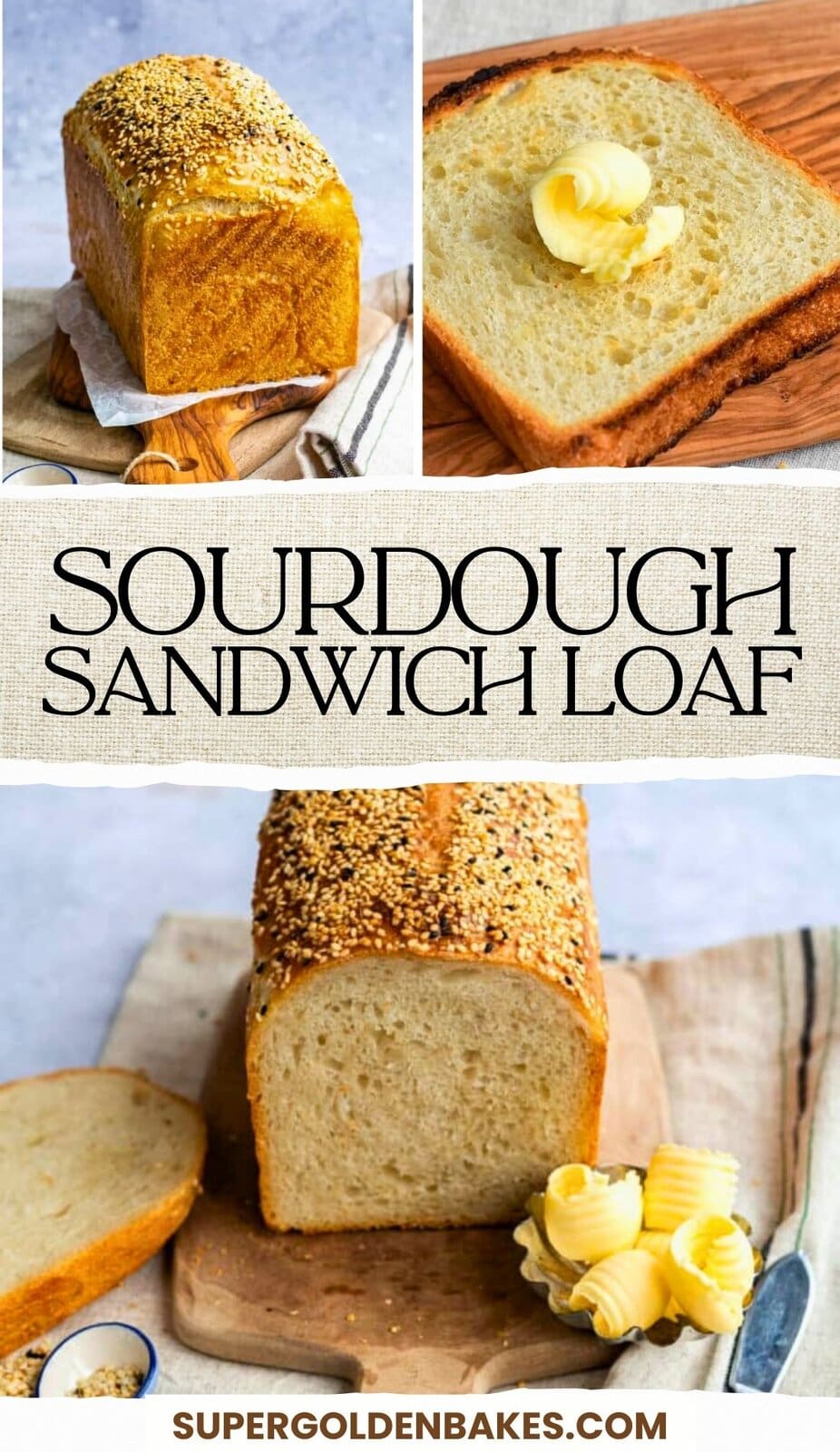
Sourdough Sandwich Bread – this sourdough loaf bread is perfect for toasting and sandwiches and easy enough for beginners.
Check out my other sourdough recipes: Air Fryer Sourdough Bread, Quick Sourdough Bread With Yeast, Easy Sourdough Focaccia and more.
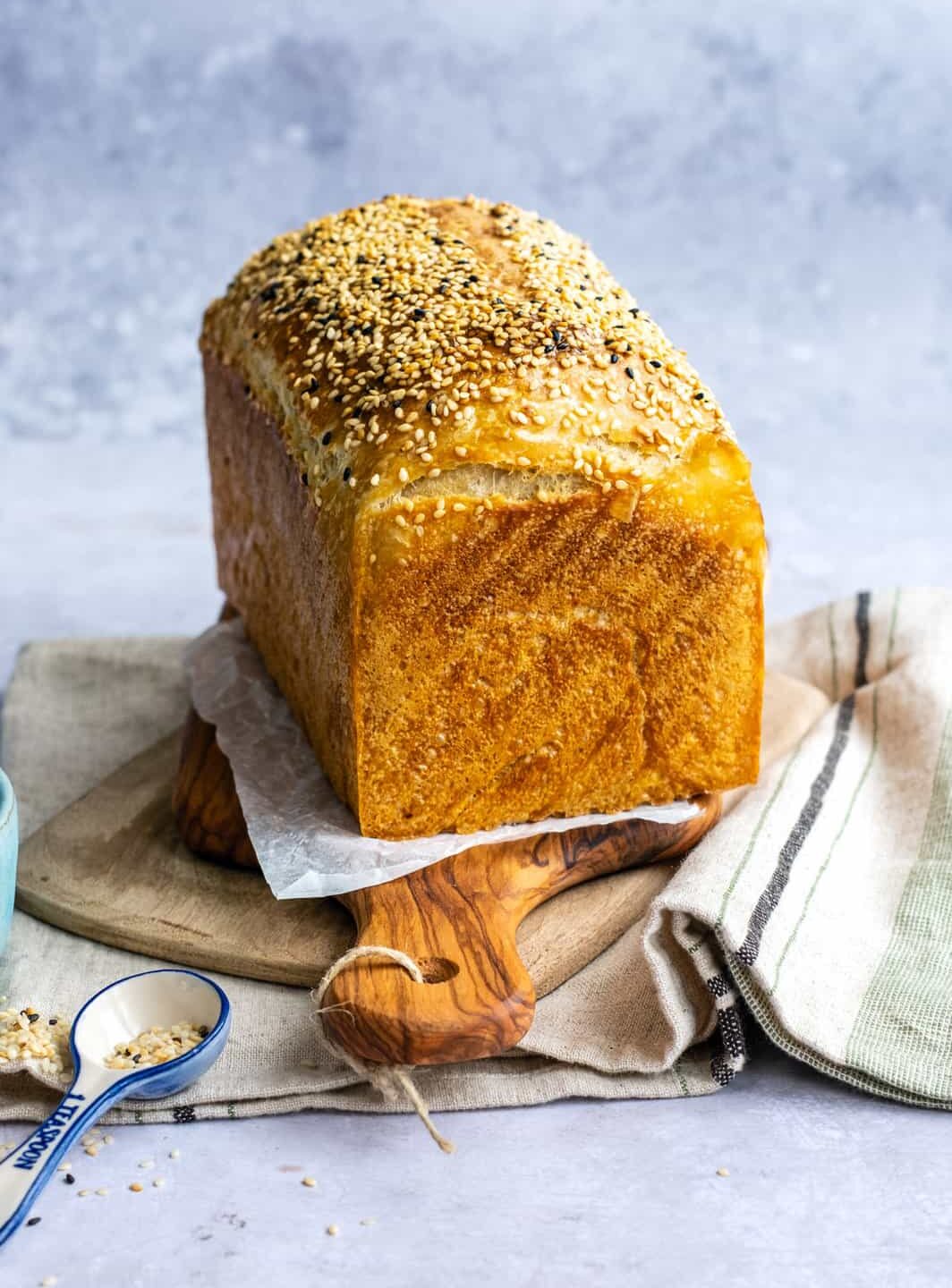
Want to bake sourdough sandwich bread but the process and jargon sounds too fussy and intimidating? I am with you!
Whether you’re a sourdough beginner or a seasoned baker exploring a more sandwich-friendly loaf, this easy recipe walks you through each step so you end up with gorgeous, delicious bread every time.
I know you will love the unmistakeable tang of sourdough and deliciously crisp crust of this bread – why buy it when you can bake?
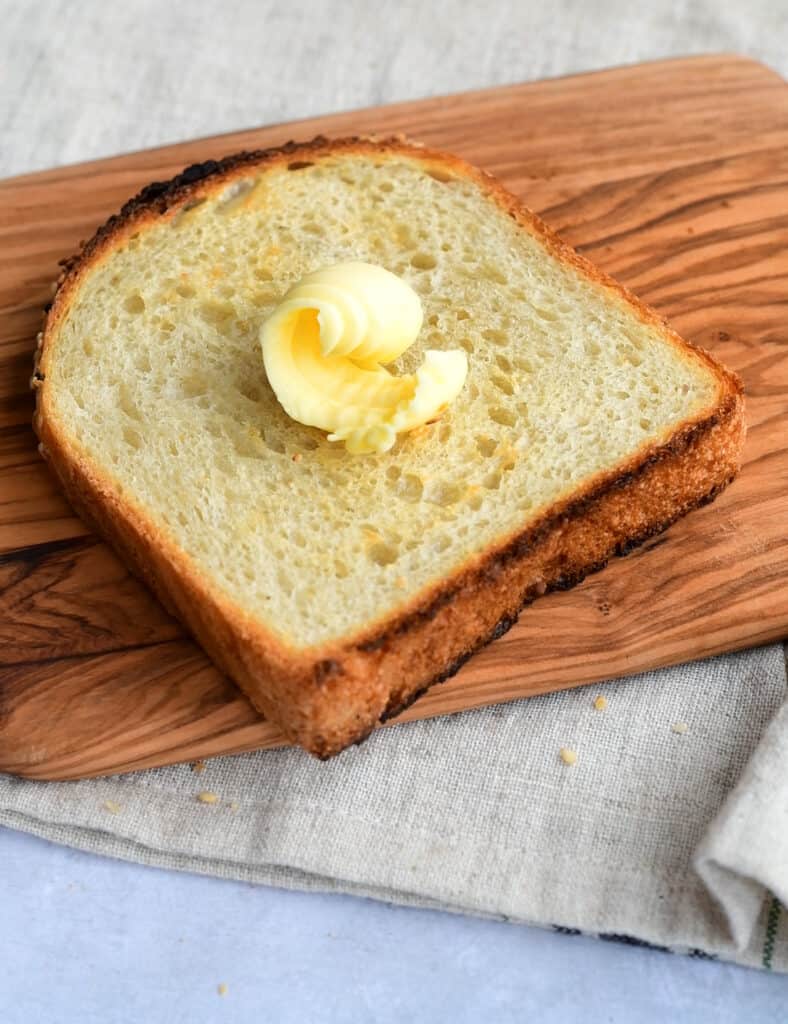
Here’s What You’ll Need
Sourdough bread is wonderfully simple, requiring few ingredients and tools. Here’s what you will need:
- Sourdough starter – active and bubbly
- Water – ideally filtered or bottled water
- Strong white bread flour
- Sea salt
- Sugar or honey (optional)
- Olive oil, for greasing
- Egg wash or milk (to brush on bread – optional)
- Sesame seeds, poppy seeds, everything bagel seasoning (optional)
In terms of tools you just need digital scales, a large mixing bowl, a straight sided container (I use a Pyrex dish) and a loaf pan.

How to Make Sourdough Sandwich Bread
Prepare the Bread Dough
- Feed the starter with flour and lukewarm water. The starter is ready to use when it has doubled in size, bubbly and floating in water (float test).
- Measure your active starter into a mixing bowl. Add water and mix well. Stir in ⅔ of the flour, salt and sugar if using. Cover the bowl and rest for 30 minutes.
- Add the remaining flour, using your hands to incorporate the flour. You aren’t kneading the dough, just making sure the ingredients are combined. If the dough is really dry add water, a few drops at a time.
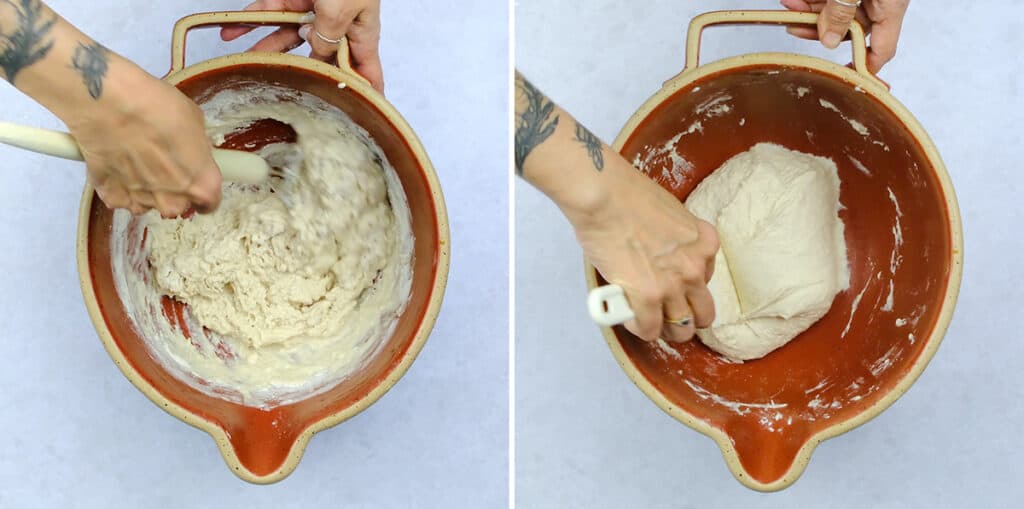
- Grease the bowl with a little olive oil and turn the dough over so that it is oiled on all sides. Cover and rest for 30 minutes.
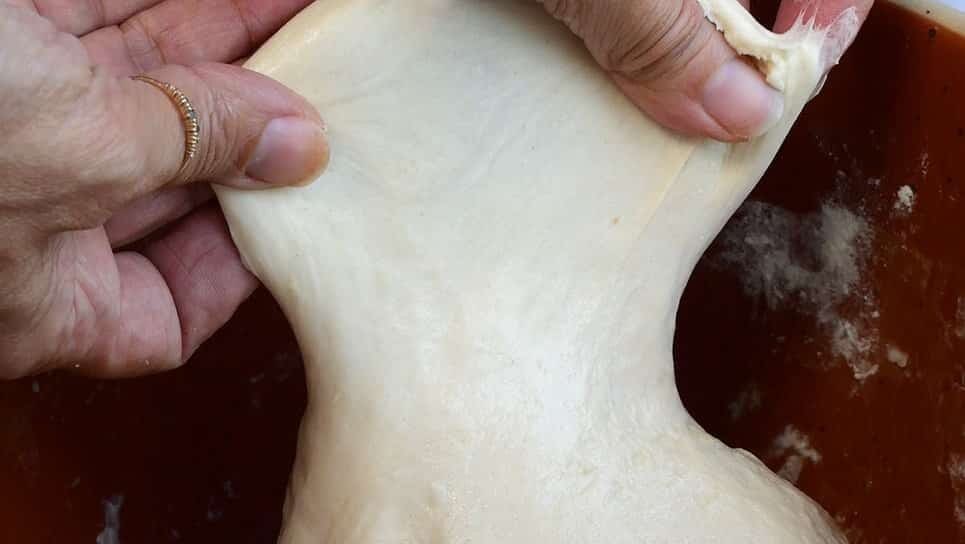
- Rub a little olive oil on your hands and do a series of “stretch and folds”. Grab the underside of the dough and fold over the top. Rotate the bowl a quarter turn and repeat until you have completed four sets of stretching and folding.
- The dough should be smooth and elastic by now – if not you can repeat another set of folds after 30 minutes.
First Rise
- Transfer the dough to a greased pyrex dish, cover and leave overnight (8-10 hours) at room temperature or in the fridge for 10-12 hours if the weather is really warm. The dough should have doubled and filled your container.
- Tip the dough onto your worktop. Gently stretch it to a rectangular shape. Fold the dough into three sections, like a letter (letter fold).
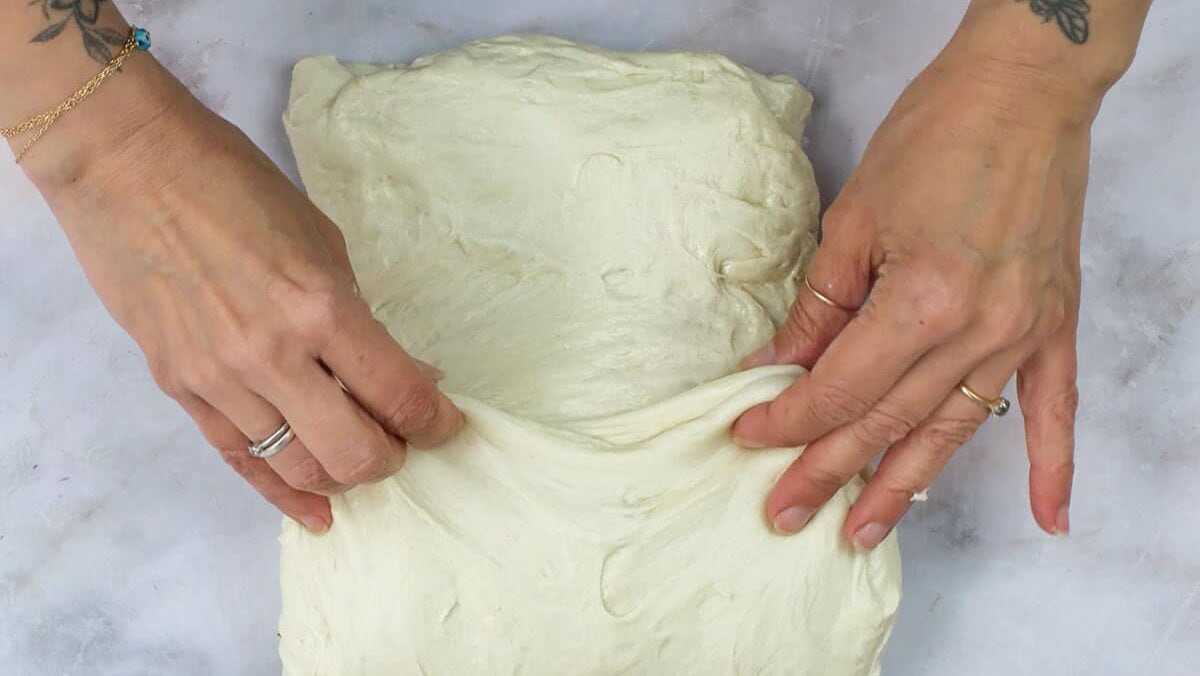
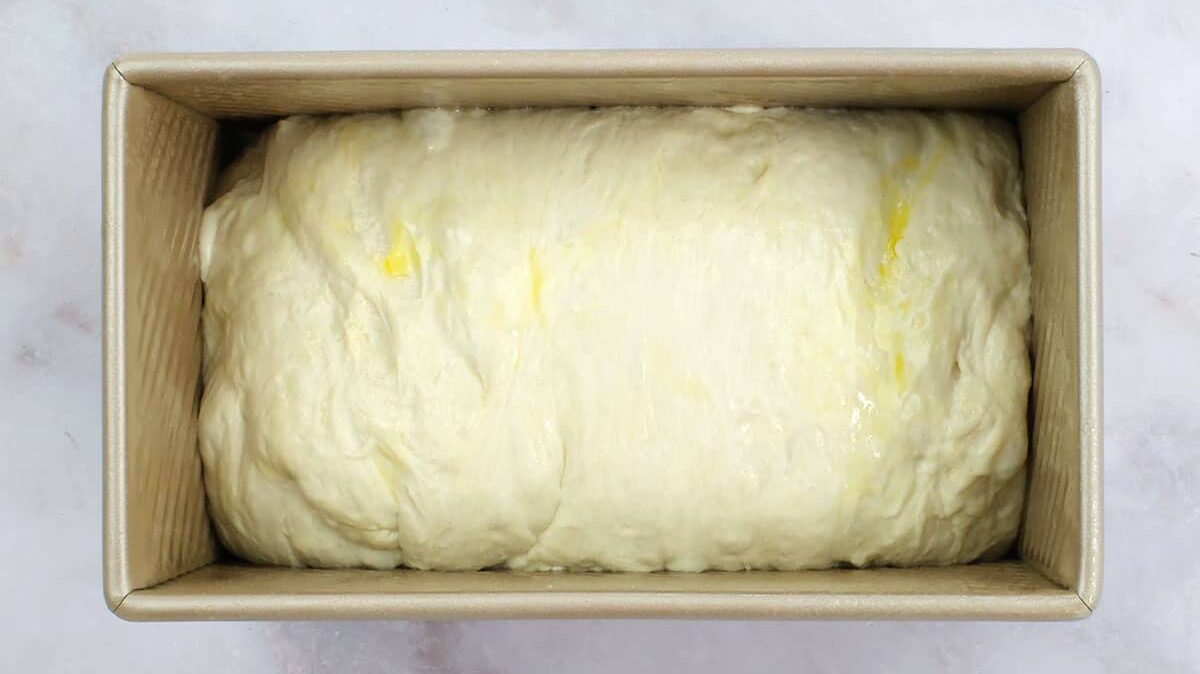
- Roll the dough into a rough oval shape, using an oiled bench scraper to help you if needed. Transfer the dough into a greased 8.5×4 inch loaf pan (I used this Pullman Loaf Pan without the lid).
Second Rise
- Cover the loaf pan with a damp towel or plastic wrap and leave it to rise once more. The dough will come to about an inch from the top of the pan. This can take 5-6 hours, depending on the ambient temperature.
Bake Your Sourdough Loaf
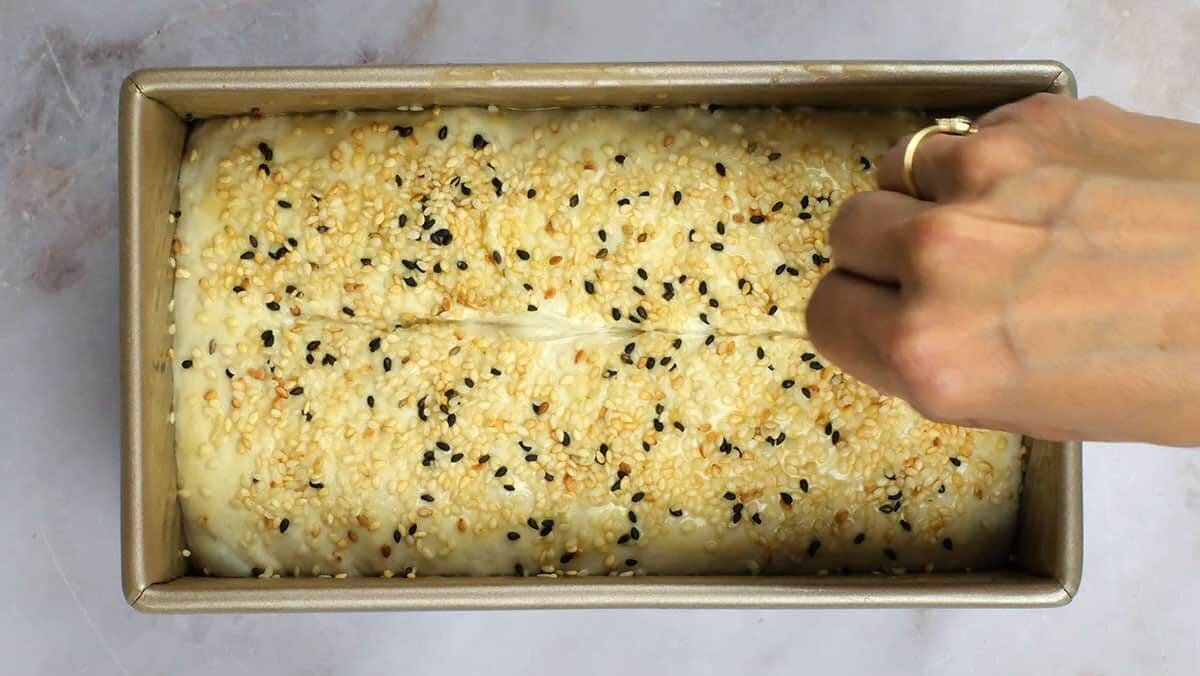
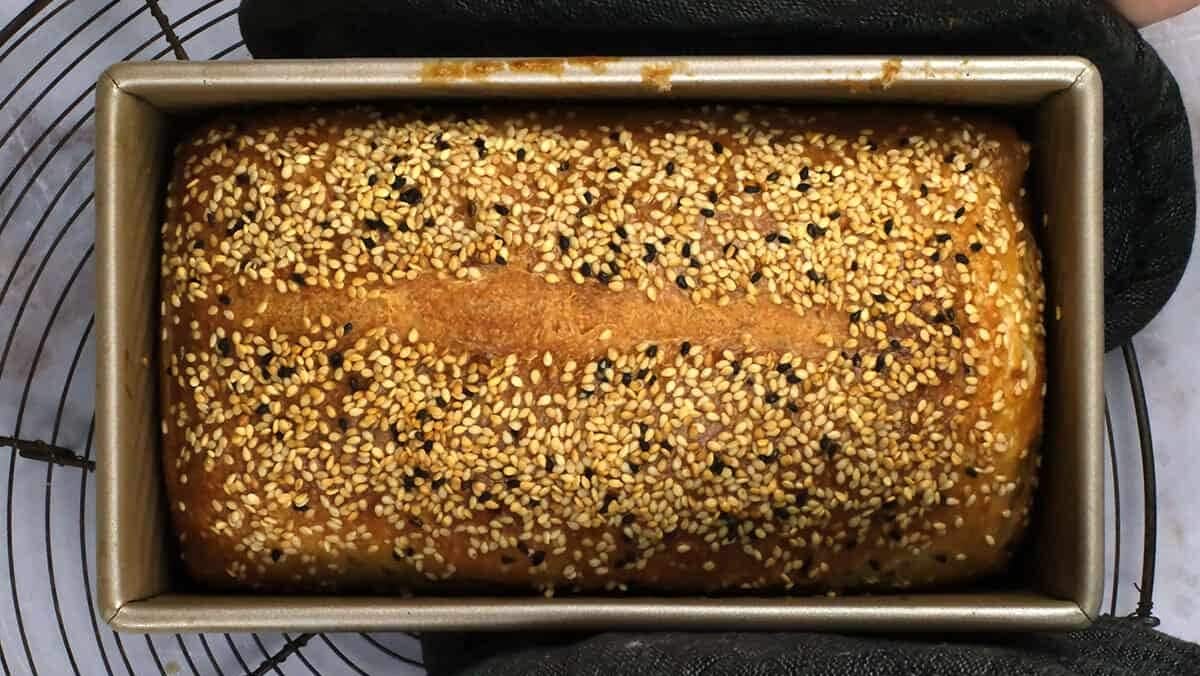
- Preheat the oven to 220°C / 425°F. Brush the loaf with the egg wash and sprinkle with the sesame seeds, if using. Score the loaf and bake, uncovered, for 15 minutes.
- Reduce the oven temperature to 190°C / 375°F and continue to bake for a further 30 minutes. Tip the bread onto a cooling rack and allow it to cool down for at least an hour before slicing.
Storing and Freezing
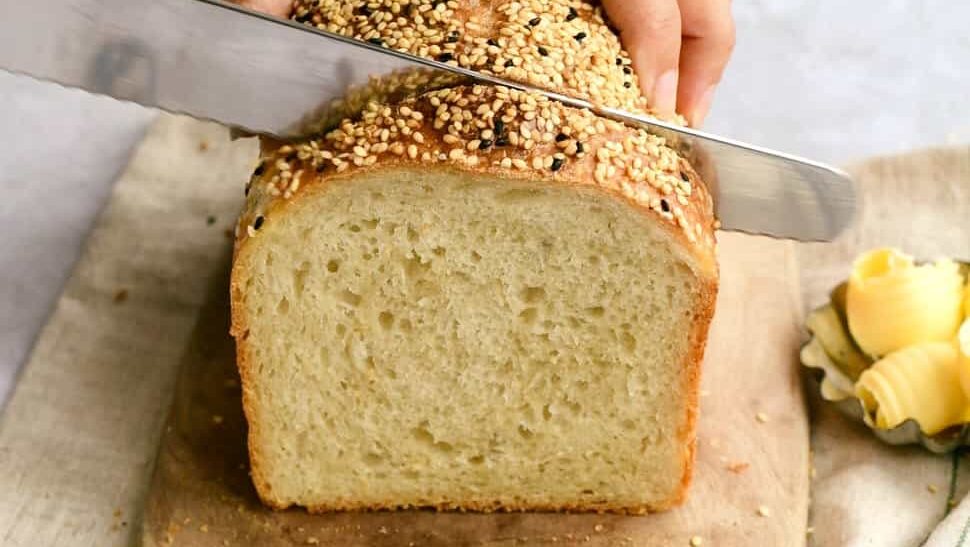
Wait until the bread has cooled down before slicing otherwise the crumb will be gummy. Store in a bread bag or wrapped in a linen towel for up to three days. Alternatively slice the entire loaf and freeze. Toast the slices directly from frozen and use within three months.
Recipe Notes and Tips
- HOW TO TELL YOUR STARTER IS READY TO USE: The starter will be bubbly and at least doubled in size in the starter jar. Drop half a spoonful in a glass of water. If it floats then you are ready to bake. Once the starter reaches its peak it will start to deflate. You can see this as a trail on the sides of the jar.
- WHAT CONTAINER IS BEST FOR MY STARTER? A glass jar with straight edges (I use these Weck jars) is ideal. Alternatively you can buy a sourdough starter jar kit which comes with a spatula and cloth cover plus thermometer and level bands.
Frequently Asked Questions
Look for a dough that’s risen noticeably, feels airy but not slack, and springs back slowly when gently poked.
Yes! A stand mixer with a dough hook works well — mix until the dough pulls away from the bowl and has a smooth sheen.
For richer bread, add a tablespoon or two of olive oil or butter — it will soften the crumb and add flavor without changing technique. You can also fold in chopped herbs or nuts to customise it.
Yes! Swap up to 25% whole wheat flour for extra flavor and nutrition.
HAVE YOU MADE MY SOURDOUGH SANDWICH BREAD RECIPE? Post a photo on my Facebook page, share it on Instagram, or save it to Pinterest with the tag #supergoldenbakes and make my day!
Sourdough Sandwich Bread
Video
Equipment
Ingredients
For your starter
- ¼ cup (60g) mature starter room temperature
- ½ cup (60g) flour
- ¼ cup (60g) tepid water (filtered, or boiled and cooled tap water)
For the sourdough
- ¾ cup (150g) active starter
- 1 ¼ cups (300ml) water (filtered, bottled or boiled and cooled tap water)
- 4 cups (500g) white bread flour
- ½ tbsp sugar optional
- 2 tsp salt
- olive oil as needed
Topping (optional)
- 1 egg lightly beaten
- 2 tbsp sesame seeds
Instructions
FEED YOUR STARTER
- Feed your sourdough starter with flour and lukewarm water. The starter is ready to use when it has doubled in size, bubbly and floating in water (float test).¼ cup (60g) mature starter, ½ cup (60g) flour, ¼ cup (60g) tepid water
PREPARE THE BREAD DOUGH
- Measure your active starter into a mixing bowl. Add water and mix well. Stir in ⅔ of the flour, salt and sugar if using. Cover the bowl and rest for 30 minutes.¾ cup (150g) active starter, 1 ¼ cups (300ml) water, 4 cups (500g) white bread flour, ½ tbsp sugar, 2 tsp salt
- Add the remaining flour, using your hands to incorporate the flour. You aren’t kneading the dough, just making sure the ingredients are combined.. If the dough is really dry add water, a few drops at a time.
- Grease the bowl with a little olive oil and turn the dough over so that it is oiled on all sides. Cover and rest for 30 minutes.olive oil
- Rub a little olive oil on your hands and do a series of “stretch and folds”. Grab the underside of the dough and fold over the top. Rotate the bowl a quarter turn and repeat until you have completed four sets of stretching and folding. The dough should be smooth and elastic by now.
FIRST RISE
- Transfer the dough to a greased pyrex dish, cover and leave overnight (8-10 hours) at room temperature or in the fridge for 10-12 hours if the weather is really warm. The dough should have doubled and filled your container.
- Tip the dough onto your worktop. Gently stretch it to a rectangular shape. Fold the dough into three sections, like a letter (letter fold).
- Roll the dough into a rough oval shape, using an oiled bench scraper to help you if needed. Transfer the dough into a greased 8.5×4 inch loaf pan (I used this Pullman Loaf Pan without the lid).
SECOND RISE
- Cover the loaf pan with a damp towel or plastic wrap and leave it to rise once more. The dough will come to about an inch from the top of the pan. This can take 5-6 hours, depending on the ambient temperature.
BAKE YOUR SOURDOUGH LOAF
- Preheat the oven to425°F (220°C). Brush the loaf with the egg wash and sprinkle with the sesame seeds, if using. Score the loaf and bake, uncovered, for 15 minutes.1 egg, 2 tbsp sesame seeds
- Reduce the oven temperature to 375°F (190°C( and continue to bake for a further 30 minutes.
- Tip the bread onto a cooling rack and allow it to cool down for at least an hour before slicing.
Notes
- STORING: Wait until the bread has cooled down before slicing otherwise the crumb will be gummy. Store in a bread bag or wrapped in a linen towel for up to three days. Alternatively slice and freeze. Toast the bread slices directly from frozen and use within three months.
- HOW TO TELL YOUR STARTER IS READY TO USE: The starter will be bubbly, active and at least doubled in size in the starter jar. Drop half a spoonful in a glass of water. If it floats then you are ready to bake. Once the starter reaches its peak it will start to deflate. You can see this as a trail on the sides of the jar.
- WHAT CONTAINER IS BEST FOR MY STARTER?: A glass jar with straight edges (I use these Weck jars) is ideal. Alternatively you can buy a sourdough starter jar kit which comes with a spatula and cloth cover plus thermometer and level bands.
Nutrition
Nutritional information is always approximate, and will depend on quality of ingredients and serving sizes.


If I bake this in an air fryer, would the temperature be 195C for 14 min and then another 14 min after out of the tin and it’s flipped over like your other soughdough air fryer breads? Is your loaf tin measurement 8.5x4in internal measurements?
Thank you
Hi Lyn – try 190 for 10 minutes then reduce to 180 for 10 and flip over
I made this bread for the first time today and it turned out fabulous. I replaced the water with unsweetened Almond milk and I will definitely be making it again. Thanks for sharing the recipe!
what kind of flour can I use if I not have bread flour?
You can use all purpose in a pinch x