Juicy Boneless Turkey Breast – Buttermilk Brined

, Published Nov 22, 2026
This post may contain affiliate links. Please read our disclosure policy.
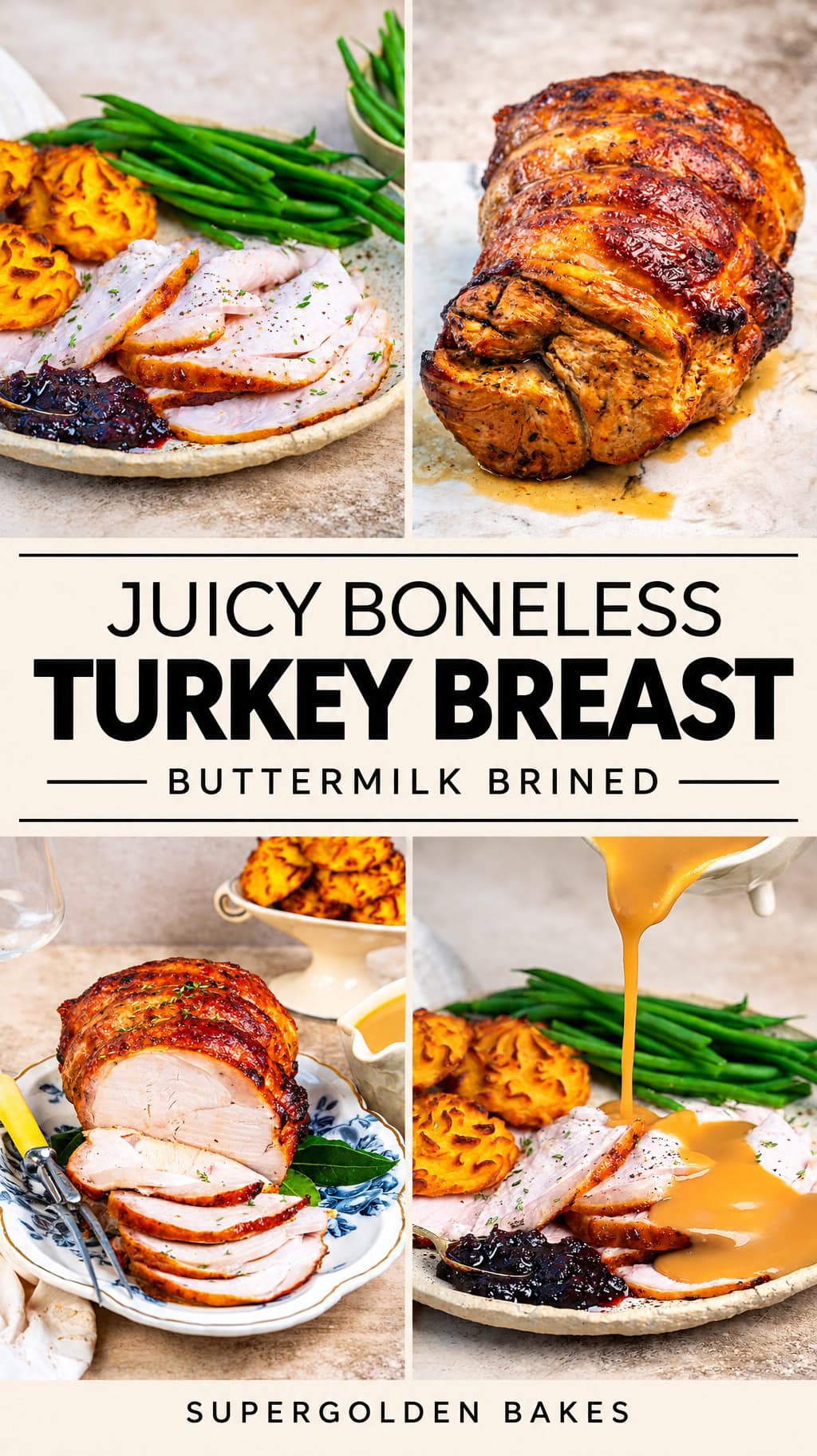
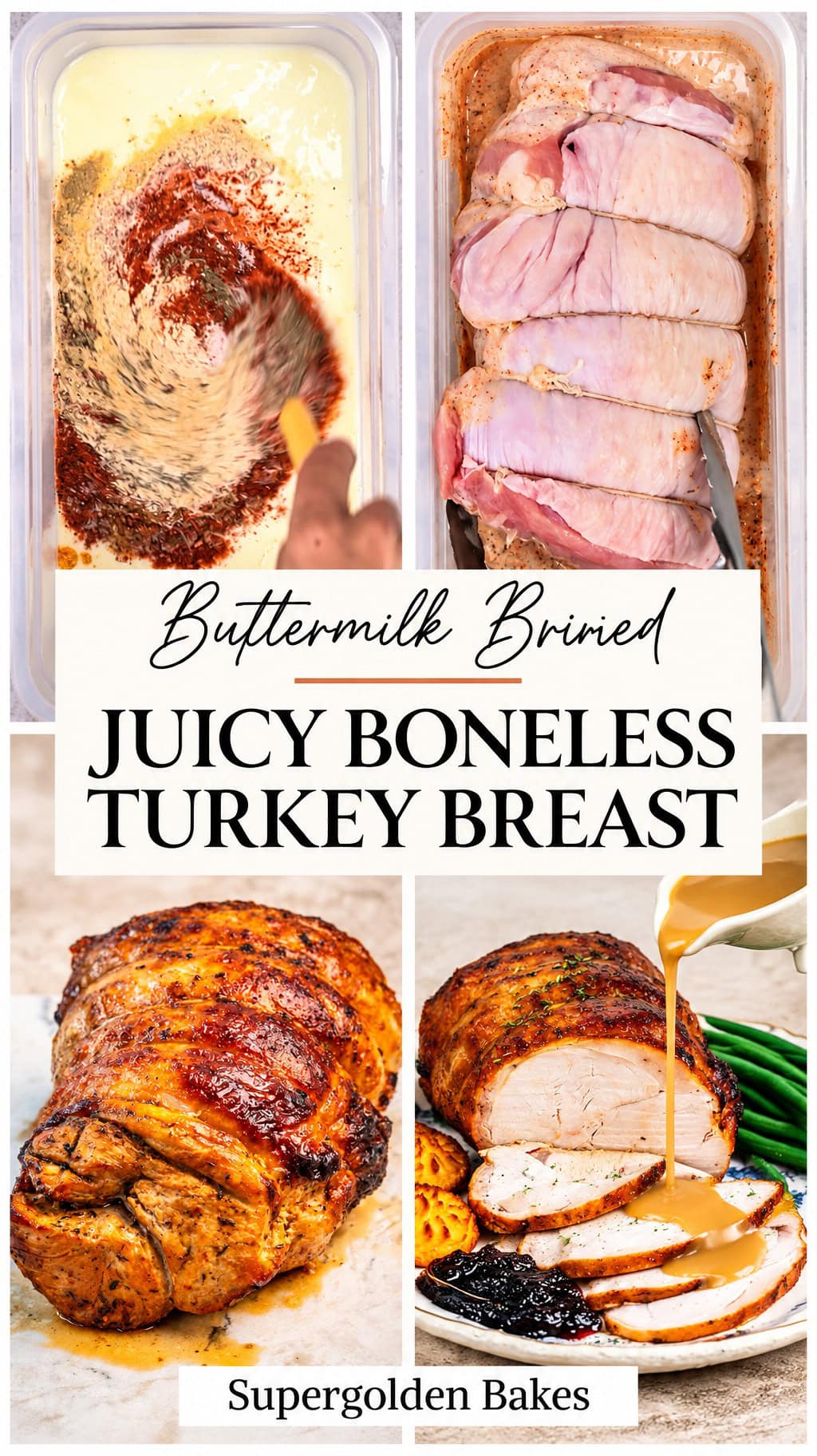
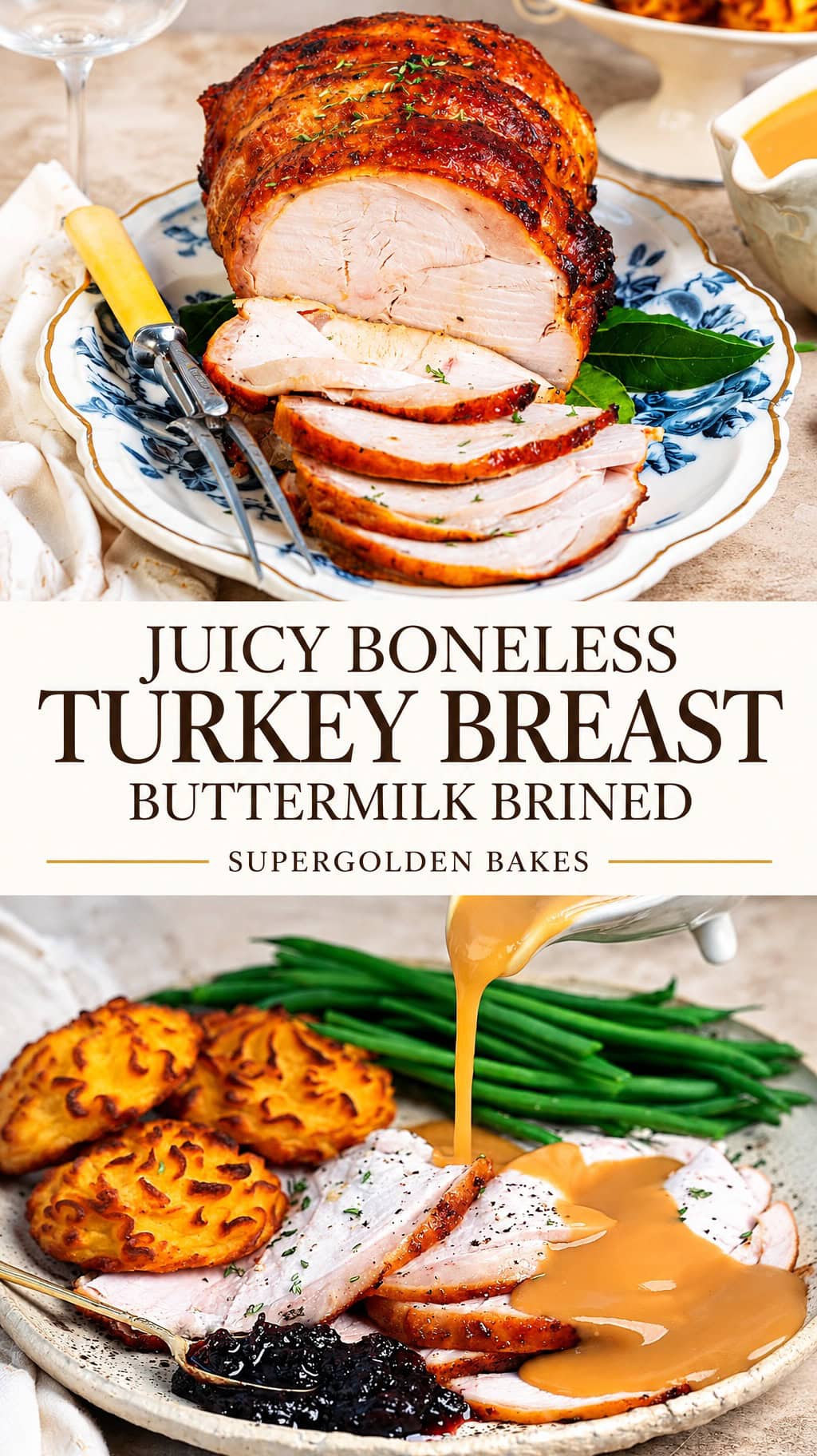
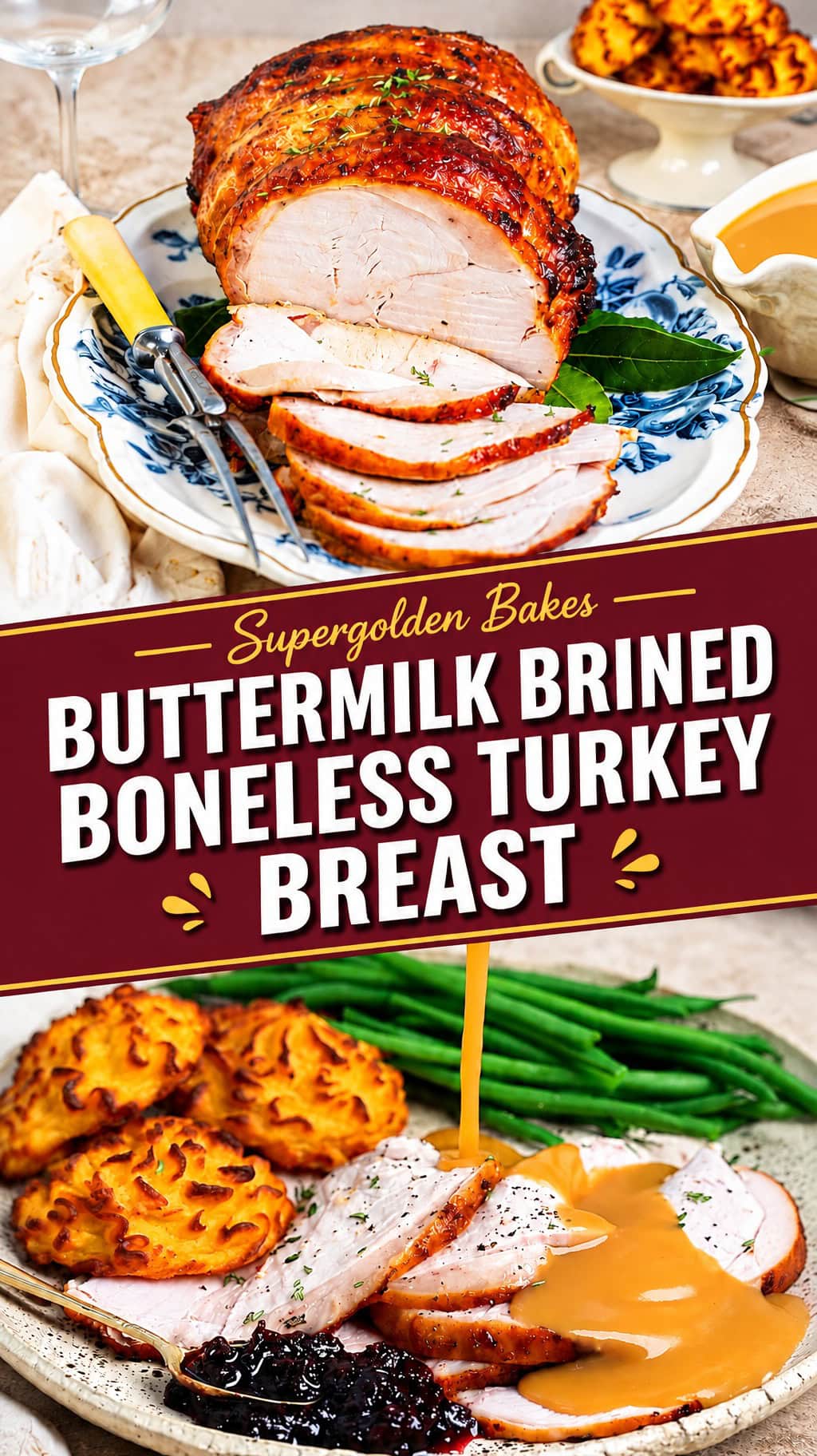
This buttermilk brined turkey breast is juicy, tender and seasoned all the way through, with deep golden, crisp skin. A boneless turkey breast soaks in a spiced buttermilk brine for a day, then roasts in the oven (or air fryer) in 2 hours or less.
A simple buttermilk brine works its magic to keep the meat incredibly tender and juicy so you can wave dry, sad turkey breast goodbye! Roast it skin side down under foil first, then flip it and uncover it for the last stretch to turn the skin gorgeously golden.
Serve it with my make-ahead gravy (no drippings required), and for more holiday ideas, browse my Thanksgiving and Christmas recipe collections.
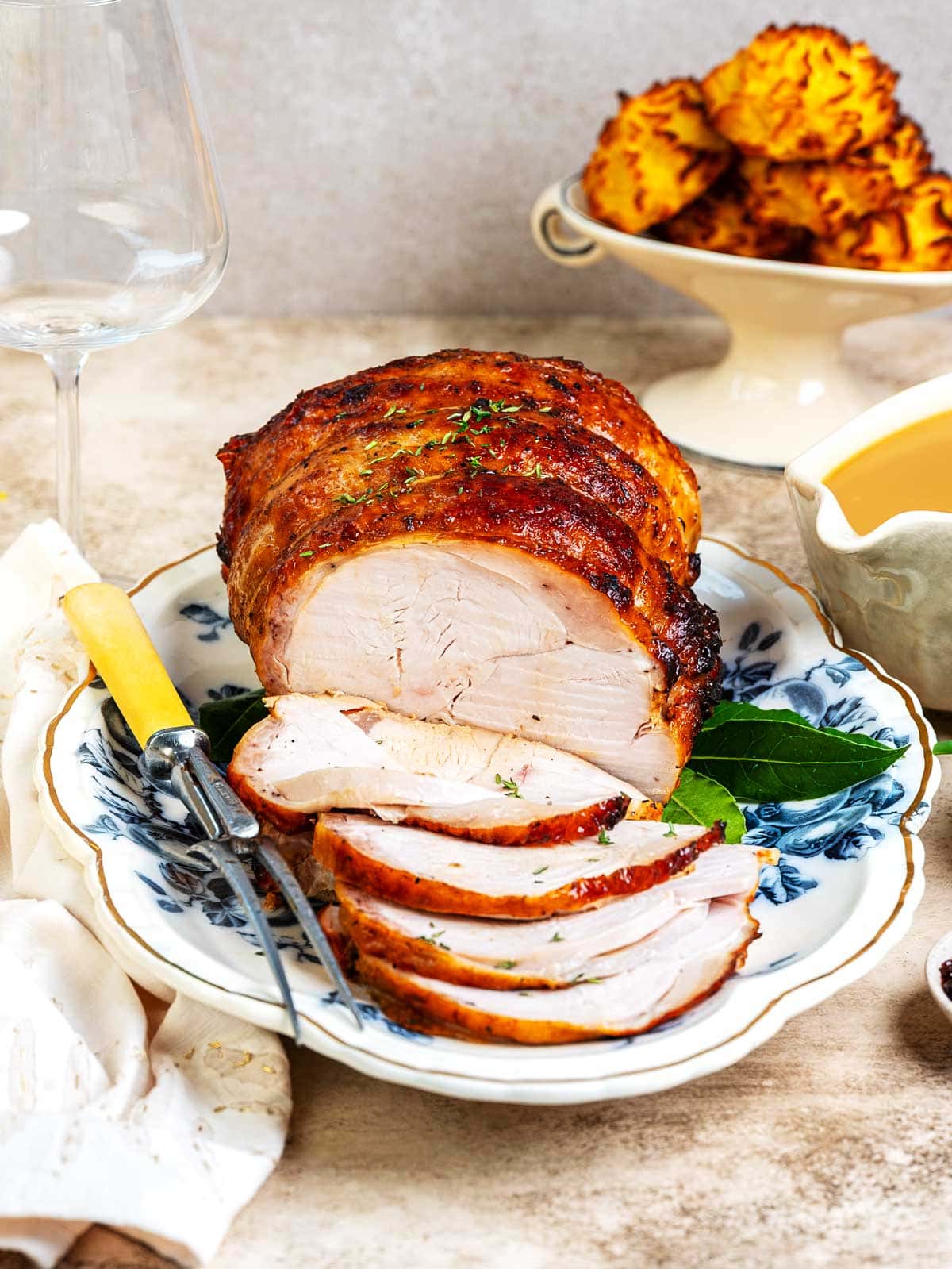
A whole turkey is a big commitment when you’re feeding a smaller crowd – not to mention a bit intimidating to cook! A boneless turkey breast (a turkey breast joint, if you’re in the UK) serves 8 with leftovers, takes up a fraction of the fridge and oven space, and is an absolute dream to carve.
Turkey breast is very lean, so it can often turn dry and bland when you are roasting a whole bird. That’s where the buttermilk brine comes in – it seasons the meat right through and keeps it juicy, and it’s far less hassle than a bucket of salt water – everything fits in one container in the fridge.
I have tested this recipe several times (much to the delight of my family) and the results have been amazing every single time. If you are fans of white meat this is THE Thanksgiving turkey recipe for you!
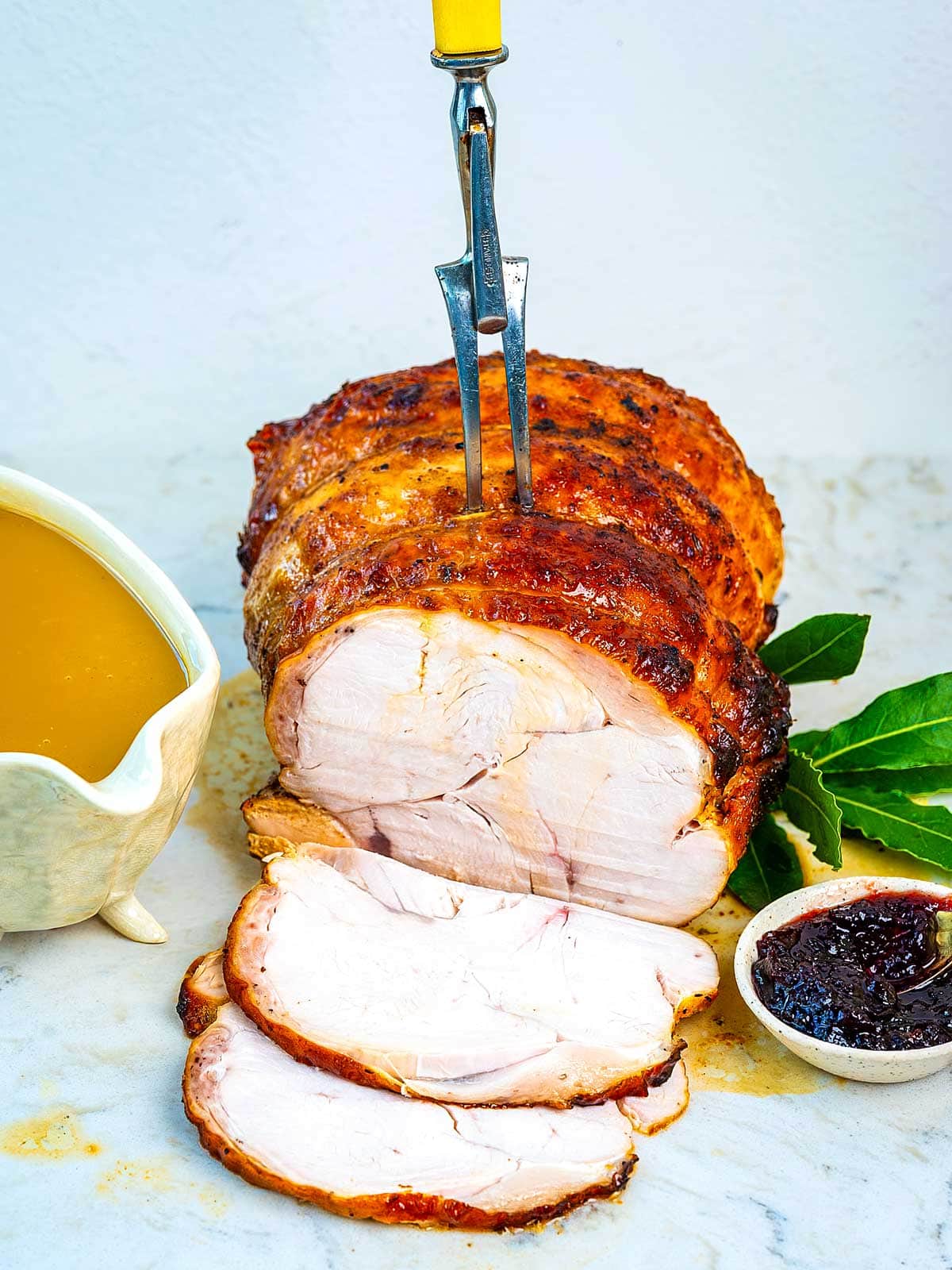
Here’s What You’ll Need
- Boneless turkey breast: Skin-on, about 5.5 lb (2.5kg). I have tested this recipe both with a breast that was tied into a roll (often sold as a rolled turkey breast or turkey breast joint) and a regular untied breast. Both work great – they just need slightly different cooking time. Avoid turkey labeled pre-brined, self-basting or enhanced, as it has already been injected with a salt solution and will end up too salty.
- Buttermilk: The base of the brine. Its gentle acidity tenderizes the meat without making it mushy. No buttermilk? Stir 1 1/2 tbsp lemon juice or white vinegar into 2 cups (500ml) whole milk and leave it for 10 minutes.
- Salt and brown sugar: Salt seasons the meat and helps it hold on to its juices, while a little light brown sugar balances it and helps the skin brown.
- Spices and dried herbs: Sweet paprika, onion powder, garlic powder, mustard powder, sage and thyme – the classic roast turkey flavors – plus a pinch of white pepper. The same blend goes on the outside before roasting.
- Olive oil: For brushing the turkey so the seasoning sticks and the skin crisps.
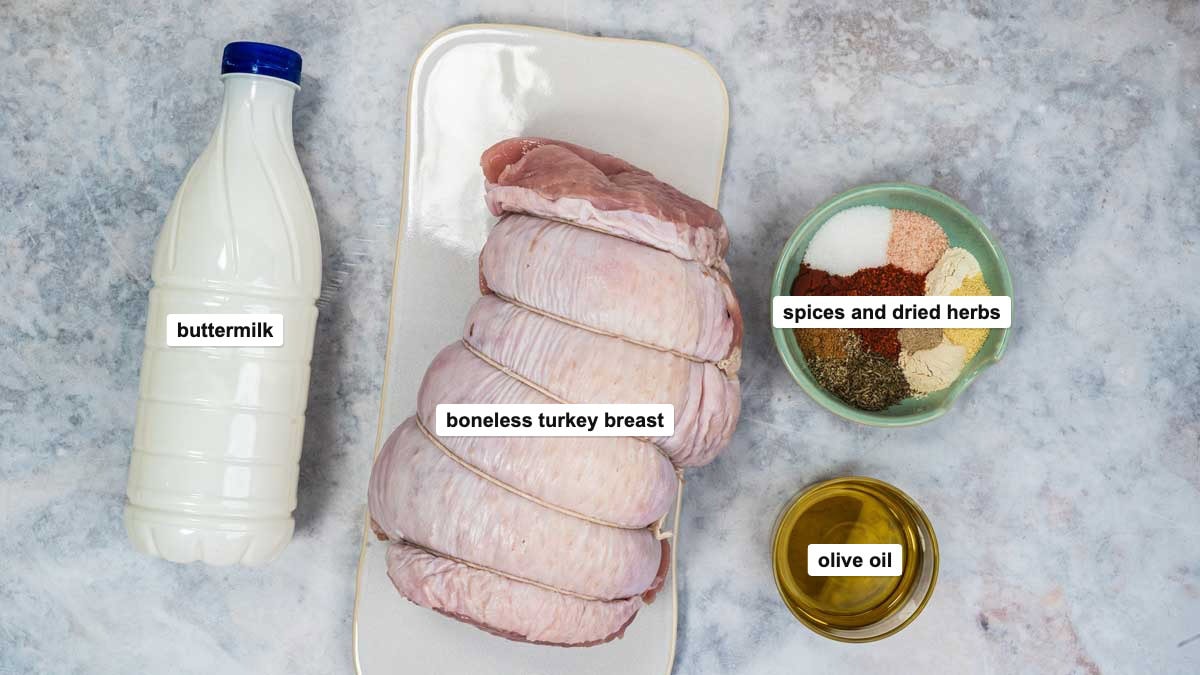
Why You’ll Love This Turkey Breast
- Juicy and seasoned through: The buttermilk brine works its way into the meat, so every slice is moist and full of flavor – not just the outside.
- No bucket required: Just 2 cups of buttermilk and a container that fits the turkey. Much easier than finding fridge space for a whole bird in brine.
- Easy to carve: No bones, no wrestling with a carcass – just slice and serve.
- Oven or air fryer: Cook it in the air fryer to free up the oven for the sides.
- Make-ahead friendly: Get it into the brine up to 2 days before you plan to cook it.
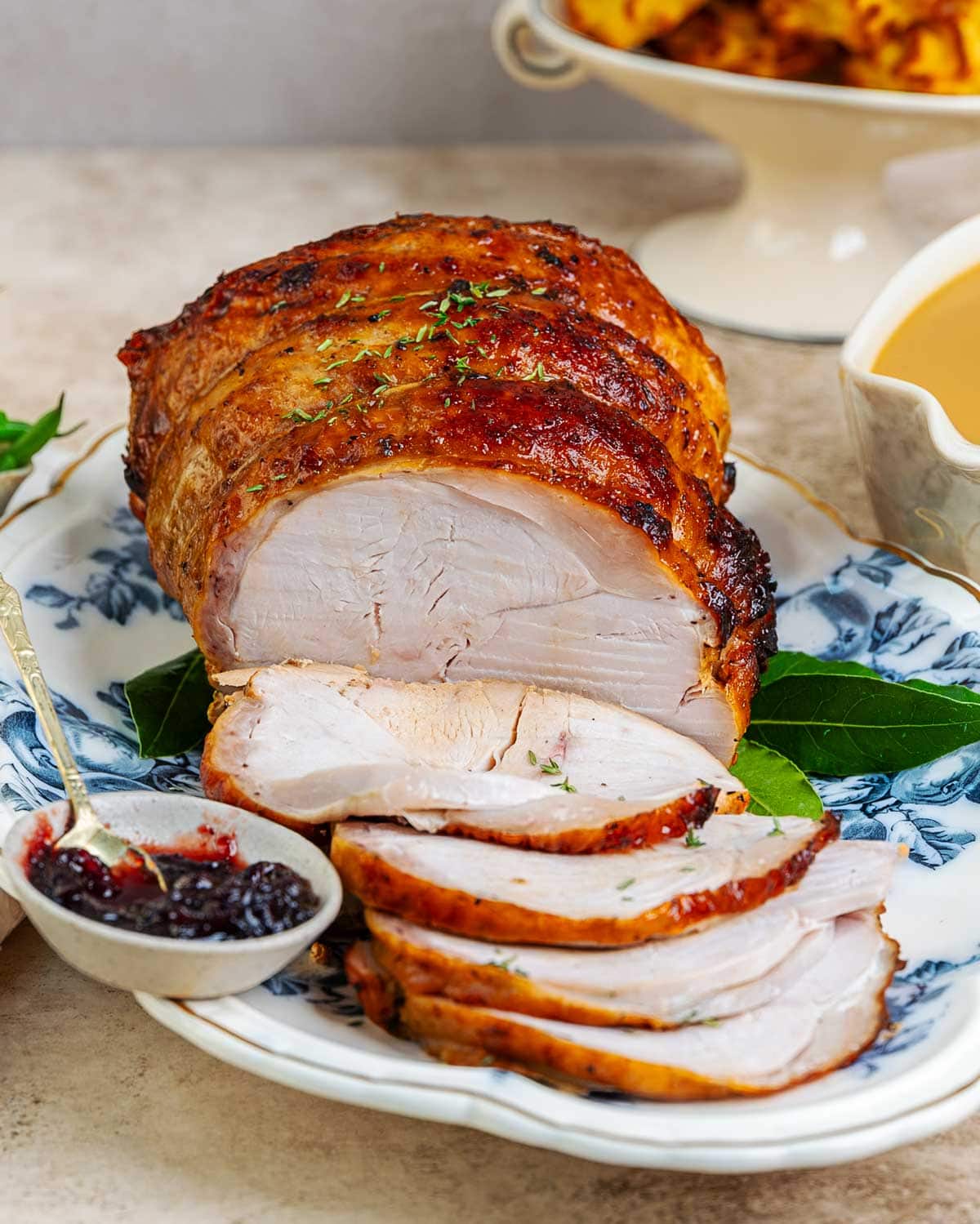
How to Make Buttermilk Brined Turkey Breast
↓ For the full ingredients and detailed method, jump to the recipe card.
Brine the Turkey
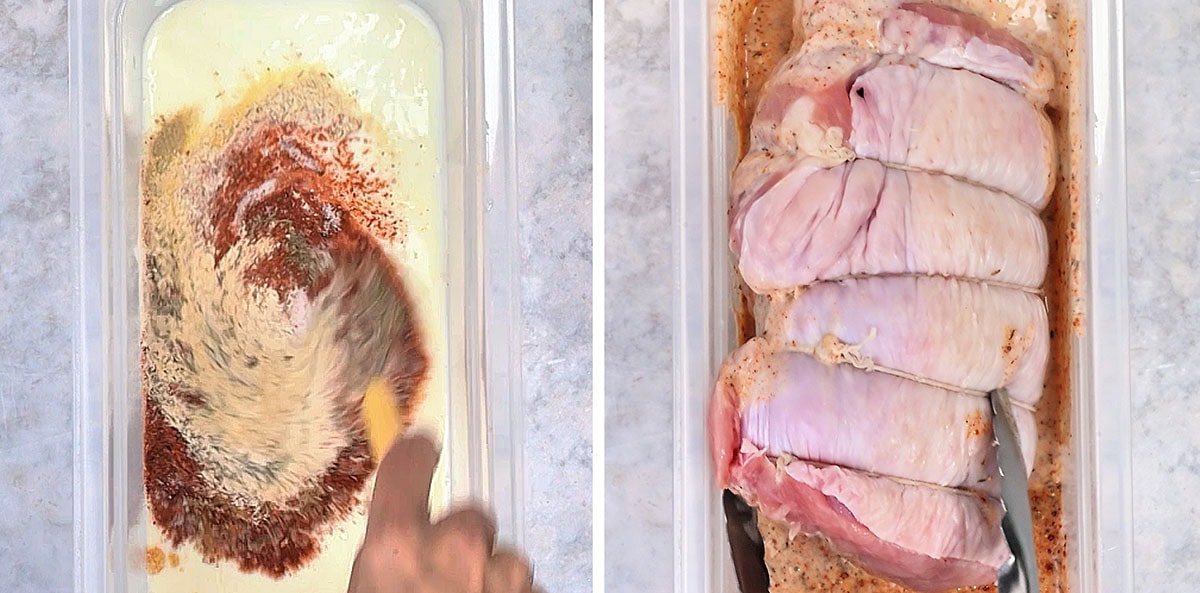
- Make the brine: In a container large enough to hold the turkey breast snugly (or a large zip-top bag), whisk together the buttermilk, brown sugar, salt, spices, herbs and white pepper.
- Add the turkey: Turn it a few times so it is coated all over. Cover with a lid and refrigerate for 24 hours, or up to 2 days, turning the turkey over once or twice so every side spends time in the brine.
Roast the Turkey
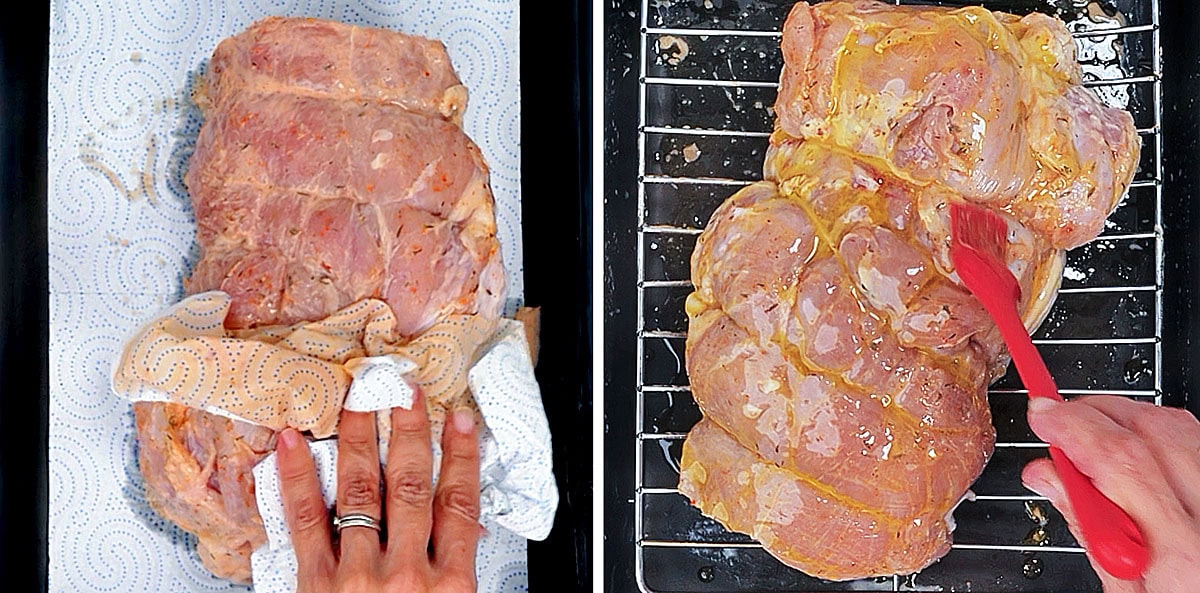
- Dry it well: Lift the turkey out of the brine, scrape off as much as you can and pat it dry all over with paper towels. Don’t skip this – the milk solids and sugar in the brine will burn in the oven, and a wet surface won’t crisp. Discard the brine. Let the turkey sit out for about 30 minutes while the oven heats, to take the chill off.
- Oil and season: Set the turkey on the rack of a roasting pan with a rack. Brush it generously with olive oil on both sides using a pastry brush, then sprinkle over the seasoning.
- Roast covered, skin side down: Preheat the oven to 350°F (180°C). Place the turkey skin side down on the rack, cover loosely with foil and roast for 1 hour.
- Flip it: Turn the turkey skin side up, tent with the foil again and roast for 30 minutes more (15 minutes for an untied breast). Check the temperature in the thickest part with an instant-read thermometer so you know how close it is.
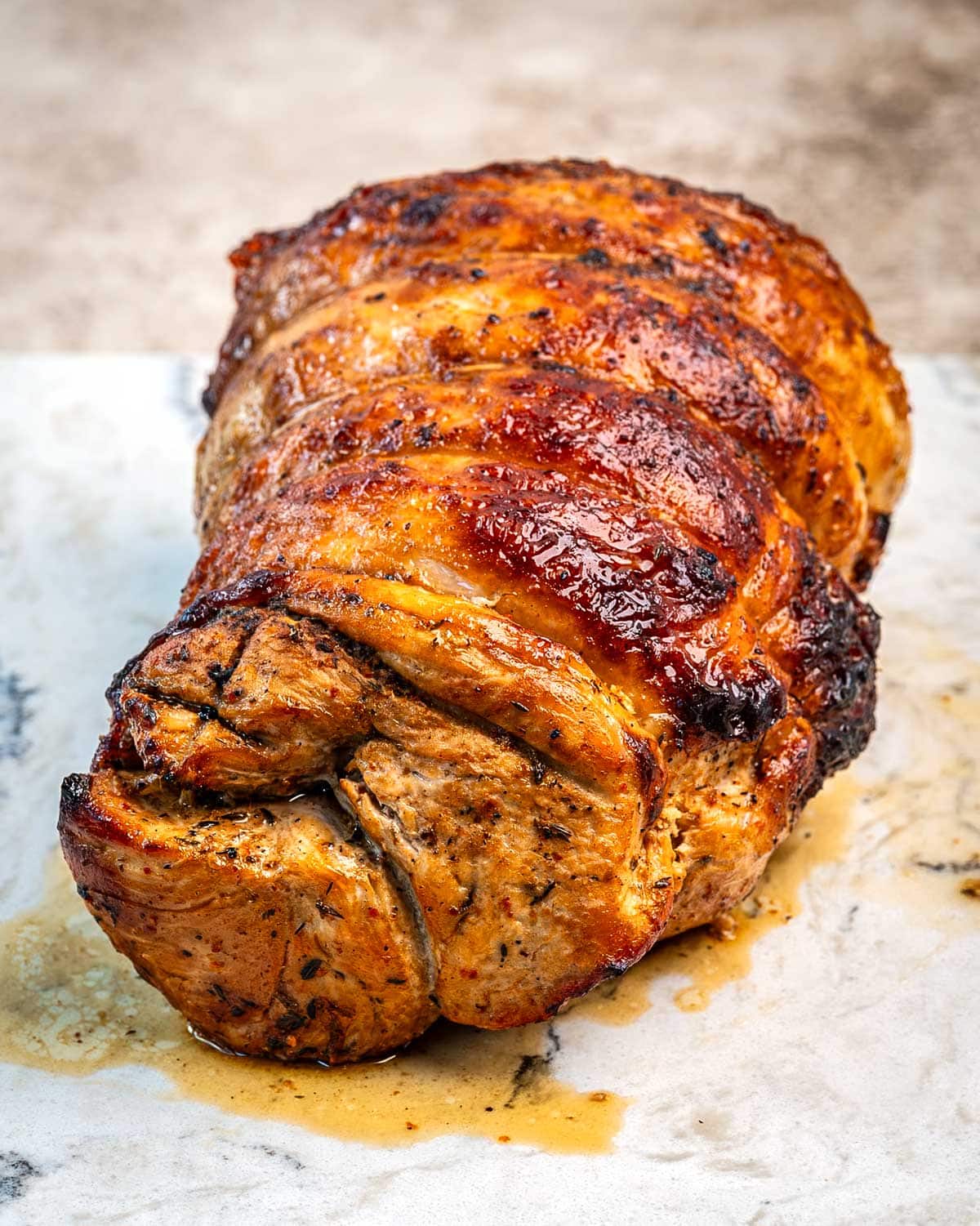
- Uncover and brown: Remove the foil and roast for a final 15 to 30 minutes (about 15 minutes for an untied breast), until the skin is golden and the thickest part reads 150°F (66°C). (The USDA recommends 165°F (74°C) – see the tip below.)
Cook’s tip
When to Take the Turkey Out of the Oven
Every turkey breast is a different shape, so use the times as a guide and trust your instant-read thermometer. I take my turkey breast out at 150°F (66°C) in the thickest part, as many chefs recommend. A pulled temperature of 150°F (66°C) will prevent the turkey meat from drying out and the temperature will keep rising as the turkey rests.
The official USDA recommendation is 165°F (74°C). If you’d rather follow it – and always if you’re cooking for anyone pregnant, elderly, very young or with a weakened immune system – take the turkey out at 160°F (71°C).
Rest and Carve
- Rest: Cover the turkey loosely with foil and leave it to rest for at least 20 minutes. The temperature keeps rising as it sits, and the juices settle back into the meat, so they end up in the slices rather than on the board.
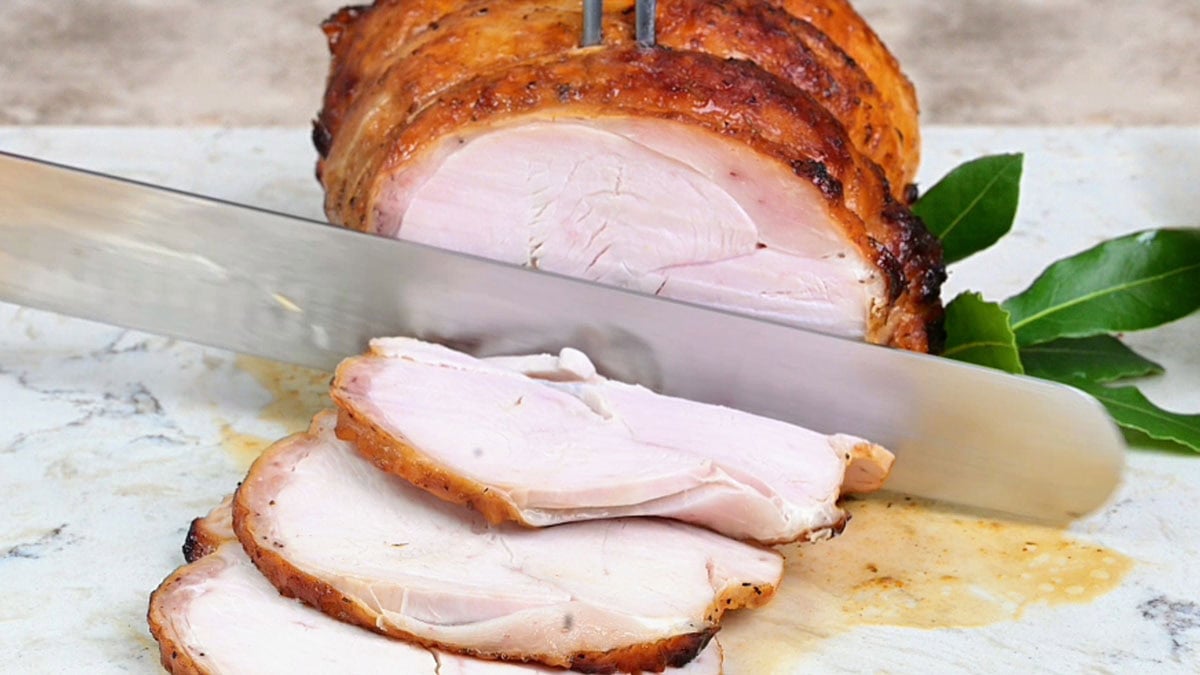
- Carve: Snip off and remove the string if your turkey is tied, then slice across the grain with a sharp carving set. The rolled breast joint can be sliced really thinly if you prefer.
How Long to Cook a Boneless Turkey Breast
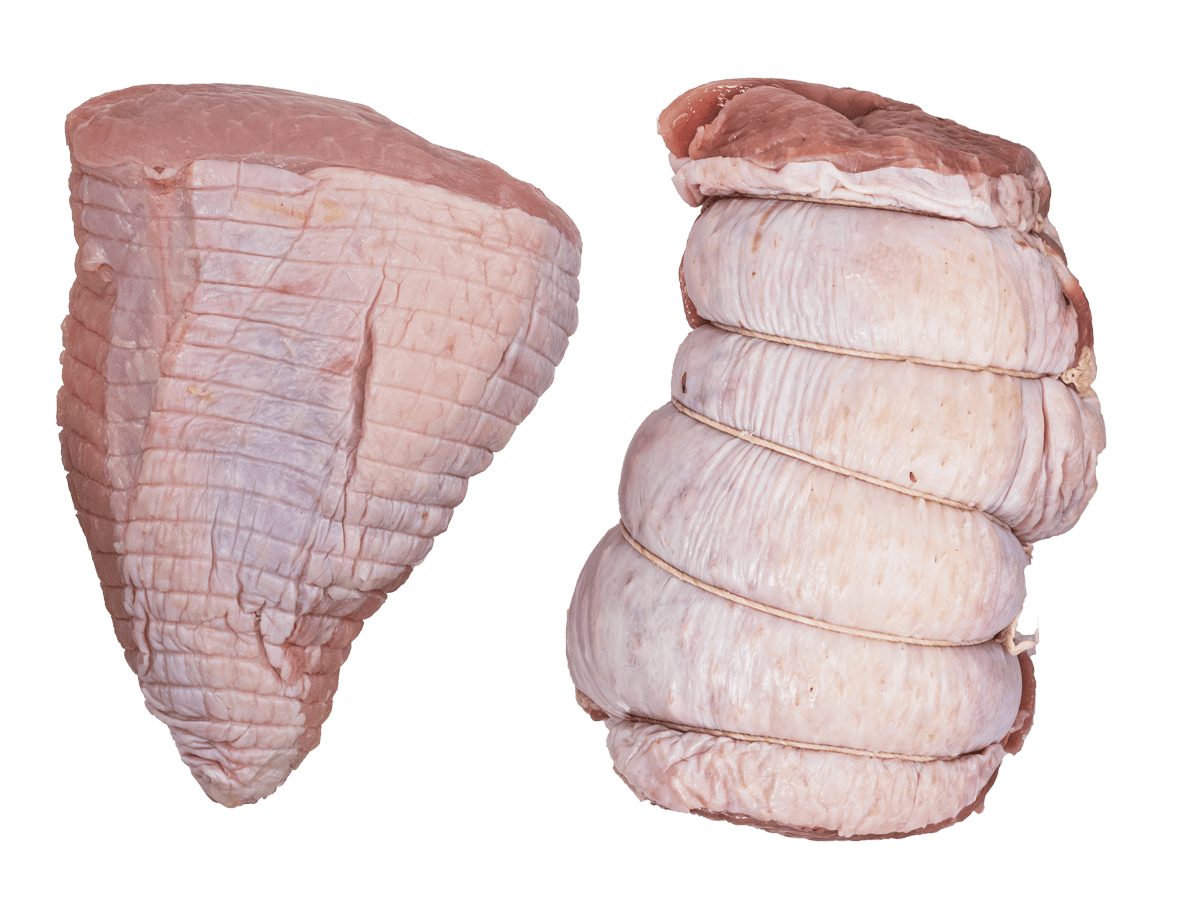
Boneless turkey breast is sold two ways. An untied breast (left, often in elastic netting) is thicker at one end and tapers at the other, while a breast tied into a roll (right) is an even cylinder that’s denser in the middle, so the heat takes longer to reach the center. Here are my timings for a 5.5 lb (2.5kg) boneless turkey breast:
| Tied into a roll | Untied | |
|---|---|---|
| Oven 350°F (180°C) | 1 3/4 to 2 hours | 1 1/2 hours |
| Air fryer 325°F (160°C) | About 1 1/2 hours | 80 to 90 minutes |
Start checking early: Air fryers cook faster than an oven, and an untied breast cooks faster than a roll, so start checking the temperature 15 to 20 minutes before the end of the cooking time. A bone-in turkey breast takes longer still – my turkey cooking time calculator will help you work out the timings.
Air Fryer Buttermilk Brined Turkey Breast
If your turkey breast fits in your air fryer basket with a little room around it, the air fryer does a brilliant job and keeps the oven free for everything else. Remove the crisper plate or rack if you need the extra height. (For a bone-in turkey crown, see my Air Fryer Turkey Breast.)
- Preheat the air fryer to 325°F (160°C). Brine, dry, oil and season the turkey exactly as above.
- Cook covered, skin side down: Place the turkey in the basket skin side down and cover it tightly with foil, tucking the edges under the turkey and securing it with air fryer magnets so it can’t lift. Cook for 45 minutes.
- Flip it: Turn the turkey skin side up, cover tightly again and cook for 30 minutes more (20 minutes for an untied breast), then check the temperature.
- Brown the skin: Remove the foil and cook for a final 15 minutes or so, until the skin is golden and the thickest part reads 150°F (66°C), or 160°F (71°C) if you’re following the USDA guideline. Rest for 20 minutes before carving.
What to Serve With Turkey Breast
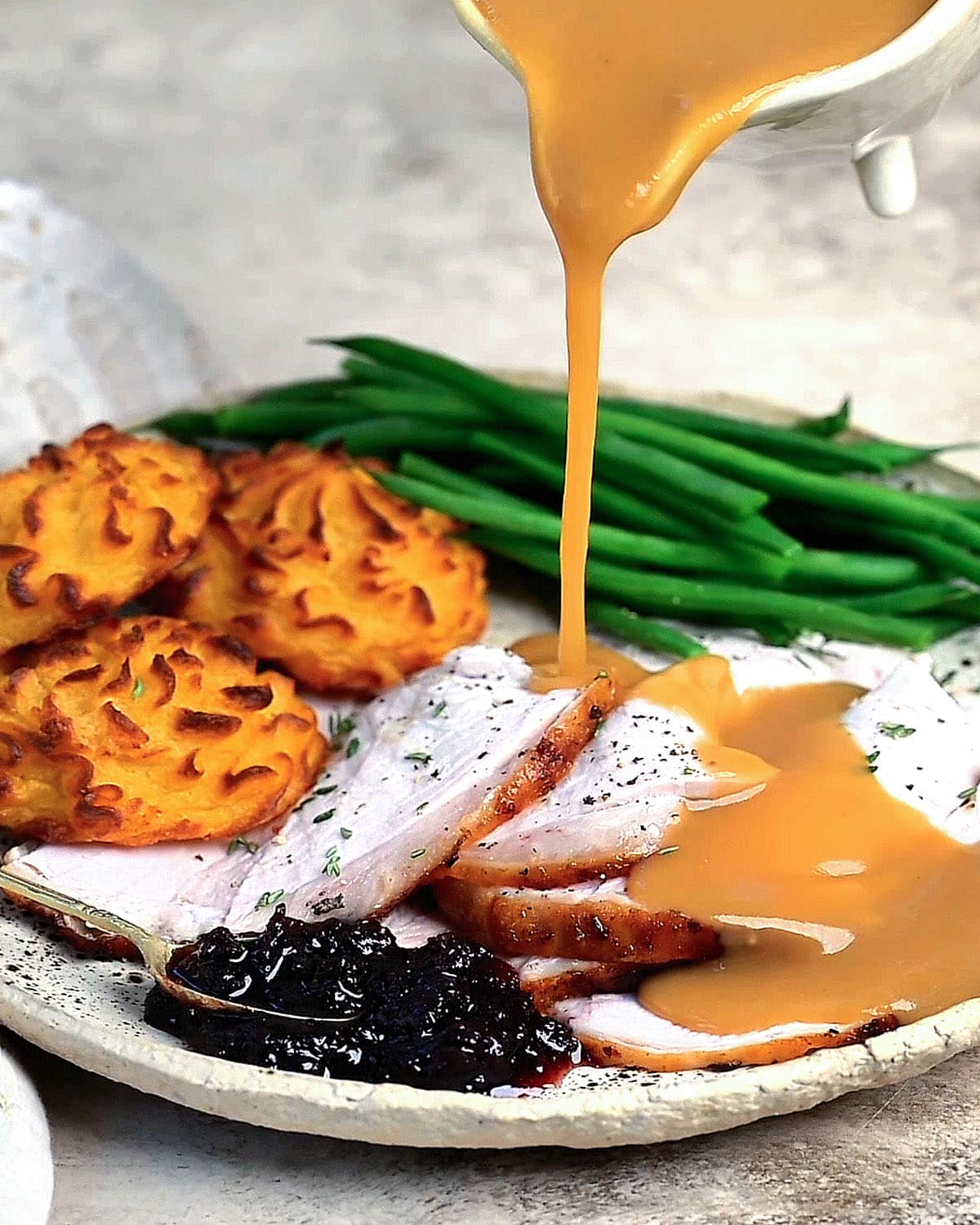
- Gravy: Brined turkey breast doesn’t leave much in the way of pan drippings (and what there is can be salty), so my make-ahead gravy without drippings is the perfect match.
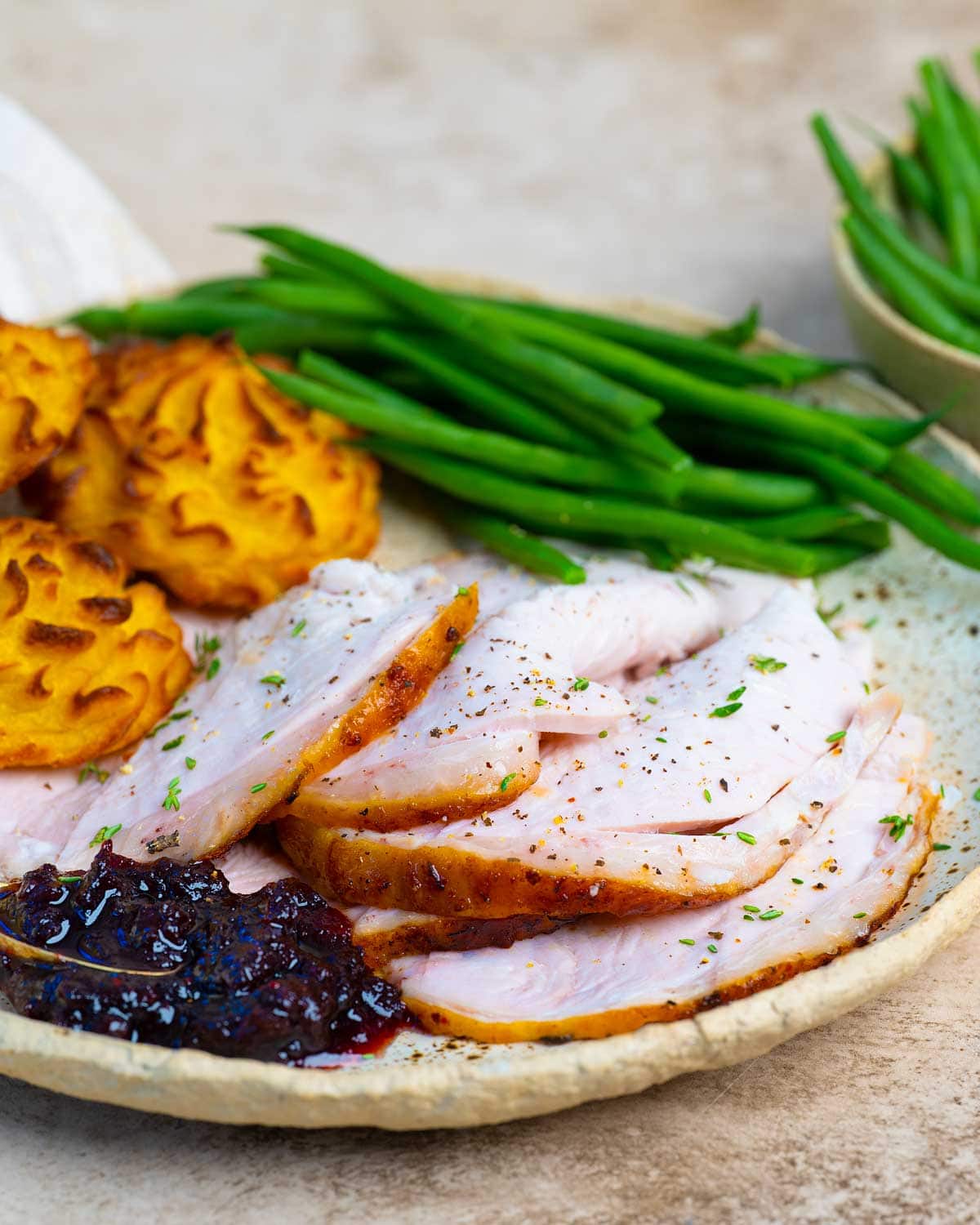
- Potatoes: Crispy goose fat roast potatoes, creamy slow cooker mashed potatoes or a sweet potato soufflé.
- Vegetables: Air fryer green beans, braised red cabbage or air fryer carrots.
- Stuffing: Air fryer stuffing balls or my wild rice dressing with sausage.
Make Ahead, Storage and Leftovers
- Make ahead: Put the turkey in the brine up to 2 days before you want to cook it, or roast it ahead and reheat it whole (see below).
- Fridge: Keep leftover turkey in an airtight container in the fridge for up to 3 to 4 days.
- Freezer: Freeze sliced turkey with a splash of gravy or broth for up to 3 months. Thaw overnight in the fridge.
- Reheat a whole turkey breast: This is a great way to cook ahead. Drape the turkey with a damp cheesecloth, spoon over the reserved cooking juices and oil, then cover with foil. Reheat at 325°F (160°C) for 30 to 45 minutes, until hot all the way through, then uncover and give it a few minutes at 425°F (220°C) to crisp up the skin. Mine stayed perfectly tender.
- Reheat slices: Place the slices in a baking dish with a splash of broth, cover with foil and warm through at 325°F (160°C) until piping hot.
- Leftovers: Turn them into leftover turkey soup, an easy leftover turkey pie, a leftover turkey casserole or my creamy leftover turkey orzo.
Frequently Asked Questions
24 hours is ideal, and you can leave it for up to 2 days. Turn the turkey once or twice so all sides spend time in the brine.
No. Scrape off as much of the brine as you can and pat the turkey dry with paper towels. Rinsing raw poultry can splash bacteria around the sink, and a dry surface is what gives you crisp skin.
Yes, the same brine works beautifully. A bone-in breast takes longer to cook, so go by temperature and check my turkey cooking time calculator or roast turkey crown recipe for timings.
I take turkey breast out at 150°F (66°C) in the thickest part, as many chefs recommend – holding it at that temperature for a few minutes as it rests makes it just as safe, and it stays juicy. The official USDA recommendation is 165°F (74°C): To follow it, take the turkey out at 160°F (71°C) and let it rest, and the temperature will rise to 165°F (74°C).
No, thaw it completely in the fridge first so the brine can reach the meat. My turkey cooking time calculator also gives thawing times.
You’ll Also Love These Turkey Recipes
- Stuffed Turkey Roll: A boneless turkey breast rolled around a savory stuffing. It slices into beautiful spirals and makes a real centerpiece for a smaller table.
- Roast Turkey Crown: The bone-in option, roasted until golden. Ideal if you want something a little more traditional than a boneless roll.
- Spatchcock Turkey: Feeding a crowd? Flattening a whole bird cuts the roasting time dramatically and cooks it more evenly.
- Slow Cooker Turkey Breast: Hands-off and incredibly tender, with gravy made in the same pot. Great when the oven is full.
- Air Fryer Turkey Breast: A bone-in turkey crown cooked in under an hour, with super crisp skin.
Have you made my Juicy Boneless Turkey Breast? Leave a rating and a comment below to let me know how it turned out! Follow me on Pinterest for more easy recipes and don’t forget to tag me on @Instagram or TikTok so I can see your creations.
Juicy Boneless Turkey Breast – Buttermilk Brined
Equipment
- Air Fryer magnets air fryer method
Ingredients
For the brine
- 2 cups (500ml) buttermilk or as needed to coat
- 2 tbsp light brown sugar
- ½ tbsp (9g) fine sea salt or table salt or 1 tbsp Diamond Crystal / 2 tsp Morton kosher salt
- 2 tsp sweet paprika
- 2 tsp onion powder
- 2 tsp garlic powder
- 2 tsp mustard powder
- 2 tsp dried sage
- 2 tsp dried thyme
- ½ tsp white pepper
For the turkey
- 5.5 lb (2.5kg) boneless turkey breast skin on, tied into a roll or untied (see notes)
For the seasoning
- 3 tbsp olive oil or as needed
- 1 tsp salt
- 1 tsp sweet paprika
- 1 tsp onion powder
- 1 tsp garlic powder
- 1 tsp mustard powder
- 1 tsp dried sage
- 1 tsp dried thyme
Instructions
Brine the turkey
- Combine the brine ingredients in a large container that can hold the turkey breast snugly.
- Add the turkey and turn a few times to coat in the brine. Cover with a lid and refrigerate for 24 hours, or up to 2 days, turning the turkey over once or twice.
Roast the turkey
- When you’re ready to cook, take the turkey out of the brine, scrape off as much as you can (the milk solids and sugar will burn in the oven) and pat dry with paper towels. Discard the brine. Let the turkey sit out for about 30 minutes to take the chill off.
- Preheat the oven to 350°F (180°C). Place the turkey on a rack over a roasting pan. Brush generously with olive oil on both sides and sprinkle with the seasoning.
- Turn the turkey skin side down on the rack, cover loosely with foil and roast for 1 hour.
- Turn the turkey skin side up and roast, tented with foil, for 30 minutes more (15 minutes for an untied breast). Check the temperature in the thickest part so you know how close it is.
- Remove the foil and roast for a further 15 to 30 minutes (about 15 minutes for an untied breast), until the skin is golden and the internal temperature reaches 150°F (66°C) (see notes for the USDA recommendation).
Rest and carve
- Rest the turkey, loosely covered with foil, for at least 20 minutes – the temperature keeps rising as it rests. Remove the string, carve into slices and serve with gravy.
Notes
- Turkey breast: Use a plain turkey breast – not one labeled pre-brined, self-basting or enhanced, which will be too salty. A boneless breast cooks faster than bone-in, and a breast tied into a roll takes longer than an untied one: Allow 1 3/4 to 2 hours in the oven for a 5.5 lb (2.5kg) tied roll, or about 1 1/2 hours if untied.
- Salt: Kosher salt brands vary in saltiness, so measure by weight (9g) if you can.
- Cook to temperature: Times are a guide. I take turkey breast out at 150°F (66°C) in the thickest part, as many chefs recommend – it keeps cooking as it rests and stays juicy. The official USDA recommendation is 165°F (74°C): To follow it (always if cooking for anyone pregnant, elderly, very young or with a weakened immune system), take the turkey out at 160°F (71°C) and it will rise to 165°F (74°C) as it rests.
- Air fryer: Preheat to 325°F (160°C). Make sure the turkey fits in the basket (remove the rack if needed). Cook skin side down, tightly covered with foil secured with air fryer magnets, for 45 minutes. Turn over, cover again and cook for 30 minutes (20 minutes if untied), then check the temperature. Remove the foil and cook for 15 minutes more to brown the skin, until it reaches 150°F (66°C), or 160°F (71°C) for the USDA guideline. Total time is about 1 1/2 hours for a tied roll, or 80 to 90 minutes untied. Rest before carving.
- Store: Keep leftovers in an airtight container in the fridge for 3 to 4 days, or freeze sliced turkey with a splash of gravy or broth for up to 3 months.
- Reheat whole: Drape the turkey with a damp cheesecloth, spoon over the reserved cooking juices and oil, and cover with foil. Reheat at 325°F (160°C) for 30 to 45 minutes until hot all the way through, then uncover and blast at 425°F (220°C) for a few minutes to crisp the skin.
Nutrition
Nutritional information is always approximate, and will depend on quality of ingredients and serving sizes.
Troubleshooting
| Problem | Why It Happens | How to Fix It |
|---|---|---|
| Skin browning too fast | The sugar and buttermilk in the brine brown quickly | Keep the turkey tented with foil until the final 15 to 30 minutes. |
| Pale or soft skin | The turkey wasn’t dried well, or the foil stayed on too long | Pat it really dry after brining and make sure the foil comes off for the last stretch. |
| Dry turkey | It was overcooked | Take it out at 150°F (66°C) and rest it – the temperature keeps rising. |
| Too salty | The turkey breast was pre-brined, self-basting or enhanced | Buy a plain, untreated turkey breast for brining. |
| Outside done, center still under temperature | A thick, tightly tied roll takes longer to cook through | Keep it covered and give it more time, checking every 10 minutes. |