Gochujang Chicken Thighs

, Published May 04, 2026
This post may contain affiliate links. Please read our disclosure policy.
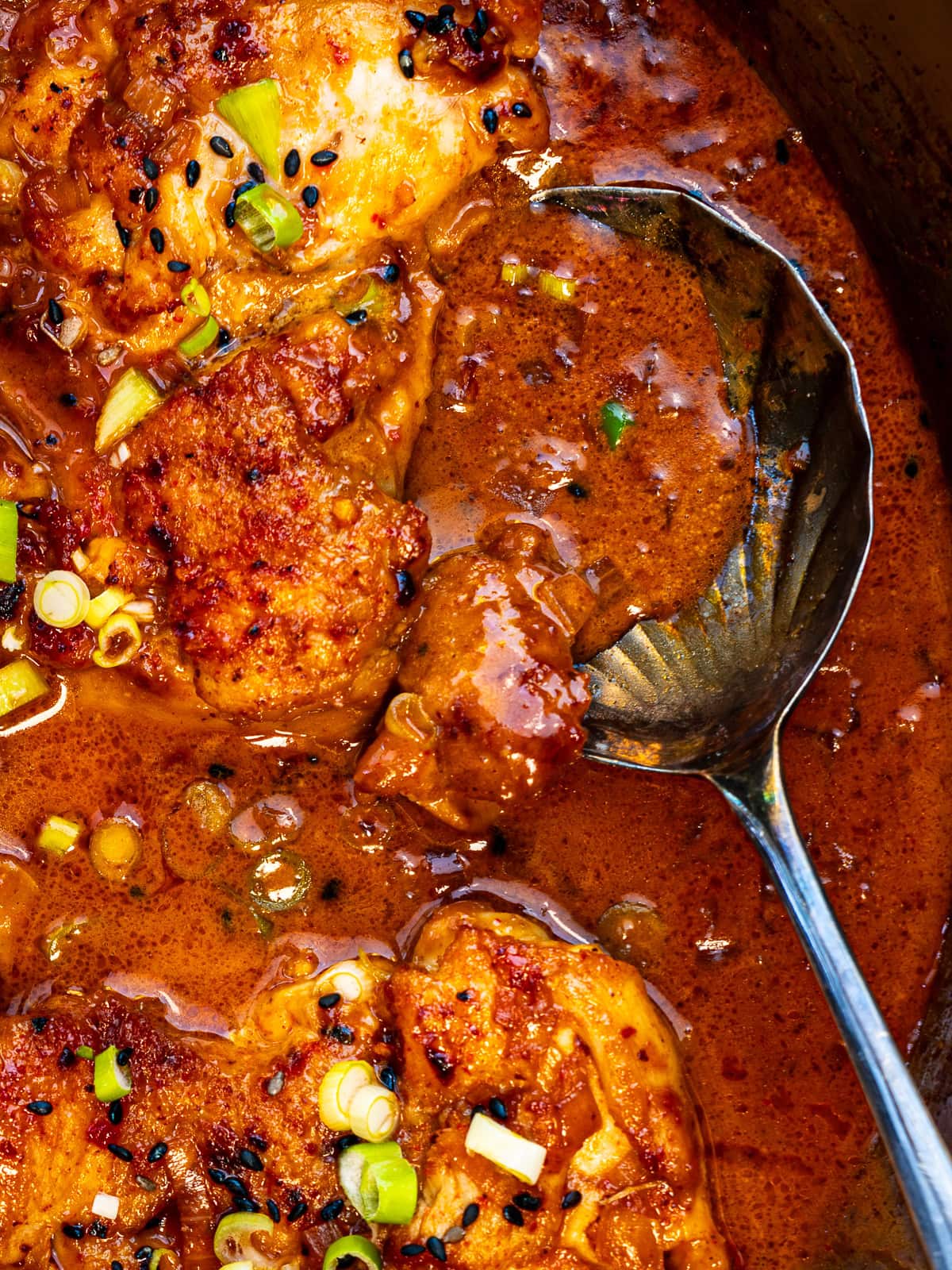
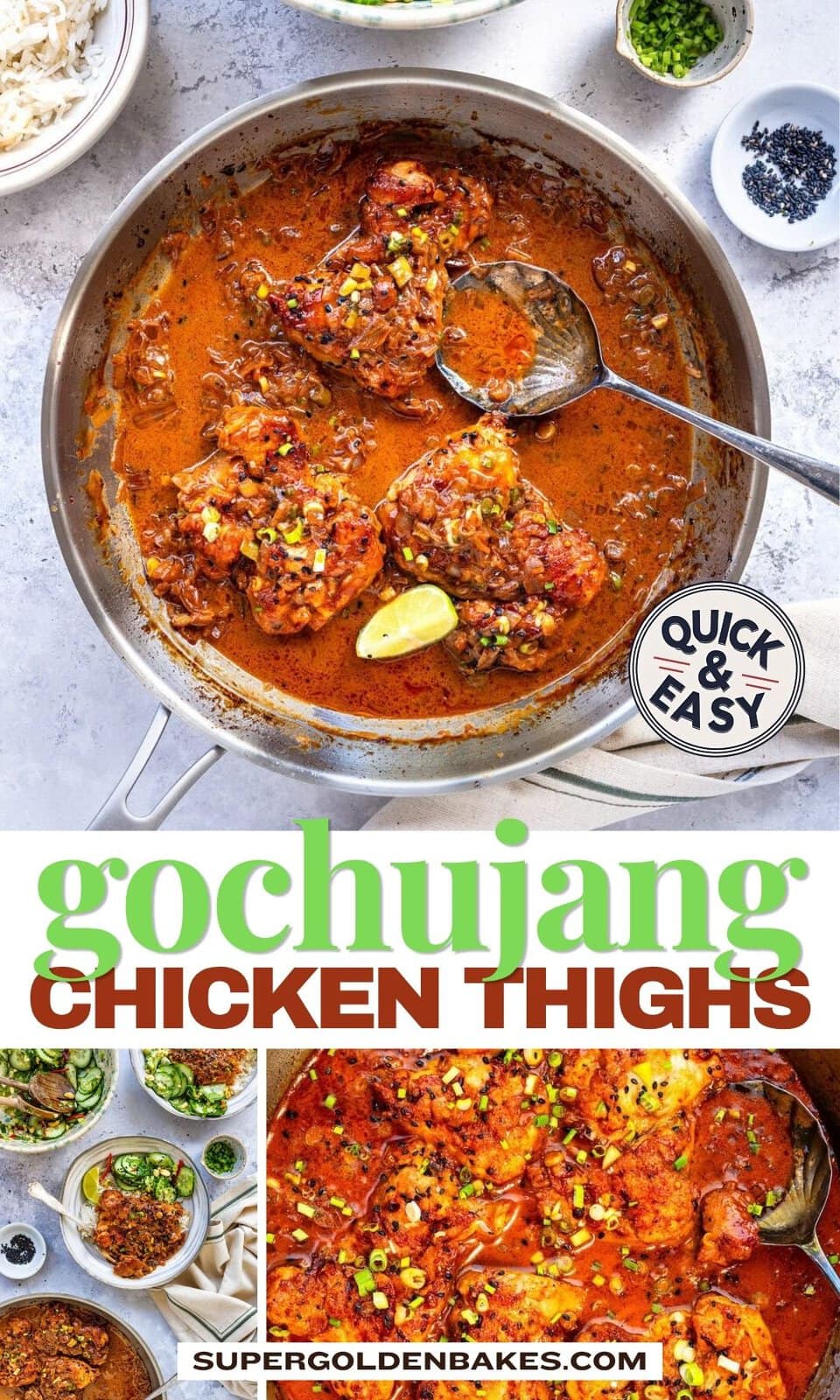
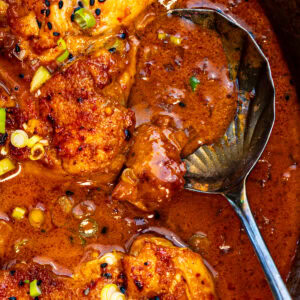
Gochujang Chicken Thighs – sticky, flavor-packed chicken cooked in an irresistible honey, garlic and gochujang marinade and finished with a creamy coconut sauce. This easy chicken dish is bursting with flavor and ready in under 30 minutes.
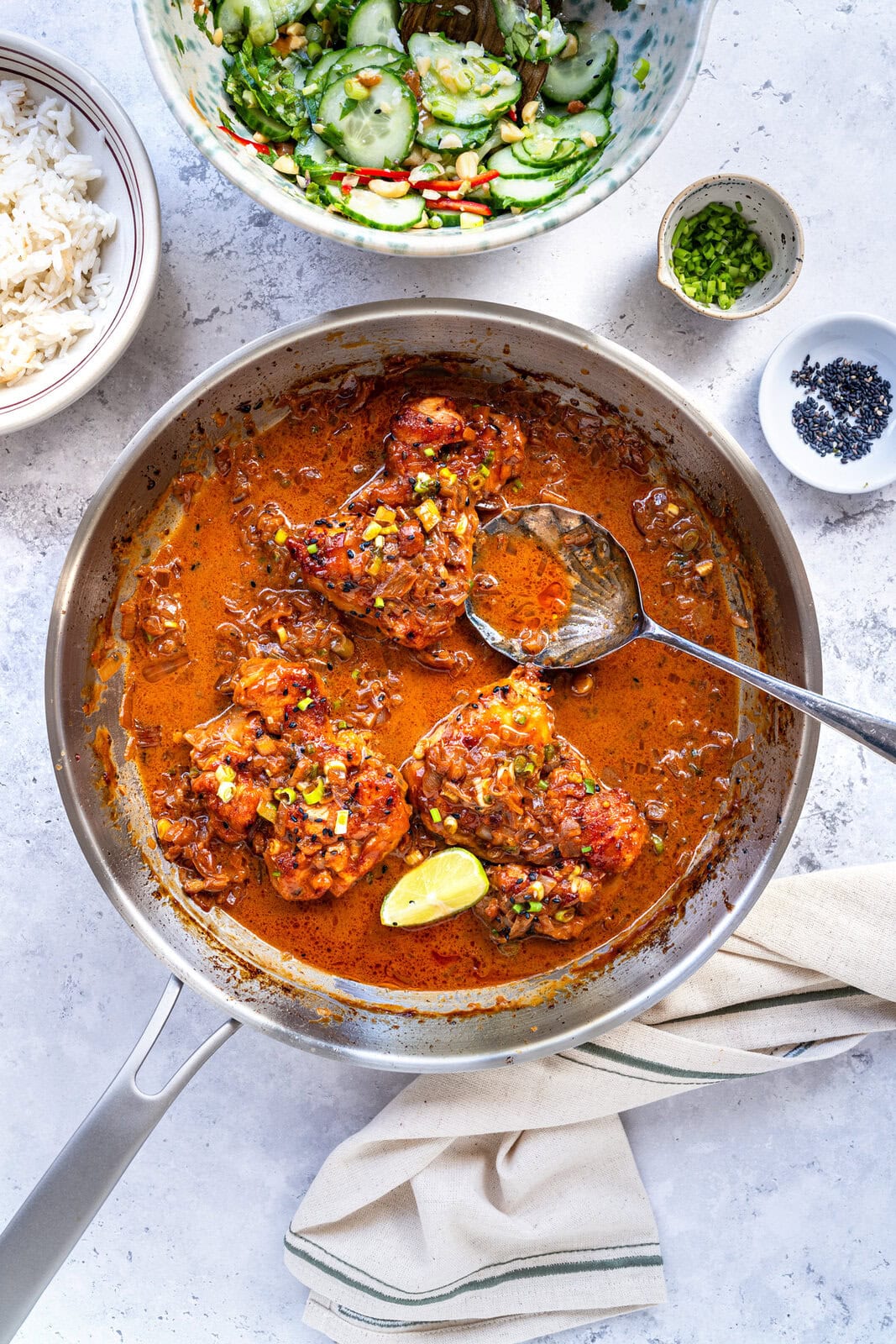
Looking for an easy chicken dinner that’s big on flavor and low on fuss? Stop scrolling and take a good look at these gochujang chicken thighs! Quick and easy? Check! Tons of flavor? Check! Happy family? Check!
Gotta love a recipe that comes together quickly and tastes amazing – better than takeout, if I do say so myself. The combination of gochujang, honey, garlic, sesame oil and skinless boneless chicken thighs is dynamite. Serve over coconut rice with a quick cucumber salad and you have a feast for the senses!
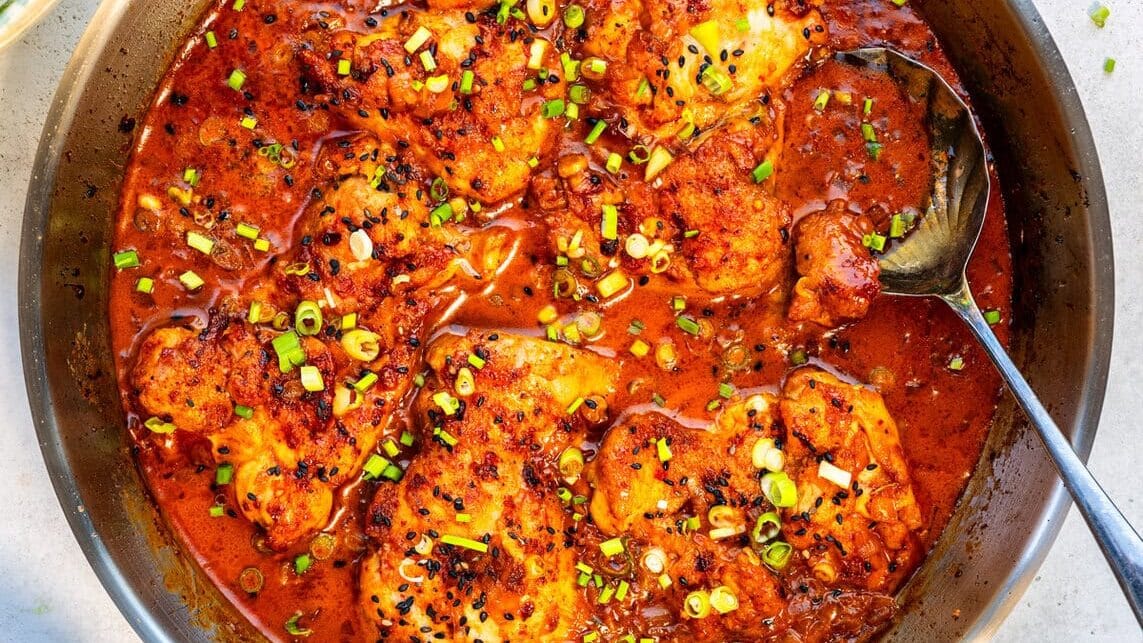
Here’s What You’ll Need
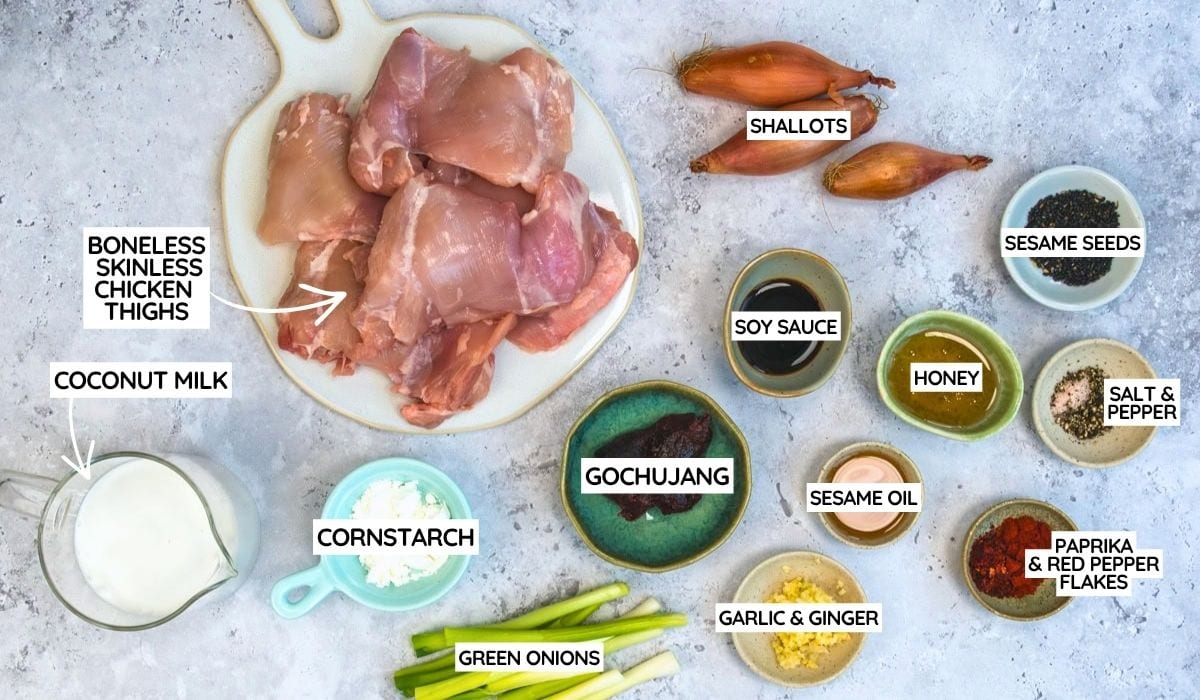
There’s just one special ingredient in this gochujang chicken recipe – and the clue is in the name 😉 Let’s take a look at the key ingredients:
- Our star – Gochujang: This Korean fermented chili paste is made from a blend of red chili powder (gochugaru), fermented soybean powder (meju), glutinous rice and salt. It tastes deeply savory and a little sweet, and gives dishes a real flavor injection!
- Marinade ingredients: Honey for sticky sweetness, classic aromatics like minced garlic and ginger, low sodium soy sauce and sesame oil.
- Chicken: I use boneless, skinless chicken thighs – they’re relatively affordable, cook quickly and stay super tender.
- Seasoning: Salt, pepper, paprika, red pepper flakes and cornstarch to season the chicken.
- Shallots: Finely diced shallots give the dish a mild onion flavor.
- Shaoxing: A splash of this rice cooking wine helps deglaze the pan but you can replace with chicken broth if needed.
- Coconut milk: This finishes the recipe with a touch of creamy sweetness that balances the mild heat of the marinade.
- Lime juice or a little rice vinegar, to brighten the sauce.
- Neutral oil and unsalted butter to fry up the chicken.
- Green onions: (a.k.a. scallions / spring onions) and black sesame seeds to garnish.
How to Make Gochujang Chicken Thighs
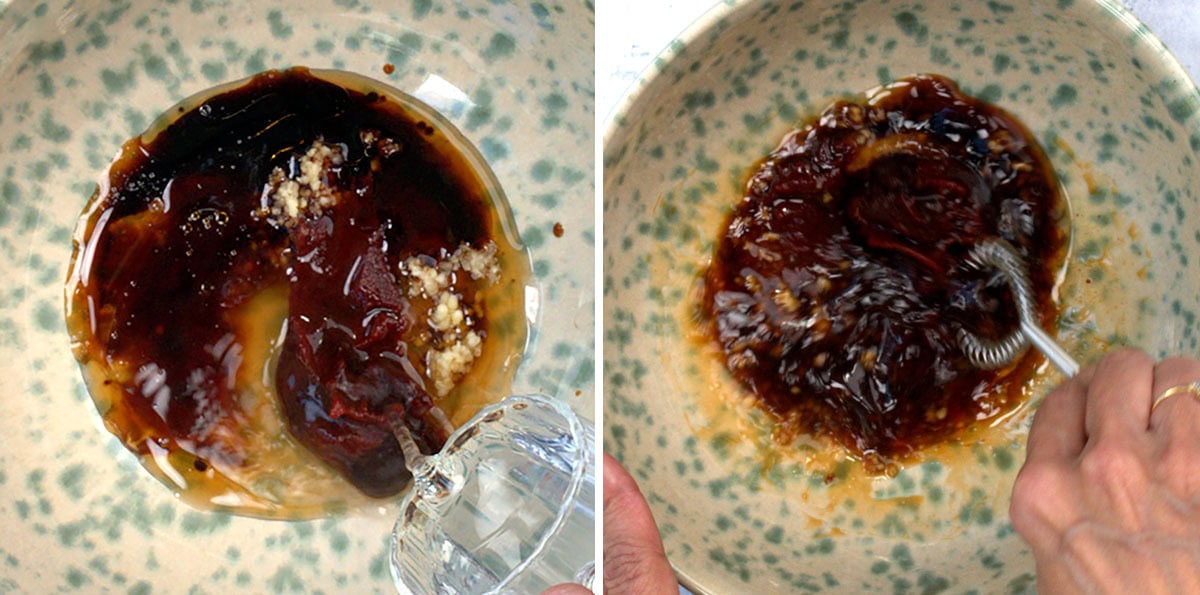
- Add all of the marinade ingredients in a bowl and just enough hot water to loosen the chili paste. Stir well to combine and set aside for now.
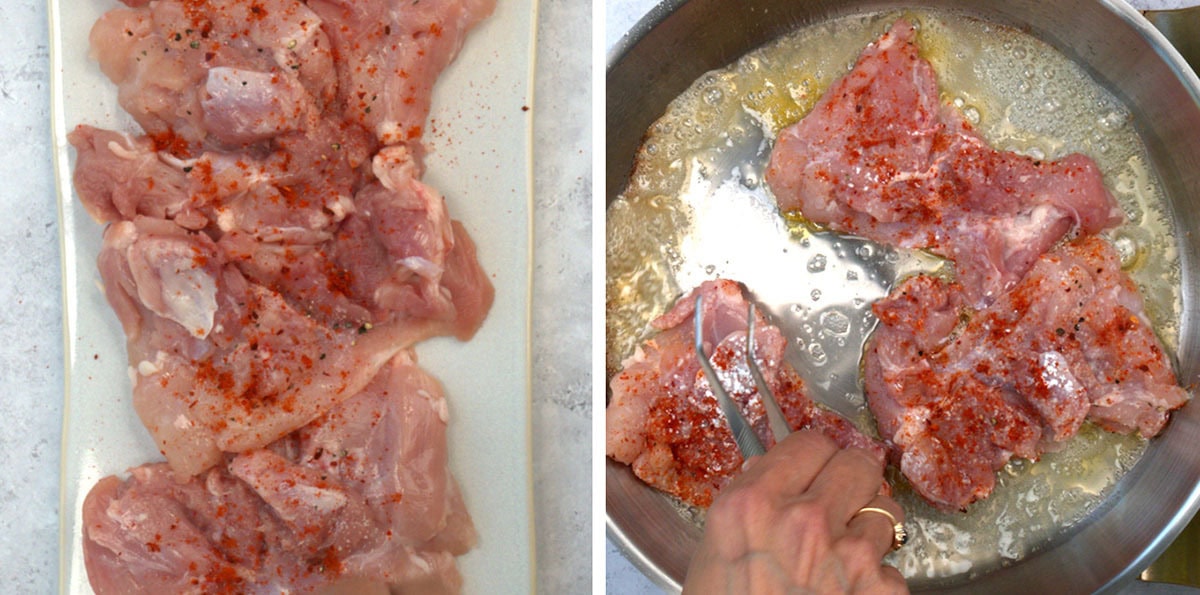
- Trim the chicken of any fatty bits and pat dry. Season with salt, pepper, paprika and red pepper flakes, and dust with the cornstarch.
- Heat the oil and butter in a large pan and sear the chicken for 2-3 minutes per side over medium-high heat, until nicely golden.
- Pour the Shaoxing and let it bubble away until almost completely evaporated, scraping the bottom of the pan to loosen any sticky bits.
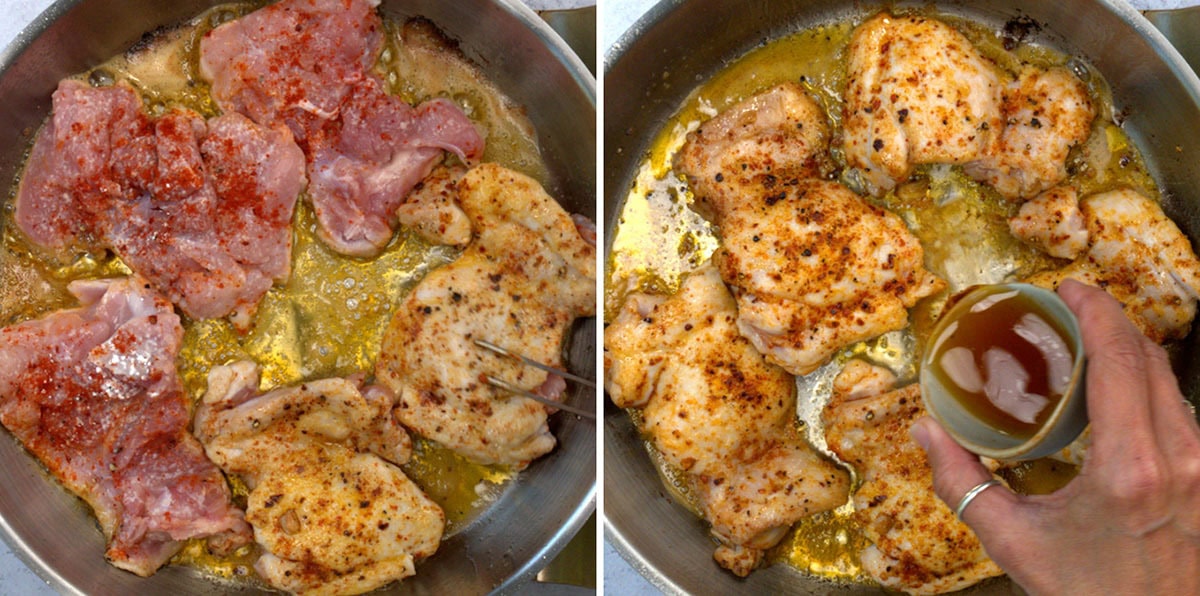
- Add most of the marinade and cook for a further 4 minutes, flipping the chicken over so it’s nicely coated with the sticky glaze on both sides. Transfer the chicken onto a plate.
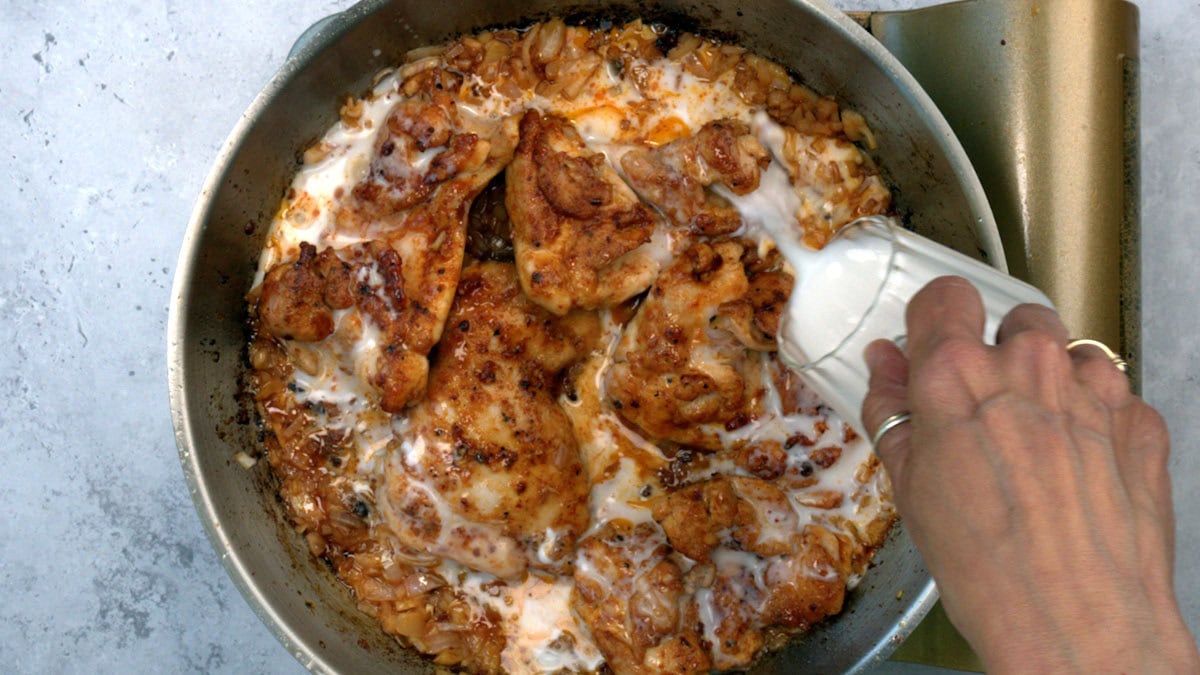
- Lower the heat to medium-low and sauté the shallots for 5 minutes, stirring often. Return the chicken to the pan and pour in the coconut milk and remaining marinade. Bring to a simmer and cook until the sauce has reduced.
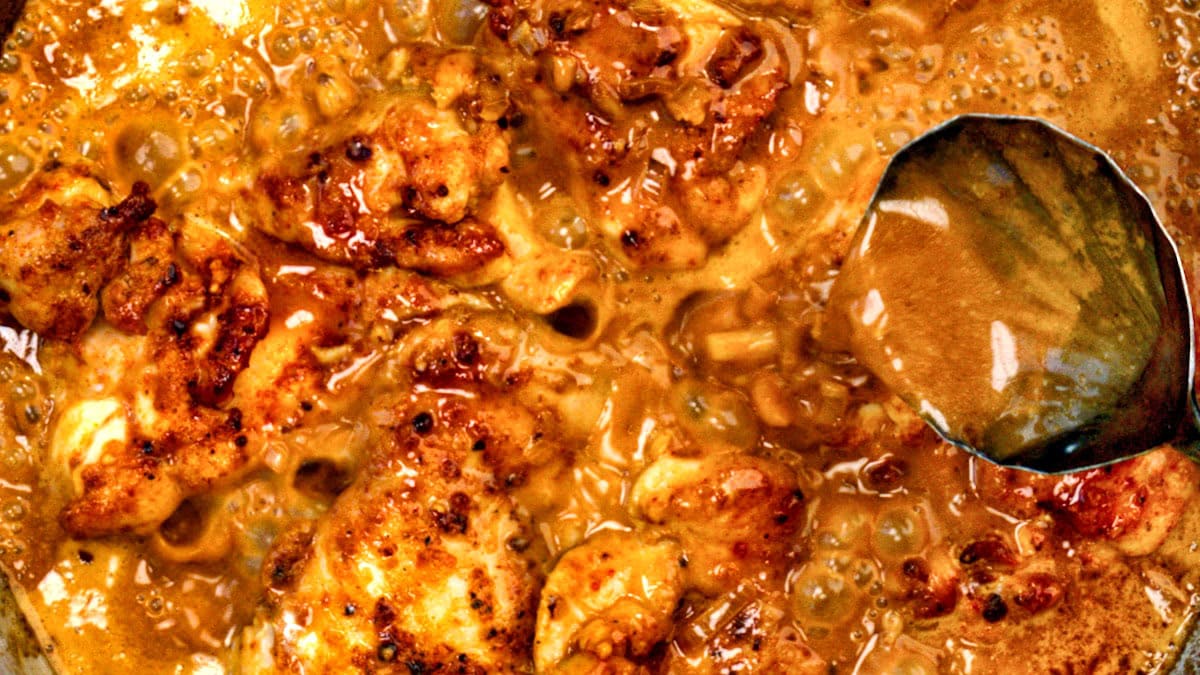
- Taste the sauce and add the lime juice or rice vinegar to balance the flavors. Serve the chicken garnished with green onions and sesame seeds.
Serving Suggestions
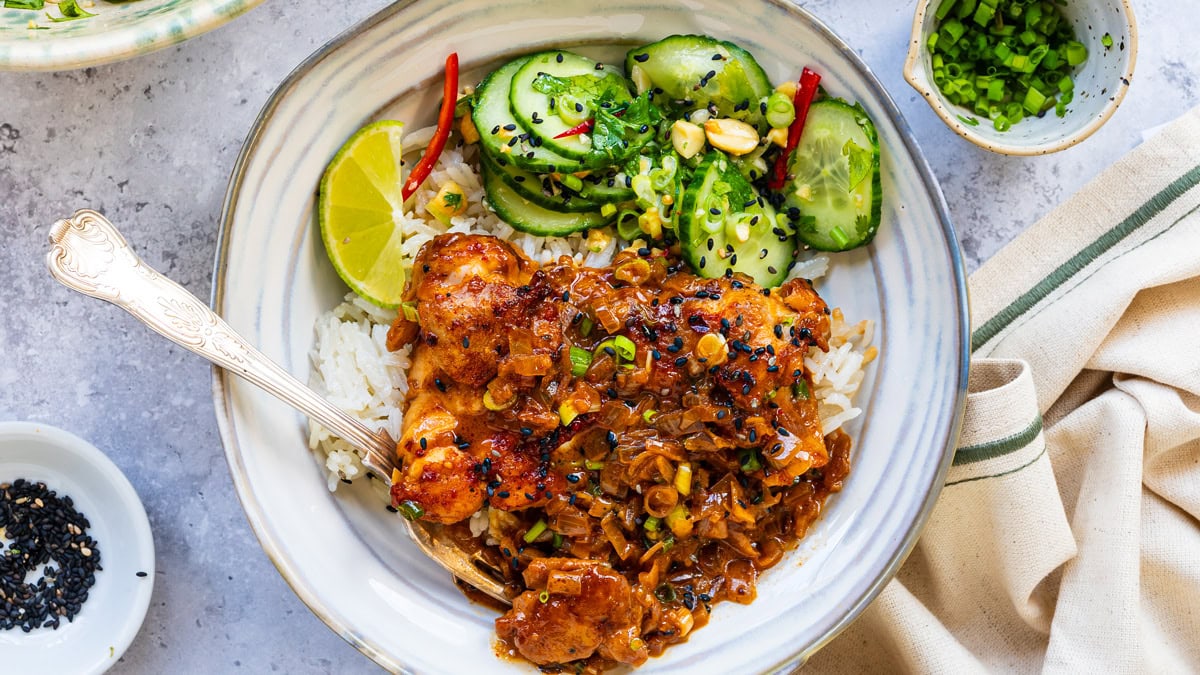
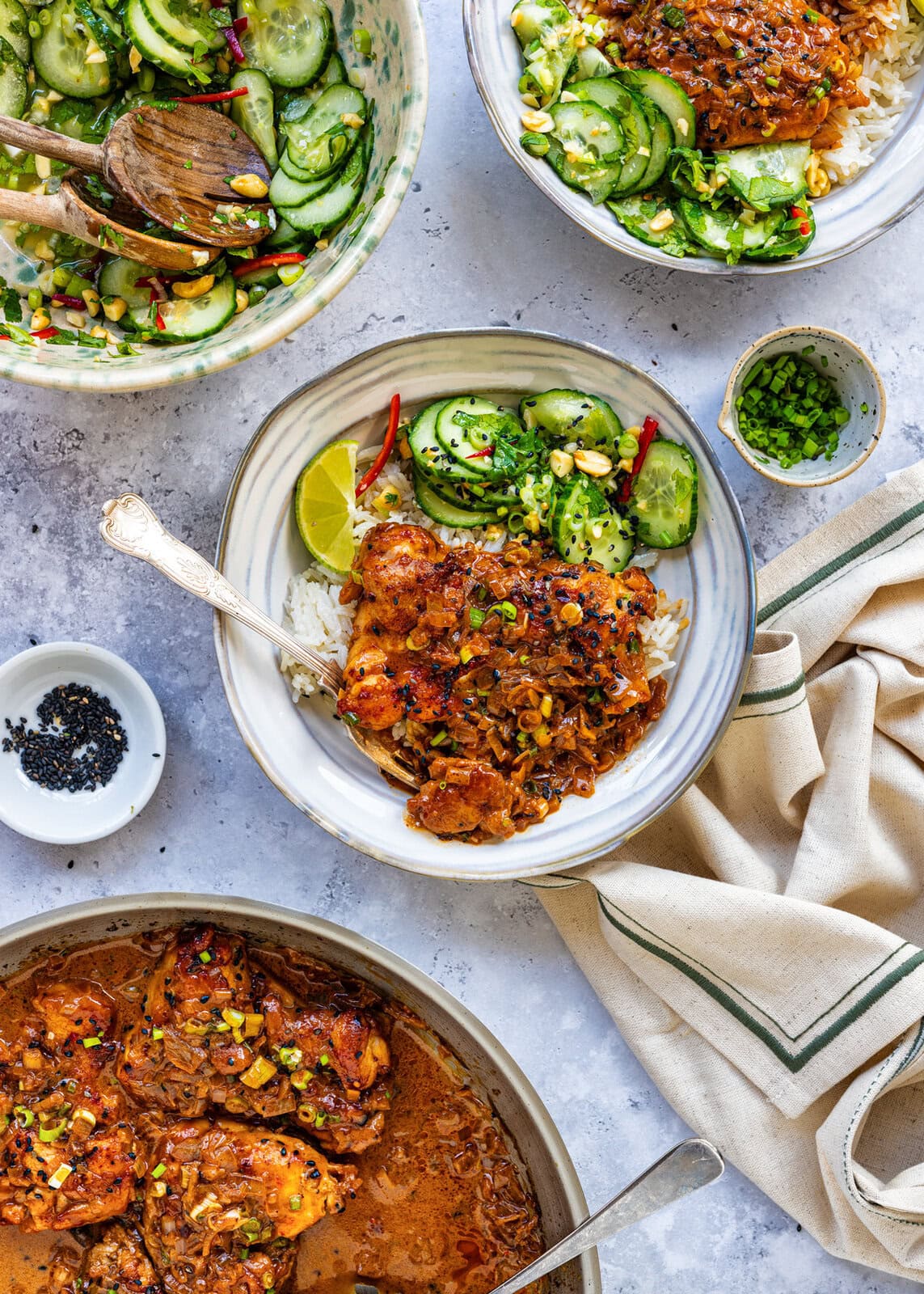
Coconut rice is the perfect partner for this dish, soaking up the gochujang sauce nicely. A quick Asian cucumber salad brightens up the overall flavor or you could opt for steamed greens, edamame beans or broccoli.
Recipe Notes and Tips
- Gochujang paste can range from fairly mild to really spicy – I used a mild tasting one in this recipe. You may need to adjust the amount depending on the heat levels in yours.
- Substitutions: You can make this recipe using skinless chicken breasts if you prefer but chicken thighs really do work better and are more flavorful.
- Recipe variation: You can leave out the coconut milk and shallots and just make sticky gochujang chicken using the marinade if you prefer.
- Prep ahead: Make the marinade up to two days ahead. Transfer to a sealed jar and store in the fridge until needed. You can try it with shrimp or roasted vegetables as well, it’s quite versatile.
- Leftovers: Store any leftovers in an airtight container in the refrigerator for up to 4 days. Reheat in the microwave or stovetop, adding a little water to loosen the sauce as needed.
👉 Please leave a comment and rating if you try this Gochujang Chicken Thigh recipe, follow me on Pinterest for more easy recipes and don’t forget to tag me on @Instagram or TikTok so I can see your creations.
Gochujang Chicken Thighs
Video
Ingredients
For the marinade
- 2 tbsp gochujang paste adjust according to heat levels
- 3 tbsp honey
- 2 tbsp low sodium soy sauce
- 2 tsp sesame oil
- 4 cloves garlic minced
- 2 tsp ginger paste or freshly grated ginger
- 3 tbsp hot water or as needed
For the chicken
- 8 chicken thighs skinless and boneless
- 1 tsp paprika
- ½ tsp salt
- ¼ tsp black pepper
- ¼ tsp red pepper flakes
- 1 ½ tbsp cornstarch (= cornflour)
- 1 tbsp neutral oil or as needed
- 1 tbsp unsalted butter
- ¼ cup (60ml) Shaoxing wine or chicken broth
- 3 shallots finely diced
- ½ cup (120ml) coconut milk full fat
- 2 tbsp lime juice or to taste
Cucumber Salad
- 3 green onions finely diced
- 1 clove garlic minced
- 1 tsp ginger grated or minced
- 2 tsp low sodium soy sauce
- 2 tsp sesame oil
- ¼ tsp fish sauce or rice vinegar
- ¼ tsp sugar
- 1 medium cucumber sliced very thin
- 1 tbsp sesame seeds or chopped peanuts
To serve
- 3 green onions finely diced
- 1 tbsp sesame seeds to garnish
Instructions
- Add all the marinade ingredients in a bowl and add just enough hot water to loosen the chili paste. Stir well to combine and set aside for now.2 tbsp gochujang paste, 3 tbsp honey, 2 tbsp low sodium soy sauce, 2 tsp sesame oil, 4 cloves garlic, 2 tsp ginger paste, 3 tbsp hot water
- Trim the chicken of any fatty bits and pat dry. Season with salt, pepper, paprika and red pepper flakes. Dust with the cornstarch.8 chicken thighs, 1 tsp paprika, ½ tsp salt, ¼ tsp black pepper, ¼ tsp red pepper flakes, 1 ½ tbsp cornstarch
- Heat the oil and butter in a large pan and sear the chicken for 2-3 minutes per side over medium-high heat, until nicely golden.1 tbsp neutral oil, 1 tbsp unsalted butter
- Pour the cooking wine and let it bubble away until almost completely evaporated, scraping the bottom of the pan to loosen any sticky bits.¼ cup (60ml) Shaoxing wine
- Add most of the marinade and cook for a further 3-4 minutes, flipping the chicken over so it's nicely coated with the sticky glaze on both sides. Transfer the chicken onto a plate.
- Lower the heat to medium-low and add a splash more oil to the pan if needed. Sauté the shallots for 5 minutes, stirring often.3 shallots
- Return the chicken to the pan and pour in the coconut milk and remaining marinade. Bring to a simmer and cook until the sauce has reduced.½ cup (120ml) coconut milk
- Taste the sauce and add the lime juice or rice vinegar to balance the flavors.2 tbsp lime juice
- Combine all the salad ingredients in a bowl and stir well.3 green onions, 1 clove garlic, 1 tsp ginger, 2 tsp low sodium soy sauce, 2 tsp sesame oil, ¼ tsp fish sauce, ¼ tsp sugar
- Add the cucumbers and toss well to combine. Garnish with sesame seeds or chopped roasted peanuts.1 medium cucumber, 1 tbsp sesame seeds
- Serve the chicken over coconut rice, garnished with green onions and sesame seeds and the cucumber salad on the side.3 green onions, 1 tbsp sesame seeds
Notes
- Gochujang paste can range from fairly mild to really spicy. I used a mild tasting one in this recipe. You may need to adjust the amount depending on the heat levels in yours.
- Substitutions: You can make this recipe using skinless chicken breasts if you prefer but chicken thighs really do work better and are more flavorful.
- Recipe variation: You can leave out the coconut milk and shallots and just make sticky gochujang chicken using the marinade if you prefer.
- Prep ahead: Make the marinade up to two days ahead. Transfer to a sealed jar and store in the fridge until needed. You can try it with shrimp or roasted vegetables as well, it’s quite versatile.
- Leftovers: Store any leftovers in an airtight container in the refrigerator for up to 4 days. Reheat in the microwave or stovetop, adding a little water to loosen the sauce as needed,
Nutrition
Nutritional information is always approximate, and will depend on quality of ingredients and serving sizes.