
Sourdough Olive Bread

, Updated Oct 13, 2022
This post may contain affiliate links. Please read our disclosure policy.
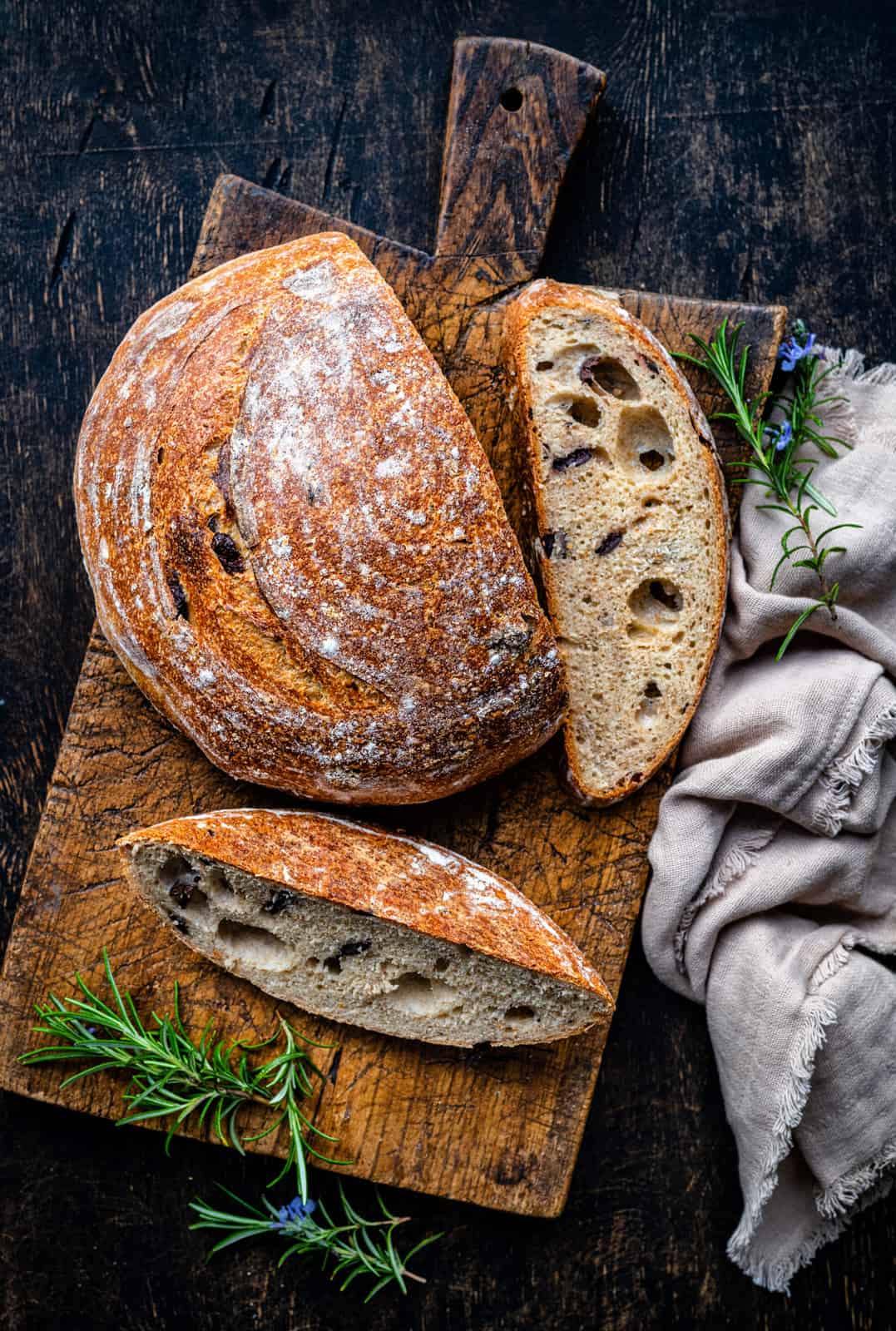
This delicious Sourdough Olive Bread is so easy to make! Just mix the dough, rest overnight, shape and bake. This no knead sourdough bread studded with olives and rosemary is perfect for beginners.
Post may contain affiliate links. For more information, check my disclosure
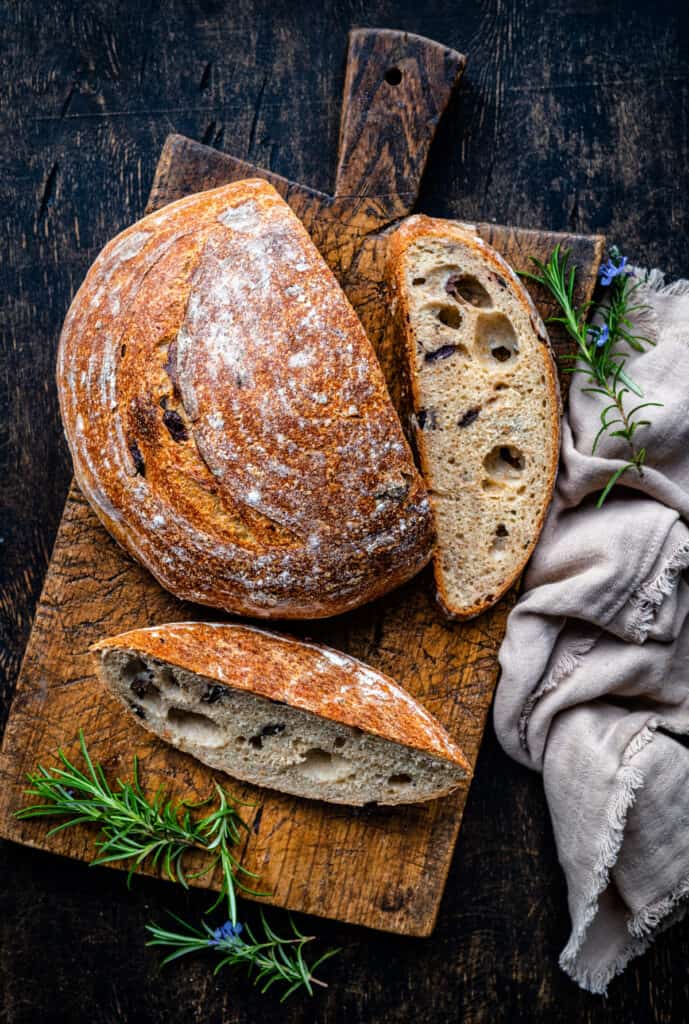
Ever tasted olive sourdough? The crunch as you bite through the crisp crust, the wonderful tangy flavor within…
I used to buy olive bread from our local bakery but my homemade sourdough olive bread tastes even better!!
WHAT DO I NEED TO MAKE SOURDOUGH BREAD?
Bread recipes generally require only four basic ingredients: water, flour, salt and yeast. Sourdough bread replaces the yeast with a sourdough starter which needs longer fermentation.
Many sourdough recipes are stuffed full of intimidating – to the novice baker – terms. Levain, autolyse, hydration, stretch and fold… plus strict timetables on how to make the perfect loaf.
I have simplified my method and recipe to make it accessible to sourdough newbies, or simply those with limited time. Because although this recipe takes several hours to complete, most of this time is hands off.
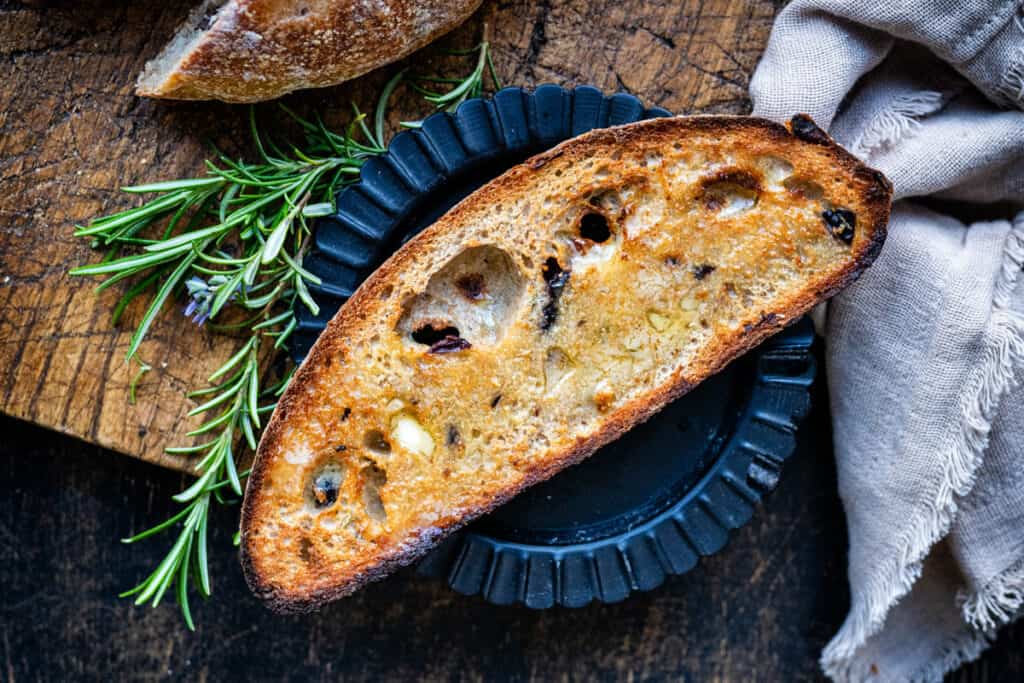
You Will Need
Here’s what you will need to make this flavored sourdough loaf. I provide measurements in cups, but for accuracy please use digital scales.
- Active and mature sourdough starter
- Flour: here I used strong white bread flour and a bit of rye flour for added flavor
- Salt and sugar
- Water – ideally filtered or bottled
- Kalamata olives – pitted and diced
- Fresh rosemary, finely diced
- Olive oil
You will also need these useful tools
- Accurate digital scales
- A mixing bowl – I used this Lekue bread bowl to mix and proof the sourdough. You can also use it to bake yeasted bread but I wouldn’t recommend it for baking sourdough
- A Dough whisk for mixing ingredients
- Banneton or a bowl (invest in a sourdough bread baking kit on Amazon that comes with a lame for scoring the bread)
- Dutch oven to bake the bread in
- A good quality bread knife
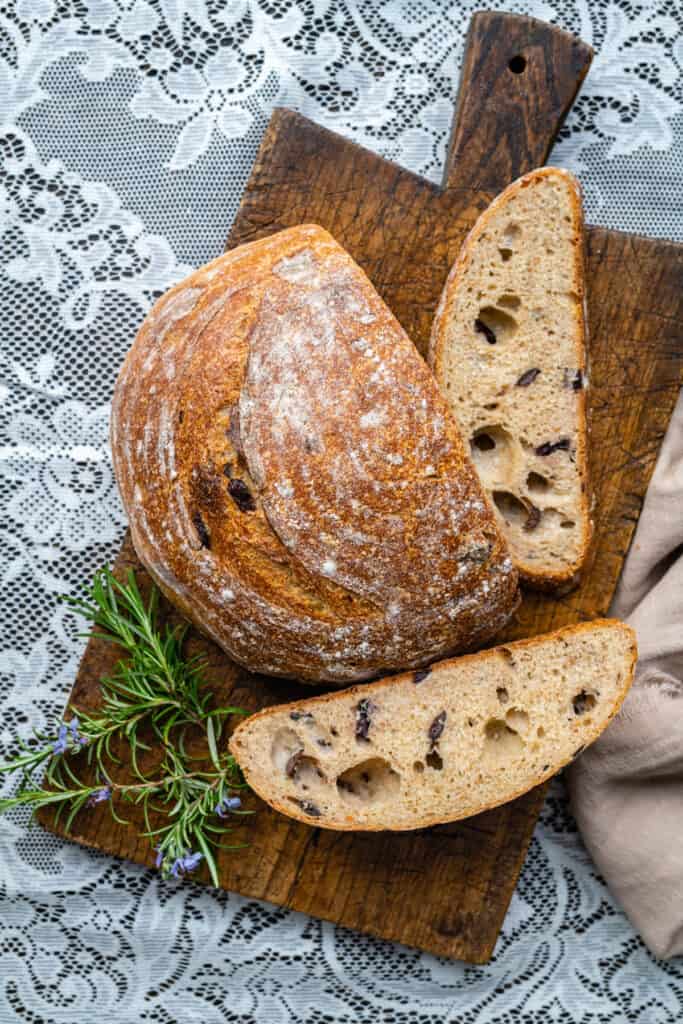
HOW TO MAKE SOURDOUGH OLIVE BREAD THE EASY WAY!
Full measurements and instructions can be found on the printable recipe card at the bottom of the page. Please take a look at the steps and video before attempting this recipe!
Prepare your leaven: In a jar, combine water, flour and mature sourdough starter. Mix well, cover with a clean kitchen towel and leave at room temperature until bubbly and almost doubled in size. This can take 2-6 hours or longer based on how mature your starter is and, crucially, the temperature of your kitchen.
This is your “levain” (leaven) which will create the rise in your sourdough loaf. Test it is ready to bake with by adding a spoonful in a glass of water. If it floats you are ready to bake!
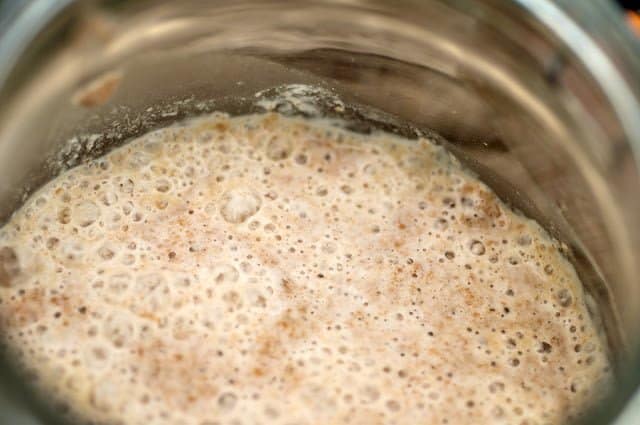
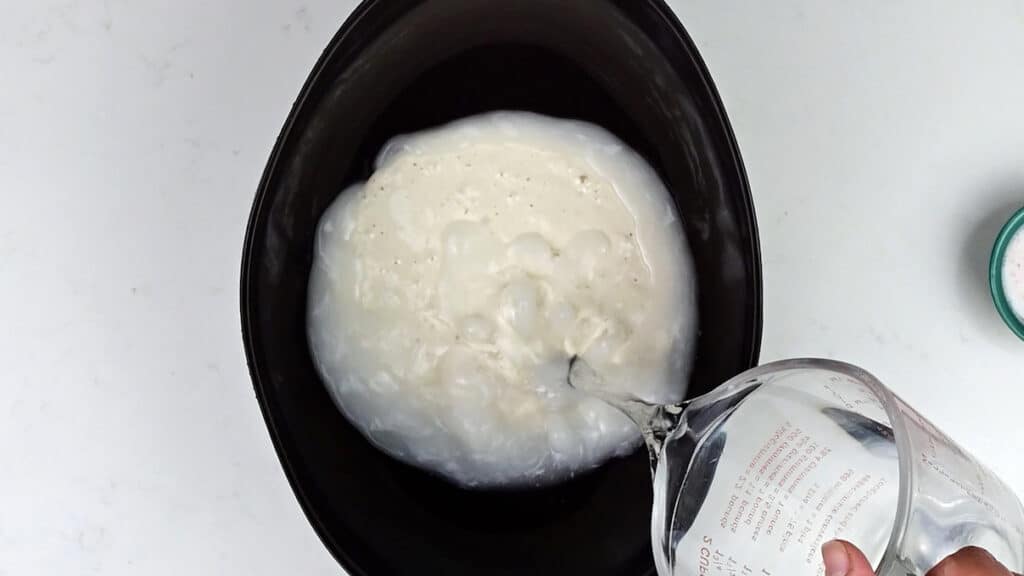
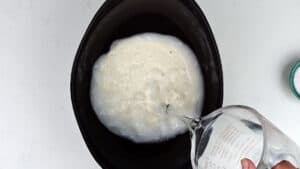
Add all of the starter (leaven) you prepared to a mixing bowl. Pour in room temperature water and mix well to combine.
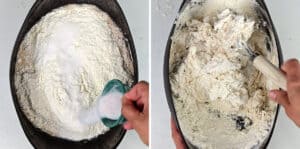
Stir in the rye flour, white bread flour, salt and sugar.
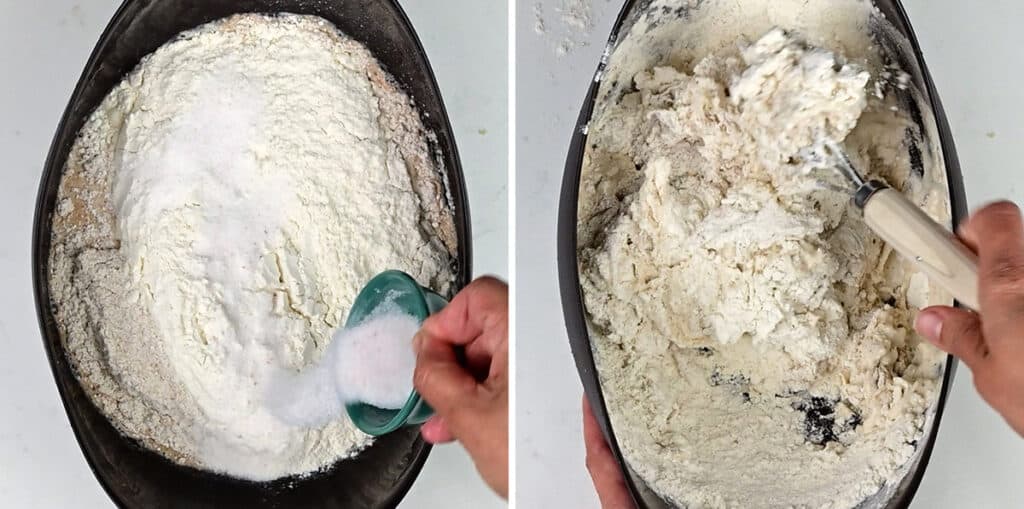
Use your hands to really mix in the flour and water together well until you have a shaggy dough. Cover with a clean kitchen towel and leave for 30-60 minutes.
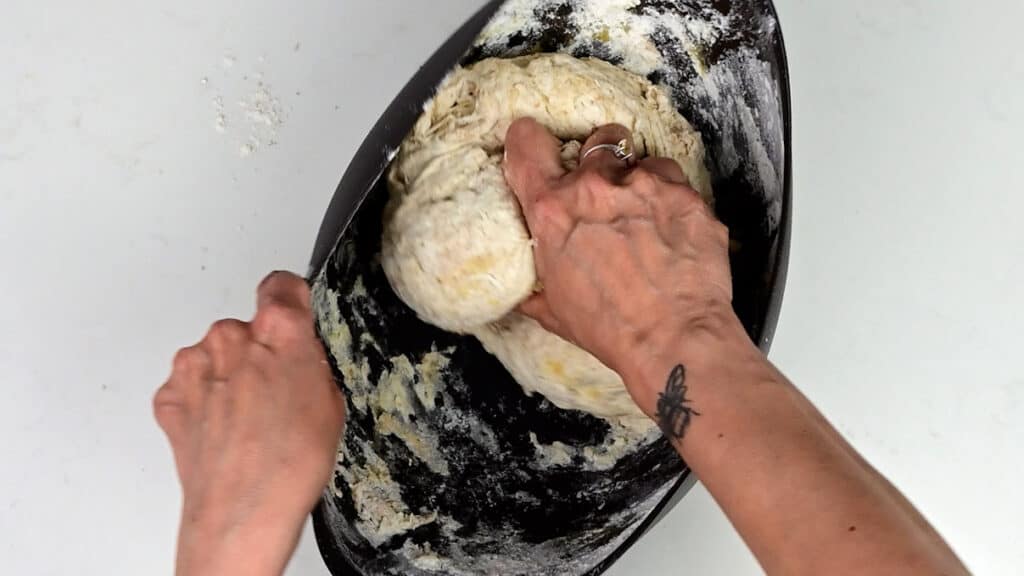
Add the chopped olives and rosemary to the middle of your dough. Rub a little olive oil on your handsl and take one side of the dough and stretch it over the top. Rotate the bowl while you repeat this action, thereby pushing the olives into the middle.
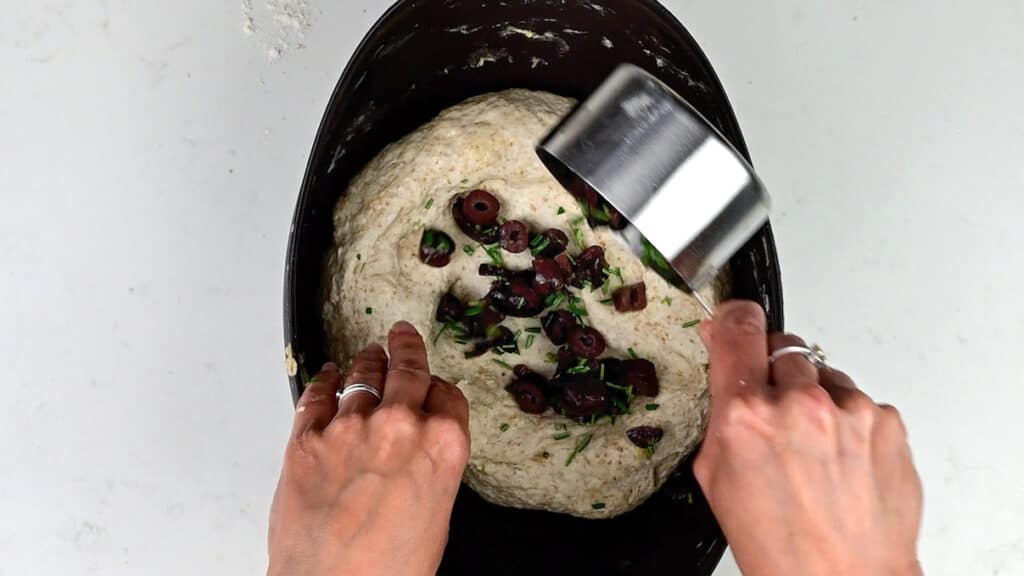
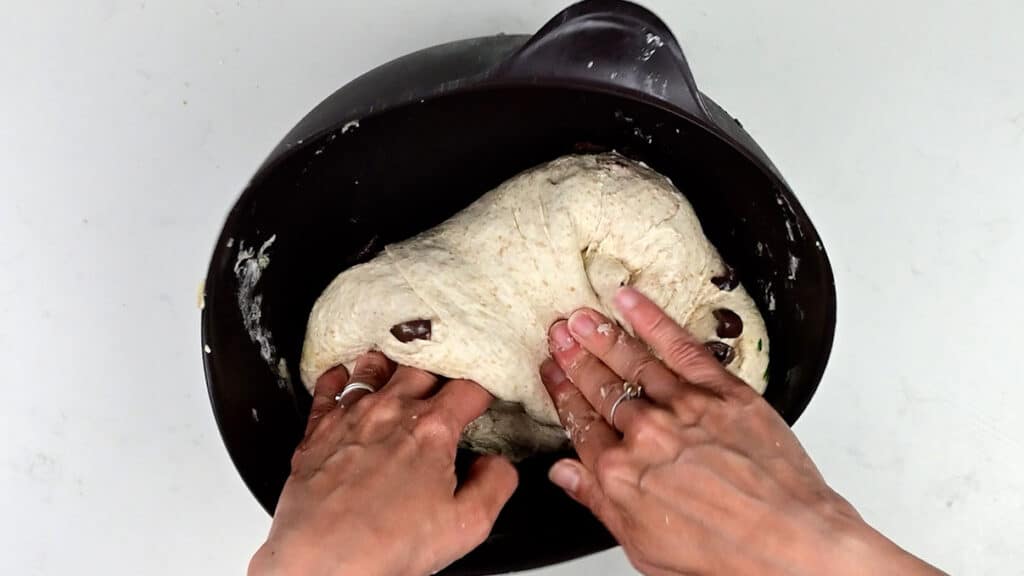
Put the dough into a lightly greased bowl – I like to use a glass Pyrex container. Cover and put in the fridge overnight (or until you are ready to bake). You can prove the dough at room temperature if you are able to keep an eye on it – the temperature of your kitchen will greatly affect how long it needs to prove for.
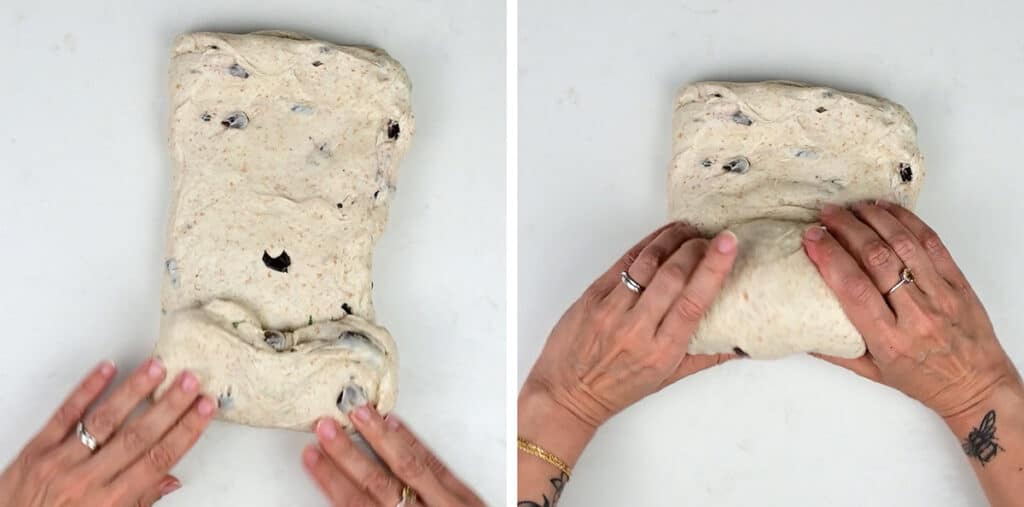
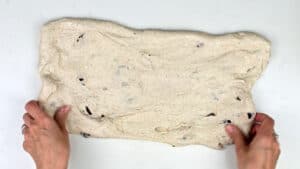
The following day take the dough out of the fridge and allow it to come to room temperature. Tip the dough onto your kitchen worktop – no need to add flour. Gently stretch to a rectangle shape, doing so gradually so as not to tear the dough if possible.
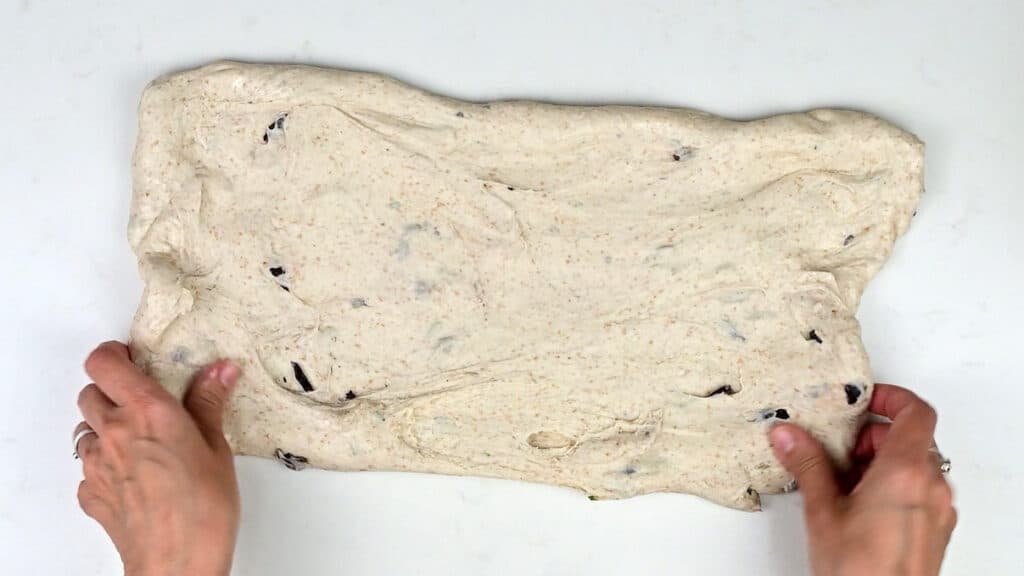
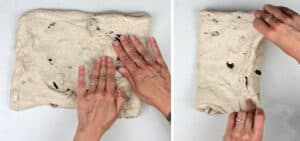
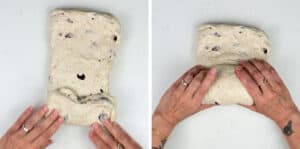
Fold the dough into three sections (letter fold). Pick up one of the sides of your dough and fold it a third of the way over. Now fold the other side over the top, as you would a letter.
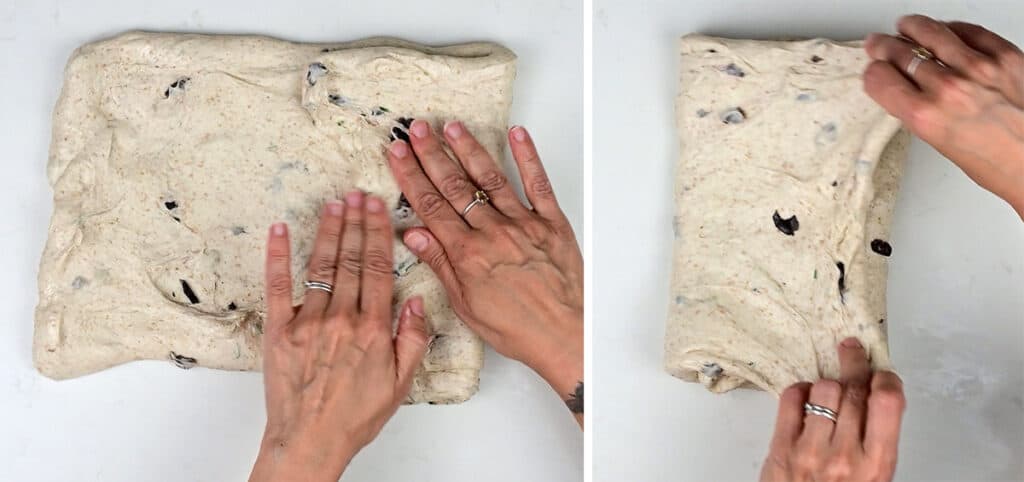
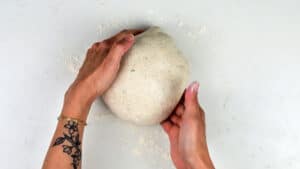
Roll the dough into a tight ball and flip over seam side down.
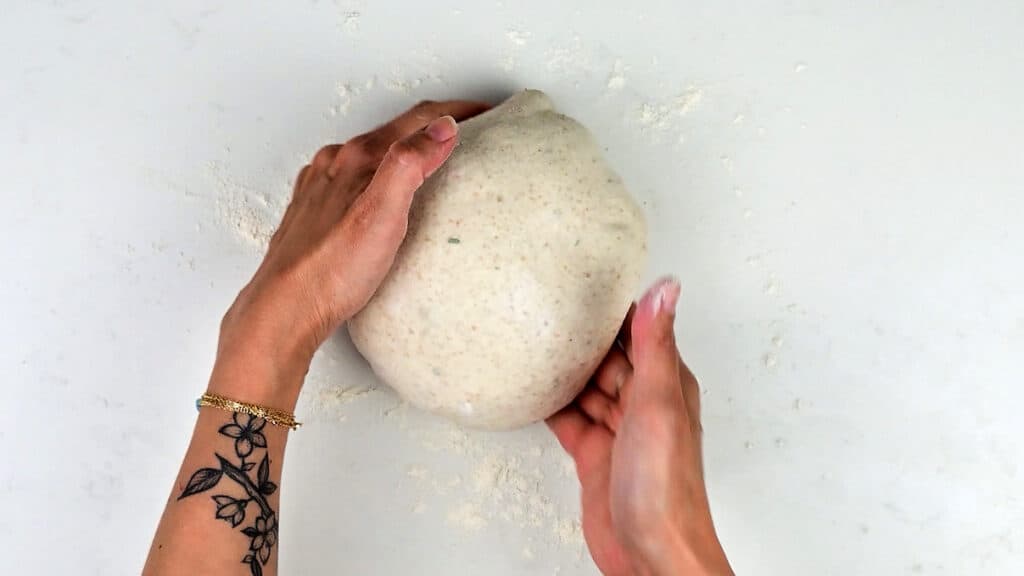
Use your hands to shape the loaf into a spherical shape, sprinkling with a little flour as you do.
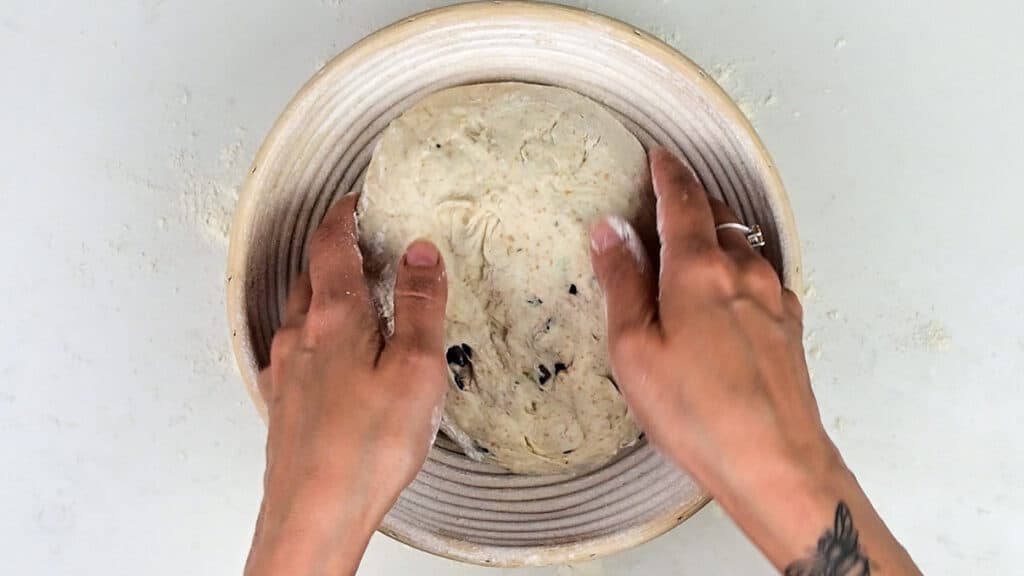
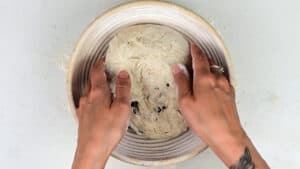
Cup the loaf into your hands and put into a banneton, with the seam side up. Cover loosely with a towel or a bag and leave in a warm spot to rise for 1-2 hours or until it springs back slowly when prodded. The temperature in your house will dictate how long it will take for your dough to prove.
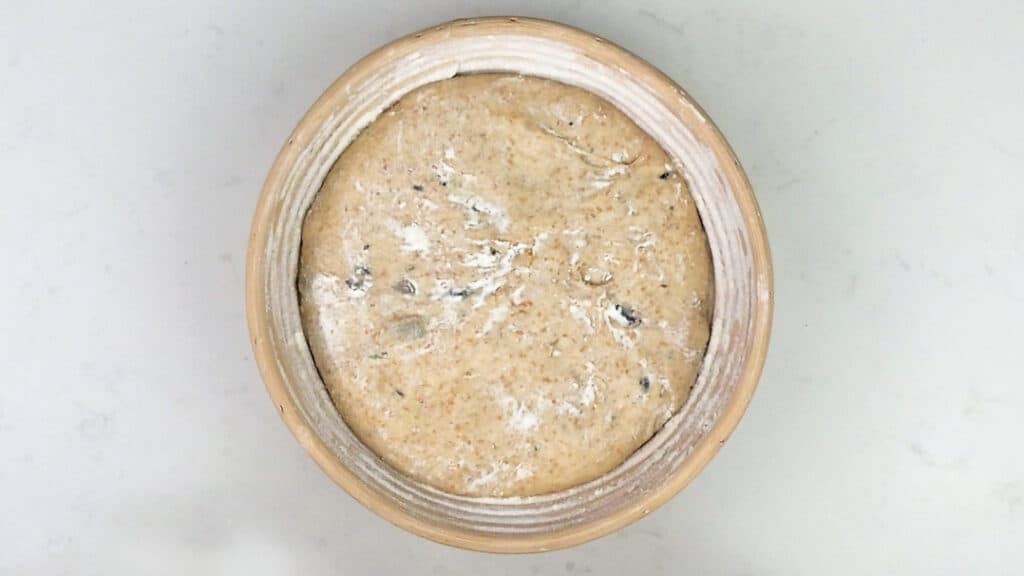
Check your loaf is ready to bake by gently prodding with a finger. If the indent springs back slowly leaving a small dent then you are ready to bake. If it springs back really quickly you need to allow it to rise for a little longer.
Preheat your oven for at least 45 minutes before your bread is ready to bake and place a cast iron pot (Dutch Oven) on the lower shelf to preheat.
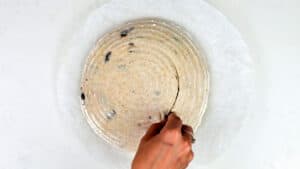
Cover the banneton with parchment paper (I like to run mine through water first) and gently flip the loaf onto it. Use a lame or sharp knife to score the dough.
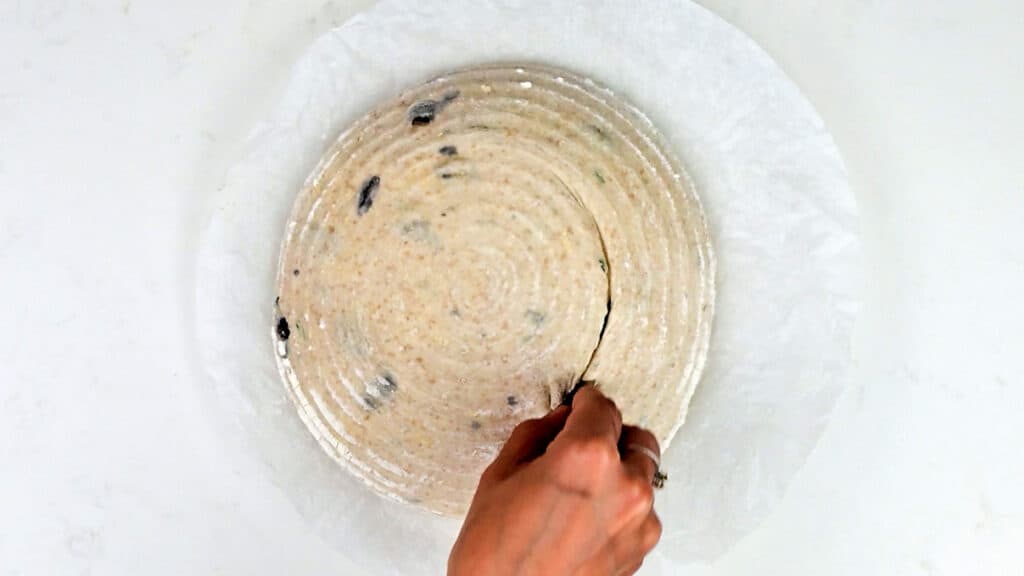
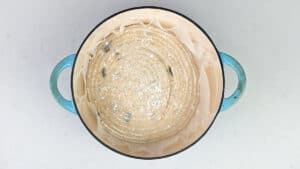
When the oven has reached optimum temperature, take the pot from the oven using pot holders. Carefully lift the loaf into the Dutch Oven, cover and bake for 20 minutes. Take the lid off and continue to cook for a further 20-25 minutes or until the bread sounds hollow when tapped on the underside. Cool on a wire rack before slicing!
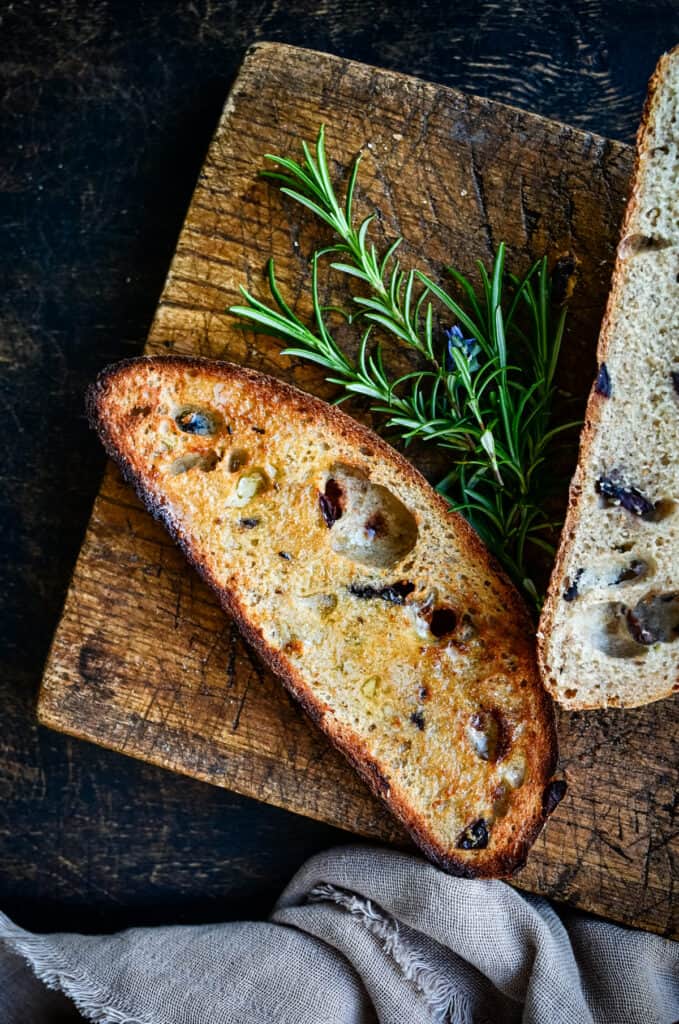
STORING SOURDOUGH BREAD
You can store sourdough in a bread bin or bread bag. Slice your sourdough loaf once it is properly cool (not still warm!) and store in the freezer. Toast from frozen!
TRY THESE DELICIOUS SOURDOUGH RECIPES!
- Cinnamon Raisin Sourdough Bread
- Sourdough Cinnamon Rolls
- Overnight Sourdough Bread | No Knead, No Fold
- Easy Sourdough Focaccia – Perfect for Beginners
- Sourdough Cheese Scones | Sourdough Biscuits

Sourdough Olive Bread
Video
Ingredients
Starter (Levain)
- 60 g (¼ cup) mature starter room temperature
- 60 g (¼ cup) white bread flour
- 60 g (¼ cup) tepid water (filtered, bottled or boiled and cooled tap water)
Olive Sourdough
- 150 g ripe levain (all of the starter you prepared earlier)
- 300 g (1 ¼ cups) water (filtered, bottled or boiled and cooled tap water)
- 400 g (3 ¼ cups) white bread flour plus extra for dusting
- 100 g (1 cup) dark rye flour or you can use wholemeal
- 12 g (2 tsp) sea salt
- ½ tbsp sugar (optional)
- 60 g (⅓ cup) diced black olives Kalamata olives
- 2 tbsp fresh rosemary leaves finely diced
Instructions
Prepare your starter (levain)
- Feed 60g of active starter with 60g flour and 60g lukewarm water. Leave for 4-6 hours until doubled in size, bubbly and floating in water (float test).

Prepare The Bread Dough
- Add 150g of bubbly starter in a large mixing bowl. Pour in 300g of water and mix well.

- Add the rye and white bread flour, salt and sugar and mix well with the dough whisk or your hands. It’s easier to have a feel for the dough if you use your hands. You will have a shaggy, slightly sticky dough.

- Transfer the dough into a rectangular container (I like a glass pyrex dish), cover and leave to rise at a COOL room temperature overnight (8-10 hours) or in the fridge for 12+ hours.
Shape The Sourdough
- If you have used the cold rise method (in fridge) allow the dough to come to room temperature before shaping.Tip the dough onto your kitchen worktop – no need to add flour. Gently stretch to a rectangle shape, doing so gradually so as not to tear the dough if possible.
- Fold the dough into three sections (letter fold). Pick up one of the sides of your dough and fold it a third of the way over. Now fold the other side over the top, as you would a letter.

- Roll the dough into a tight ball and flip over seam side down. Use your hands to shape the loaf into a spherical shape, sprinkling with a little flour as you do.
- Flip over, seam side down, and shape into a round loaf (known as a “boule”). Use your hands and a bench scraper to roll the loaf in your hands, slightly tucking the edges under as you go (please check the video for a demo).
Second Rise
- Cup the loaf into your hands and put into a prepared banneton, with the seam side up. Cover loosely with a towel or a bag and leave in a warm spot to rise for 1-2 hours or until it springs back slowly when prodded. The temperature in your house will dictate how long it will take for your dough to prove.
- Preheat your oven to 450F (230C) at least 45 minutes before the end of proving. Place a lidded pot (Dutch Oven) in the oven to preheat. Tip the loaf onto parchment paper and score the top using a sharp knife, razor or lame.
Bake your Sourdough
- Remove the pot from the oven using pot holders (please be very careful as it can easily give you very bad burns, as I can testify). Carefully place the dough into the pot, lifting it by the baking paper.
- Cover and bake for 20 minutes. Reduce the temperature to 425F (220C). Take the lid off the pot and cook for another 20-25 minutes. You can lift the bread out of the pot and cook directly on the oven shelf for the final 5 minutes. Cool the bread on a wire rack for at least an hour before slicing.


Notes
If you are using a banneton basket (you need to prep this first before first use) dust the basket with rice or gluten free flour, shaking out some of the excess. Carefully transfer your load seam side up in this case. Cover with a bag and leave to rise. When the dough is ready to bake, after the second rise, carefully invert onto baking paper then proceed to bake in a Dutch Oven. Storing Sourdough Bread
Cover the cooled loaf in a clean tea towel and store at room temperature – the bread will keep for 2-3 days. I prefer to slice the entire loaf and then freeze it – that way you can toast slices directly from frozen whenever the fancy takes you.
Nutrition
Nutritional information is always approximate, and will depend on quality of ingredients and serving sizes.


Turns out amazing! Will be making it every week for the family as we love olive bread. Thank you.