Beef Wellington – Easy Foolproof Recipe

, Updated Dec 09, 2025
This post may contain affiliate links. Please read our disclosure policy.

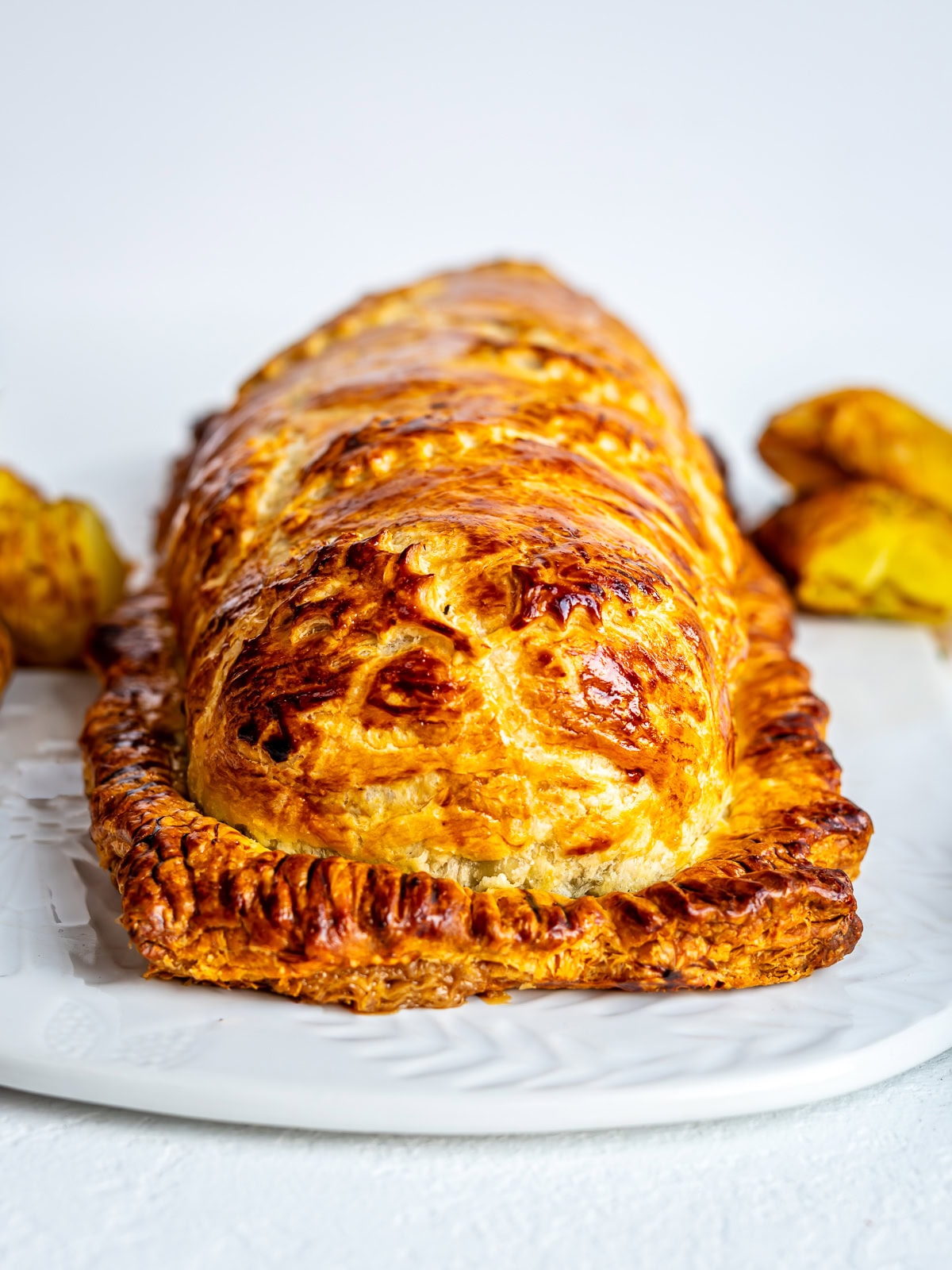
Beef Wellington – juicy beef tenderloin and rich mushroom duxelles encased in prosciutto and golden pastry. Follow my easy recipe to create this impressive dish at home – tips, tricks and step-by-step instructions for those new to Beef Wellington. (Yes, You Can Do It!)

Beef Wellington may look like a cheffy showstopper, but this version keeps things simple: juicy beef tenderloin, a garlicky mushroom duxelles and salty prosciutto all wrapped in golden puff pastry. Perfect for Thanksgiving, Christmas or any time you want to seriously impress!!
This Beef Wellington recipe takes the classic restaurant showstopper and makes it totally doable at home. You’ll sear a beef tenderloin, brush it with Dijon mustard, wrap it in a layer of savory prosciutto and mushroom duxelles, then tuck everything into buttery puff pastry.
The result? Crisp, flaky pastry on the outside, rosy pink beef in the center and a layer of mushrooms, shallots, garlic and thyme that keeps the meat juicy and full of flavor. It’s rich, indulgent and exactly the sort of main course that makes people go quiet when you slice into it.
Why you’ll love it
- A true showstopper – restaurant-worthy Beef Wellington at home!
- Make ahead friendly – assemble the Wellington, chill and bake before serving.
- Perfect for special occasions – Christmas, New Year’s Eve, birthdays, Valentine’s, Sunday roast… it never feels “everyday”.
- Impressive yet forgiving – the prosciutto and duxelles insulate the beef so it’s much harder to overcook than you’d think.
What you’ll need
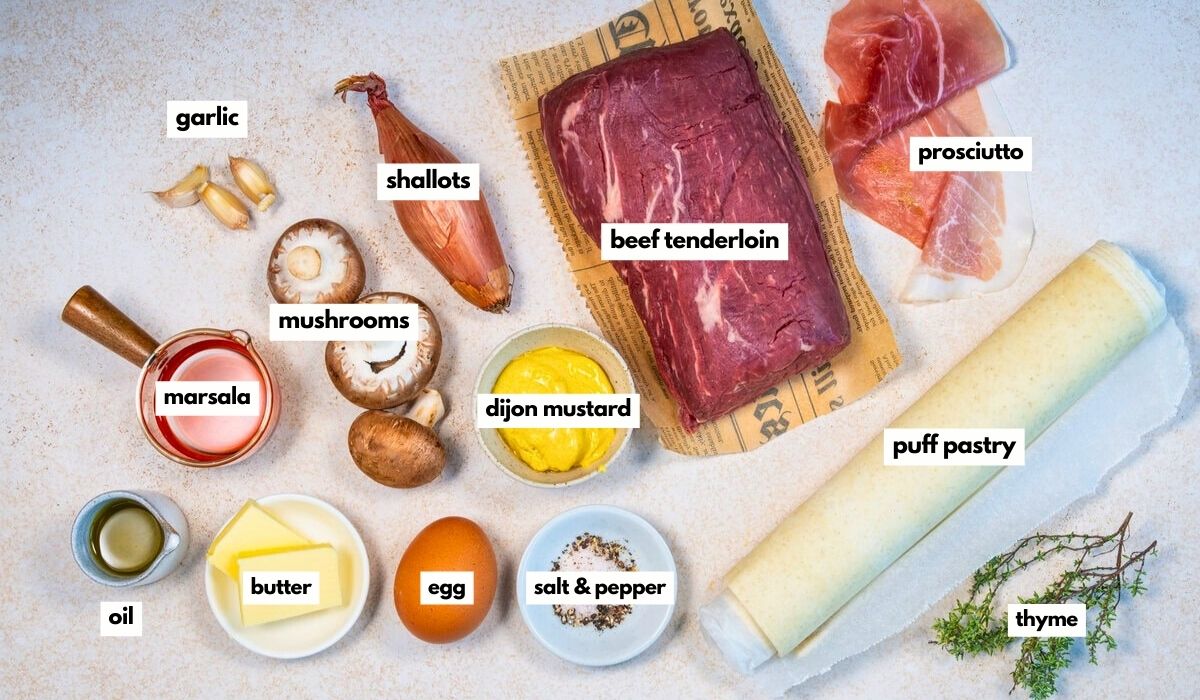
Apart from the listed ingredients, you will need a food processor, a meat thermometer, a large skillet and time to prep properly! Let’s take a look at the key elements in Beef Wellington:
- Beef tenderloin – the star of the show. Tender, lean and ideal for roasting whole so you get that pink center when you slice. Opt for center-cut beef tenderloin, also known as a Châteubriand, as it has a uniform shape that’s perfect for this recipe. If you are using the thinner end of the tenderloin, you will need to tie it prior to searing.
- Oil – use an oil with a high smoking point such vegetable or canola (rapeseed) to sear the beef.
- Unsalted butter – for cooking the mushrooms so they’re rich and glossy.
- Shallots and garlic – finely chopped shallots and minced garlic add depth of flavor to our duxelles.
- Mushrooms – I used cremini mushrooms and dried wild mushrooms for the duxelles. The mushrrooms are very finely chopped and cooked down to form a paste, bringing tons of umami and moisture protection for the beef.
- Thyme – fresh thyme leaves add a classic herby perfume that works beautifully with beef and mushrooms.
- Marsala wine – to deglaze the pan post-beef searing (to get all that yummy flavor from the fond, aka the browned bits and juices left in the pan after searing). Substitute with white wine, sherry or beef stock.
- Prosciutto (Parma Ham) – creates a salty, savory layer around the beef, acting as a barrier so the pastry doesn’t get soggy.
- Dijon mustard – a thick layer is brushed over the cooled seared beef to add a sharp, tangy kick and help everything cling.
- Puff pastry – the crispy golden jacket. Ready-rolled pastry keeps things simple and ensures even layers.
- Egg yolks – beaten for an egg wash so the pastry bakes up shiny and deeply golden.
Lucy’s Pro Tip
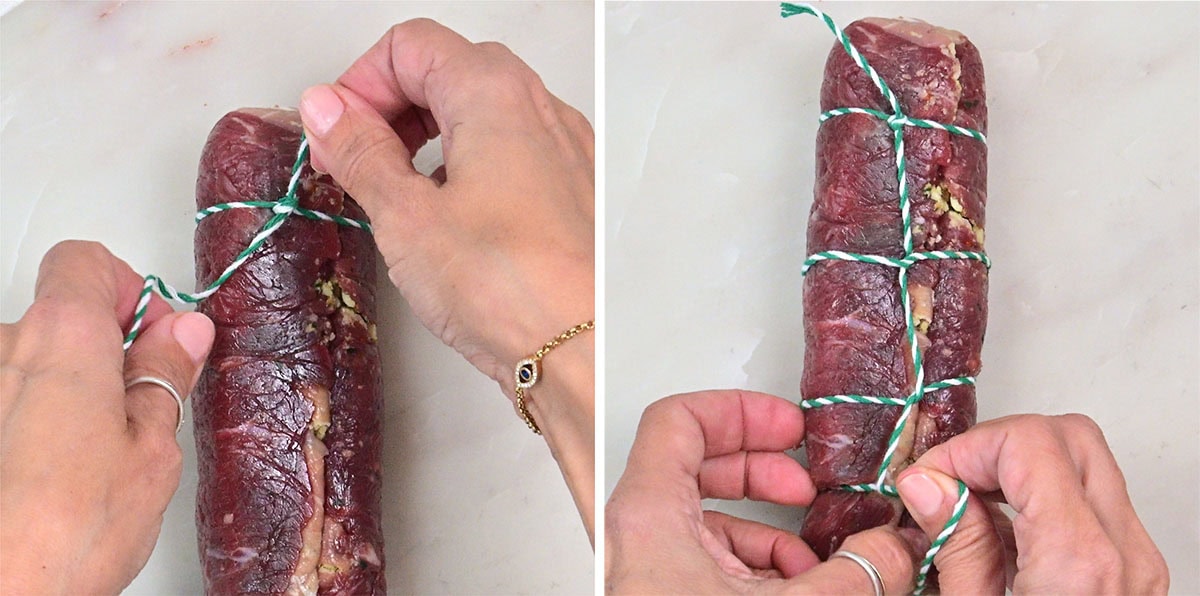
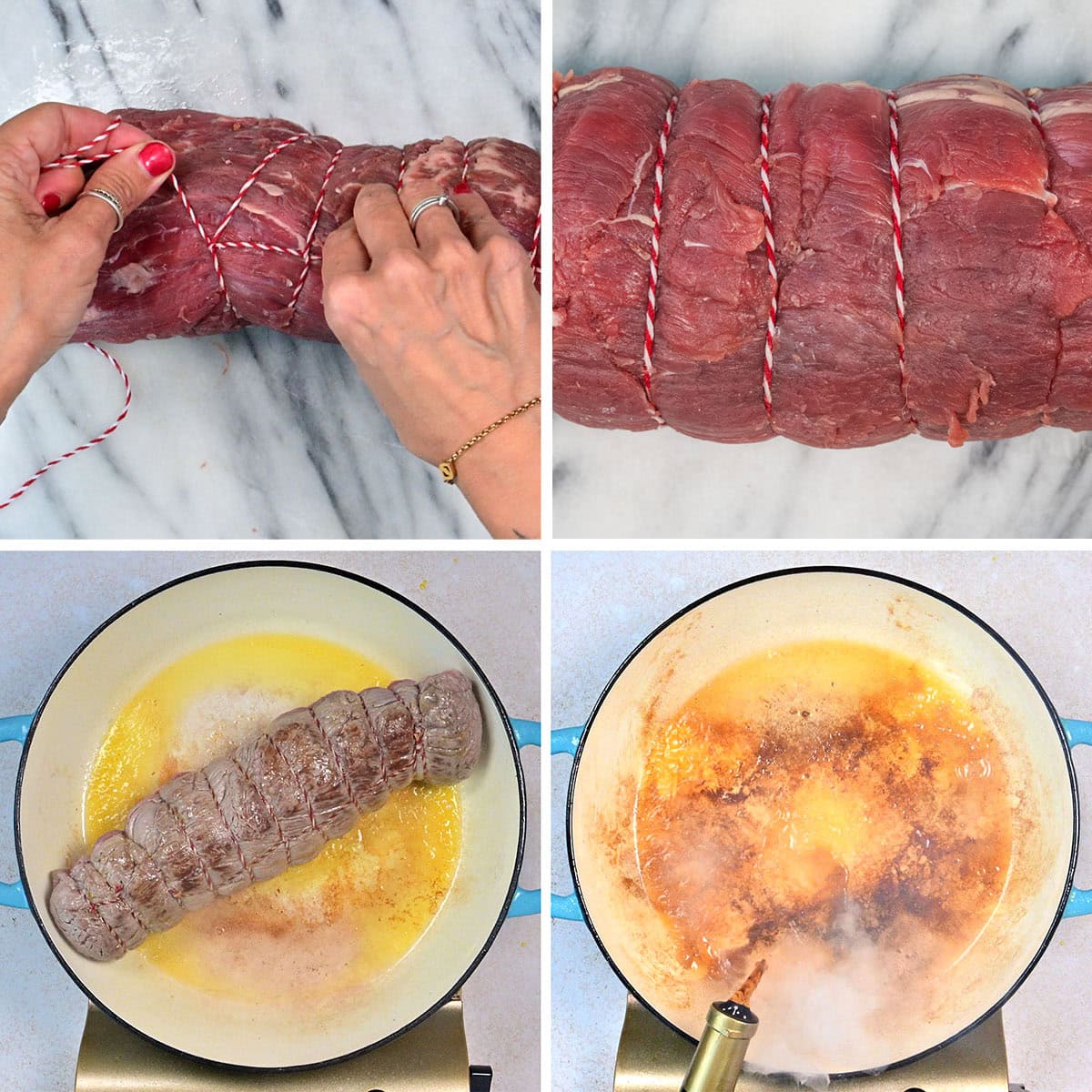
How to tie beef tenderloin
- Prep the meat: Pat the beef dry. If one end is thin, fold it under
- Tie the first knot: Slide a piece of butcher’s twine under one end of the meat (about 1 inch / 2–3cm in). Bring the ends up and tie a firm double knot on top, leaving a short tail.
- Make the loops: Without cutting the twine, wrap it around the roast to make a loop about 1 inch further along. Pull snuggly but not too tight. Repeat, spacing loops evenly all the way down the roast.
- Secure the length: When you reach the far end, flip the roast over and run the twine straight back along the underside, slipping it under each loop as you go.
- Finish and trim: Bring the twine back to your starting knot, tie a final double knot to secure and trim off any extra twine.
How to make Beef Wellington
Beef Wellington can be intimidating (even for chefs!). The recipe is a lot more approachable if you break the process up over two days. Prepare the beef and duxelles filling, wrap with prosciutto and then wrap again tightly in plastic wrap on day 1. You can cover with pastry on day 2. That way you won’t feel stressed and pressed for time.
Prep the beef
- Check whether you need to tie the tenderloin with butcher’s twine to help it keep its shape (see Tip Box on how to tie it).
- Remove any silverskin from the beef (it’s a thin silver-white membrane). Pat the beef tenderloin dry and season generously with sea salt and pepper. Let come to room temperature for 45 minutes before cooking. Pat dry again prior to searing, if needed.
- Heat a little oil in a heavy pan until very hot and sear the beef on all sides until well browned. Transfer the meat to a plate, cool and place in the refrigerator.
- Deglaze the pan: Turn the heat down and pour the Marsala into the hot pan to deglaze, scraping any browned bits stuck to the pan loose. Simmer until the liquid has cooked down.
Make the mushroom duxelles
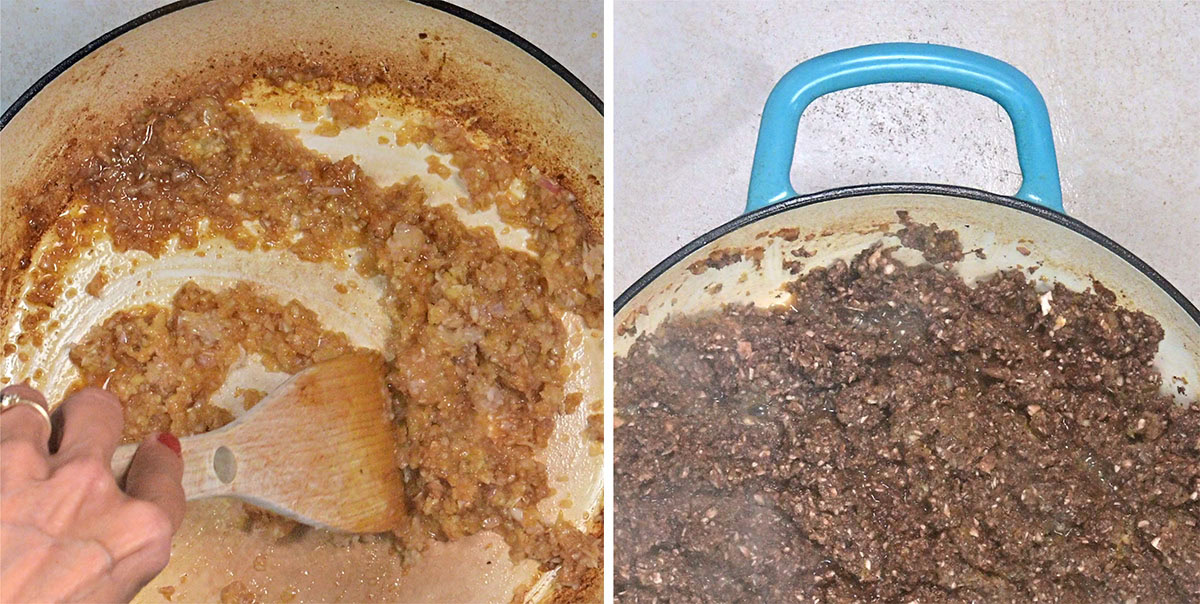
- Add butter in the same pan and melt over medium heat until sizzling. Sauté the shallots and minced garlic, stirring often, for 5 minutes.
- Add all the mushrooms, season with salt, add thyme and cook over medium heat, stirring often, for 10 minutes.
- Add the liquid from the dried mushrooms, Worcestershire sauce and Marsala. Continue to cook until all the liquid has evaporated and you have a paté-like mixture. Taste and adjust the seasoning if needed.
- Cool then transfer to an airtight container and place in the fridge (or spread out onto a platter to cool if you are in a hurry).
Wrap the beef in duxelles and prosciutto
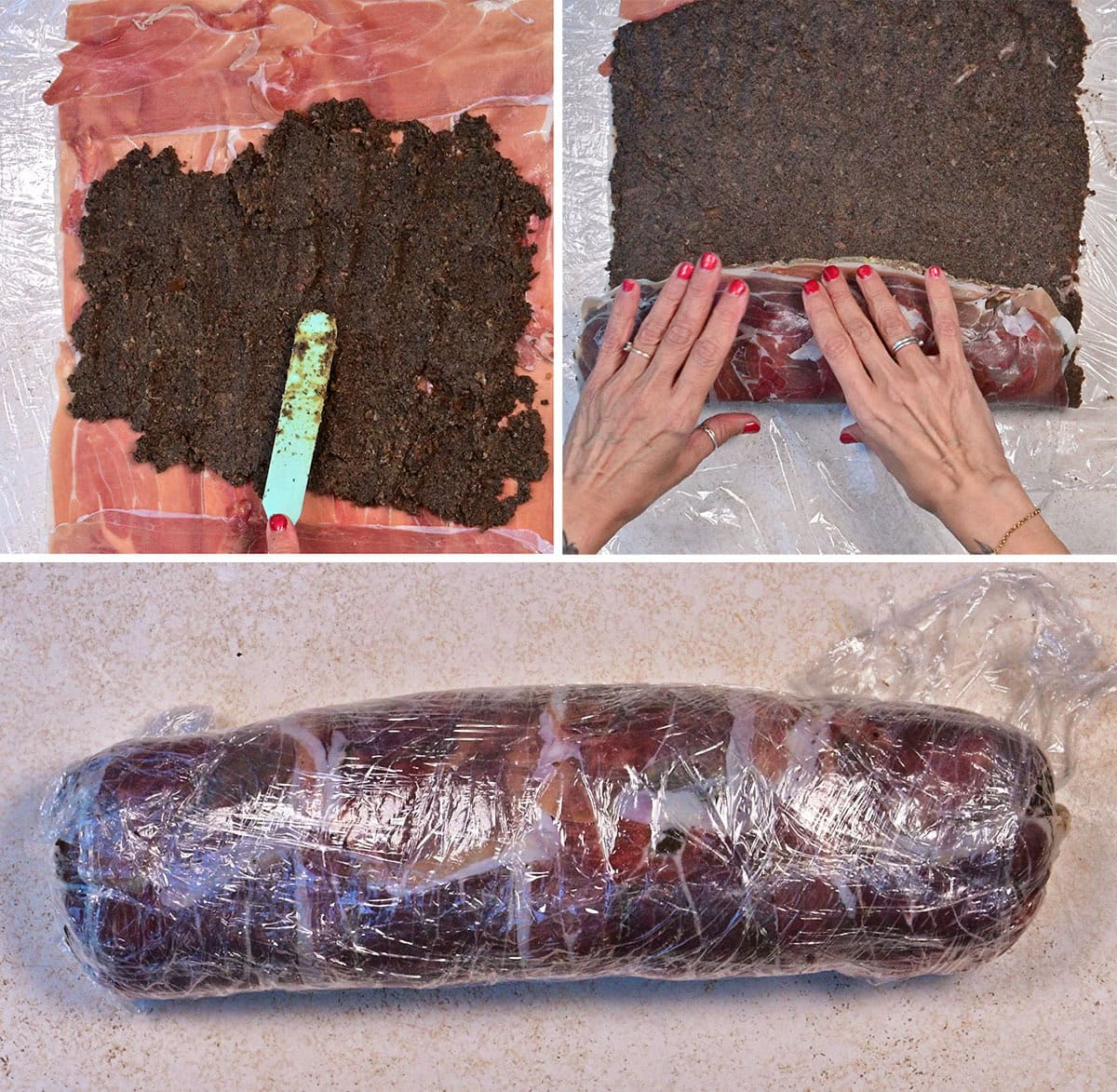
- Lay a large piece of plastic wrap on your work surface. Arrange the prosciutto slices in the middle, overlapping them slightly, to form a rectangle large enough to wrap around the beef.
- Spread the cooled mushroom duxelles evenly over the prosciutto in a thin layer, leaving a small gap on the far edge. Depending on the shape and size of your beef, you may not need to use all of the duxelles. Roll the duxelles mixture flat to make sure it cooks evenly.
- Remove the string from the beef if you have tied it. Brush with the mustard and place on top of the mushroom mixture on the edge closest to you. Use the plastic wrap to roll everything up tightly into a log, then twist the ends to secure. Chill to firm up for at least 30 minutes or overnight.
Assemble the Beef Wellington
- Unroll the puff pastry, keeping it on the paper it comes wrapped in. Make sure it is big enough – you may need to use a rolling pin to enlarge it slightly.
- Unwrap the beef log and place it in the middle of the pastry sheet. Brush the edge around the beef with egg wash.
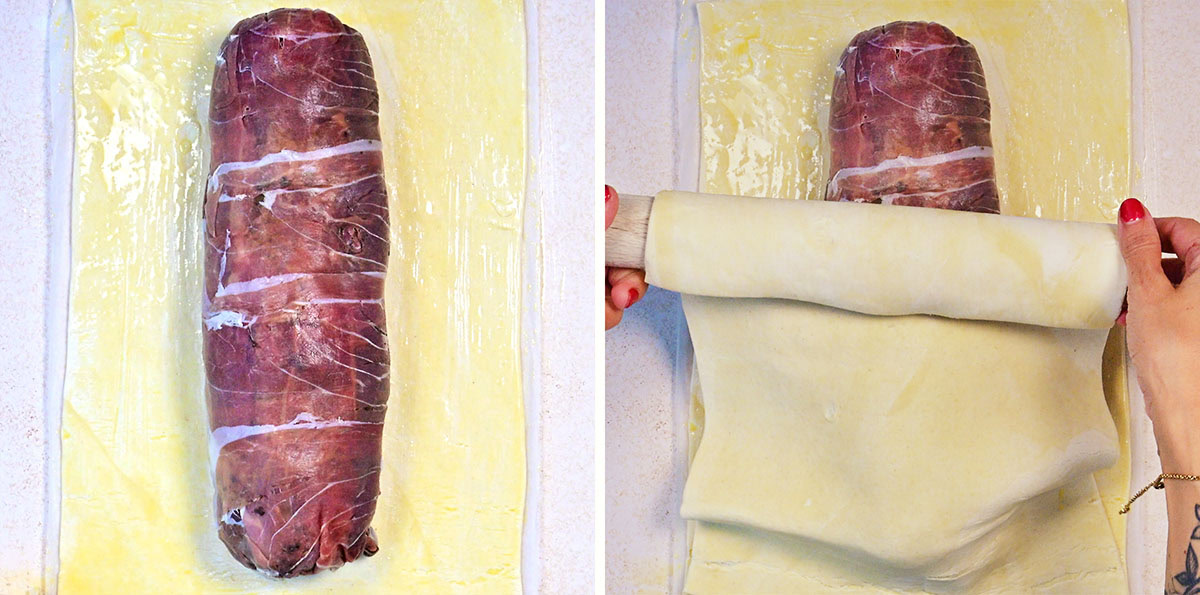
- Place the second sheet of puff pastry over the beef to cover, pressing down gently to remove any air gaps and seal the seams with a fork. Use the back of a knife to press a crosshatch pattern onto the pastry (do not cut into it!).
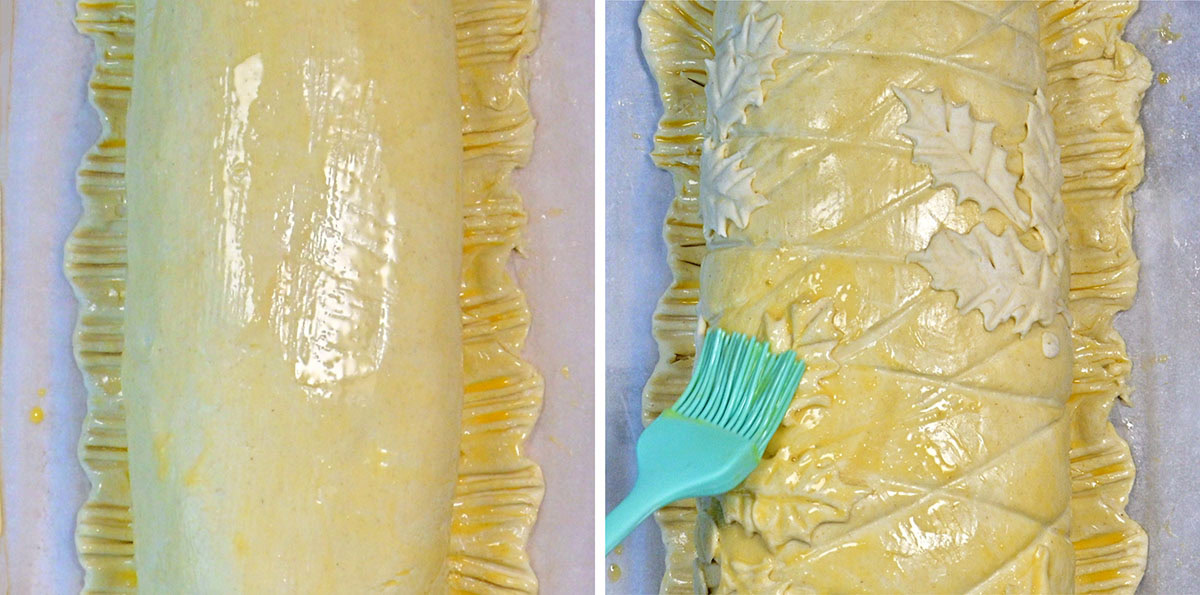
- Trim any excess pastry and the offcuts to decorate the Wellington if you like (I used a holly leaf cutter). Brush all over with the egg wash and chill for at least 30 minutes before cooking (or overnight).
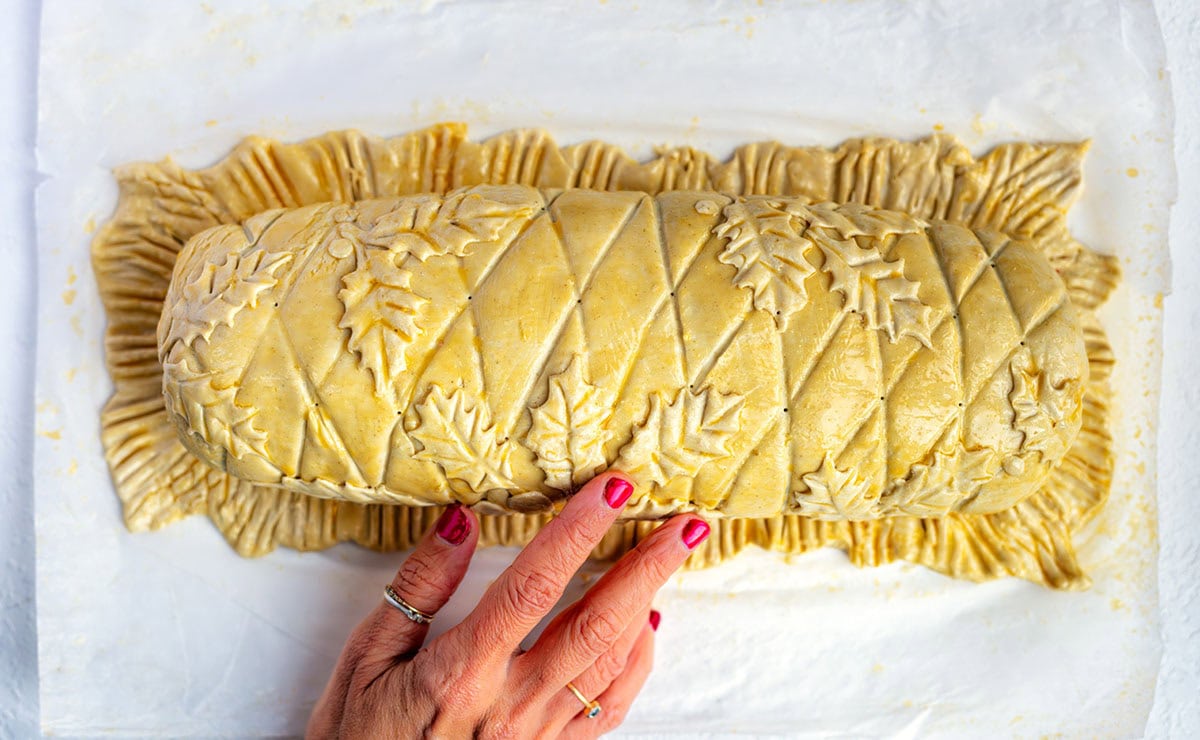
Bake the Wellington
- Preheat the oven for 30 minutes at 425°F (220°C) or 400°F (200°C) if using a convection (fan forced) oven.
- Brush the Wellington with a final layer of egg wash, sprinkle with sea salt flakes and bake for 30-35 minutes, or until the pastry is a deep golden brown and the temperature in the center of the beef registers 95°F (35°C) on an instant-read thermometer (I know this sounds low – I am following Chef Gordon Ramsey’s advice).
- Rest, uncovered, for 15 minutes (or even longer) before slicing to allow the temperature to rise while the Wellington rests – we are aiming for a final temperature of 110°F (43°C) for rare or 120°F (49°C) for medium-rare.
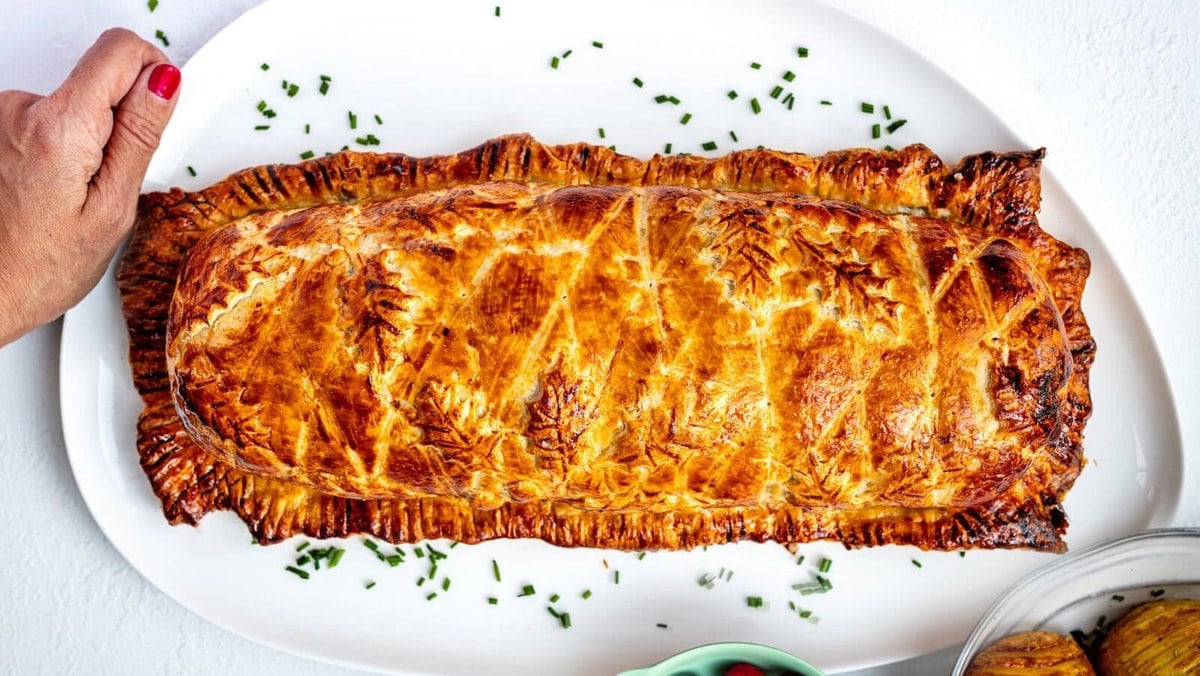
Serving suggestions
Slice the Wellington into portions about 1½ inches thick (3-4cm), using gentle, steady strokes rather than pressing straight down (don’t saw back and forth too aggressively or you’ll crush the layers). Pair with crisp roast potatoes or mashed potatoes, green beans, roast carrots or parsnips and plenty of gravy.
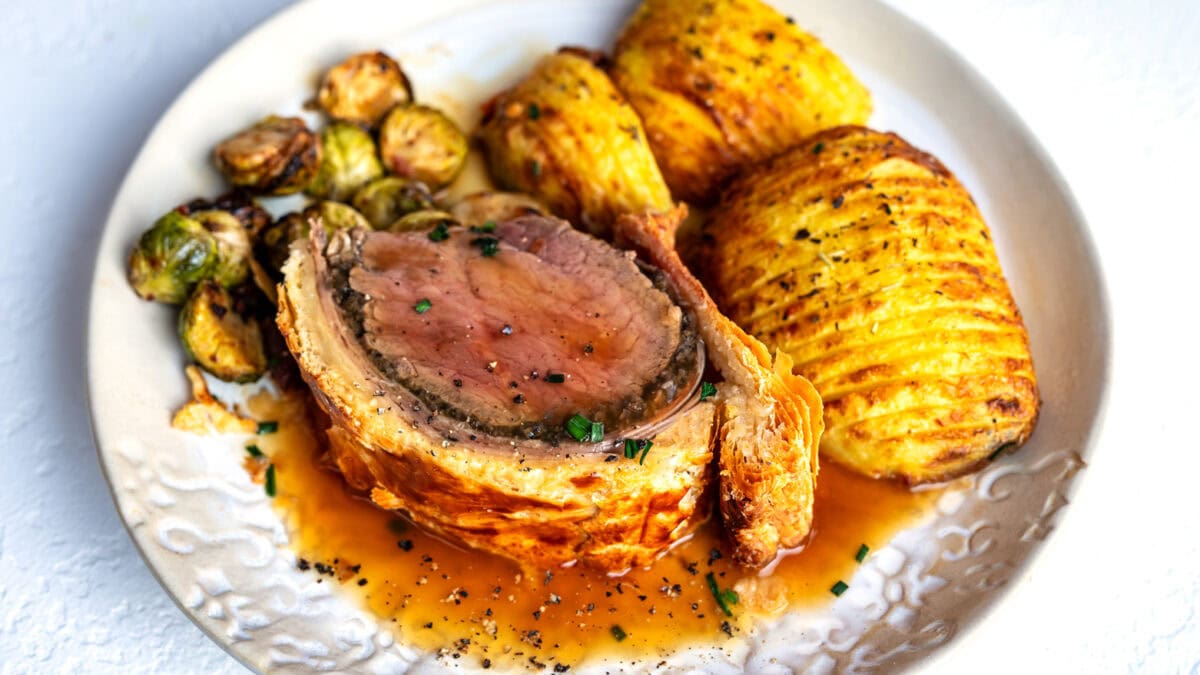
Leftovers and Storage
- Fridge – cool completely, then store slices in an airtight container for up to 4 days.
- Reheating – reheat gently in a hot oven or the air fryer (around 350°F / 180°C) until warmed through. Cover loosely with foil to protect the pastry if it’s browning too quickly. The beef will cook a little more on reheating, so leftovers will be more medium to well done.
- Freezer – you can freeze the unbaked assembled Beef Wellington, before brushing with egg wash. Wrap tightly in plastic and foil and freeze for up to 2 months. Defrost in the fridge overnight (not at room temperature). Brush with egg wash and cook as per instructions, adding a little extra time if needed.
FAQs
Beef tenderloin – ideally center-cut fillet, a.k.a Châteubriand is the classic choice because it’s lean, tender and evenly shaped, which helps it cook evenly and slice neatly.
The mushroom duxelles must be cooked until really dry. Make sure the beef is dried after searing and cool before using. Chill the assembled Wellington for at least 30 minutes before baking.
For medium-rare, aim to pull the Wellington from the oven when the center hits about 95°F / 35°C – the temperature will rise while the Wellington rests. Check after resting for 10-15 minutes or until the temperature in the center reaches 110-115°F (45-50°C) for rare or 120 -130°F (50-55°C) for medium-rare (longer it rests, the more well done it will become). If pink meat scares you, pull at 113°F / 45°C.
Duxelles (pronounced “duck-sell”) is a classic French mixture of finely chopped mushrooms cooked down with shallots, garlic, butter and herbs until it’s soft, fragrant and almost dry – if you drag a spoon through the pan, it should leave a little trail.
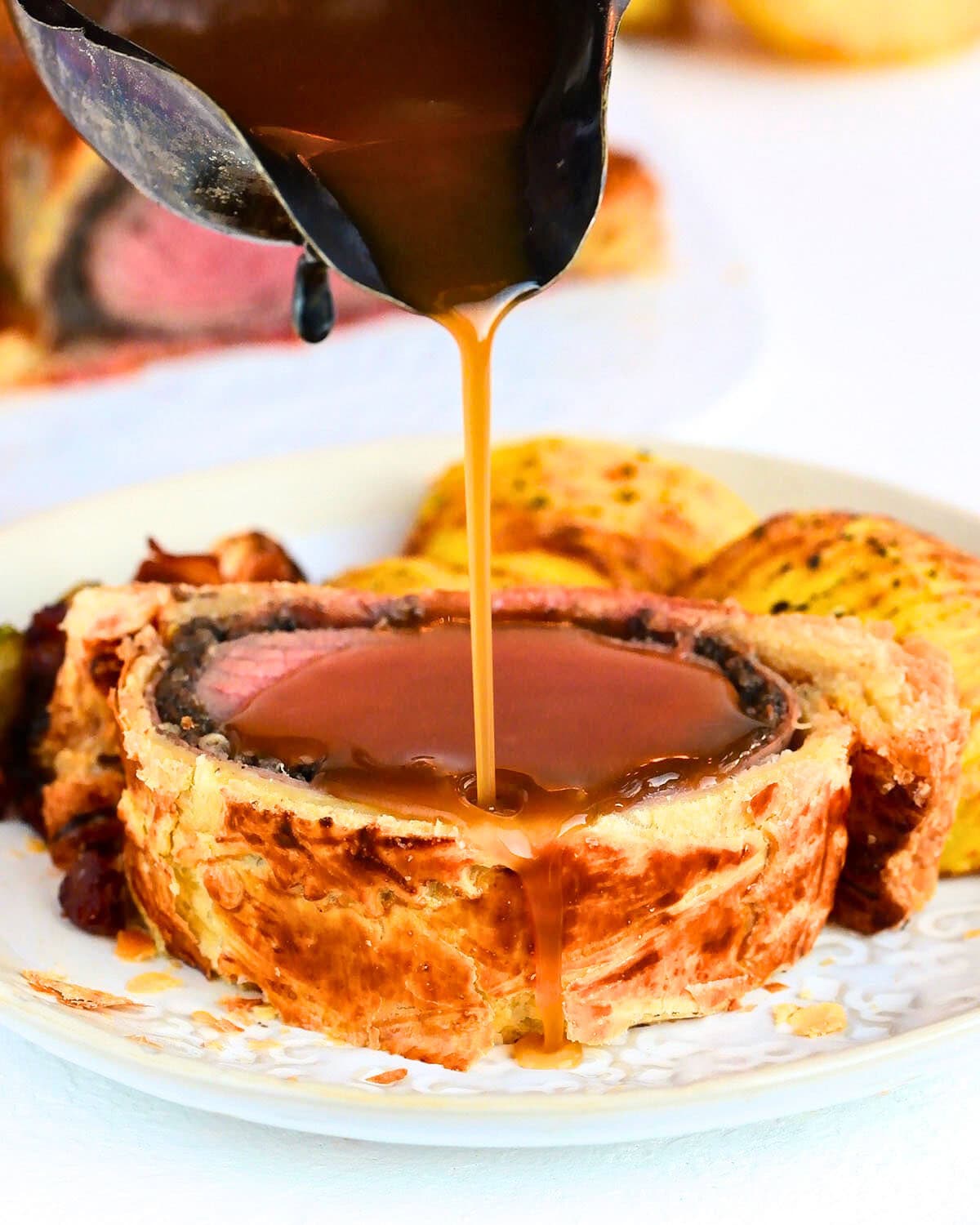
If you make this Beef Wellington recipe, I’d love to hear how it went – did you serve it for a big celebration or just a fancy Sunday dinner at home? Please leave a comment and rate the recipe, it really helps others find it and gives me great feedback for future tweaks. Don’t forget to share your Wellington photos and tag me on @Instagram or TikTok – I LOVE seeing what you’re cooking.
Beef Wellington
Video
Equipment
Ingredients
For the mushrooms (prep first)
- 3 tbsp dried wild mushrooms or porcini
- ¼ cup (60ml) boiling water
- 1 lb (450g) cremini mushrooms
For the beef
- 2 ⅓ lb (1kg) center-cut beef tenderloin
- sea salt and black pepper
- 2 tbsp vegetable or canola oil (rapeseed)
- ¼ cup (60ml) Marsala or white wine
- 3 tbsp Dijon mustard
For the duxelles
- 3 ½ tbsp (50g) unsalted butter
- 2 large shallots very finely chopped
- 2 cloves garlic minced
- 1 tsp salt
- ½ tsp black pepper
- 2 tsp fresh thyme leaves 1 tsp dried thyme
- 1 tbsp Worcestershire sauce or light soy sauce
- 3 tbsp dry Marsala or brandy
- salt and pepper to taste
To Assemble
- 8 -10 slices prosciutto (have extra ones handy just in case!)
- 2 packs ready-rolled puff pastry
- 2 large egg yolks or 1 large egg
- 2 tbsp milk
- pinch flaky salt
Instructions
Prep the mushrooms
- Pour boiling water over dried mushrooms and steep for 10 minutes. Squeeze dry, reserving the water and chop very finely.¼ cup (60ml) boiling water, 3 tbsp dried wild mushrooms
- Chop the mushrooms using a food processor – pulse until very finely minced, scraping the sides of the bowl as needed. Set aside.1 lb (450g) cremini mushrooms
Prep the beef and sear
- Check whether you need to tie the tenderloin with butcher's twine to keep its shape. Pat the beef tenderloin dry and season generously with sea salt and pepper and let it come to room temperature for 45 minutes. Pat dry again prior to searing, if needed.2 ⅓ lb (1kg) center-cut beef tenderloin, sea salt and black pepper
- Heat the oil in a heavy pan until very hot and sear the beef on all sides until well browned. Transfer the meat to a plate and cool.2 tbsp vegetable
- Wrap in paper towels, place on a plate and chill in the refrigerator for at least 20 minutes or up to overnight.
Deglaze the pan
- Turn the heat down and pour the Marsala into the hot pan to deglaze, scraping any browned bits stuck to the pan loose. Simmer until the wine has cooked down.¼ cup (60ml) Marsala
Make the mushroom duxelles
- Add butter in the same pan and melt over medium heat until sizzling. Sauté the shallots and minced garlic, stirring often, for 5 minutes.3 ½ tbsp (50g) unsalted butter, 2 large shallots, 2 cloves garlic
- Add all the mushrooms you prepped earlier, plus salt, pepper and thyme, and cook over medium heat, stirring often, for 10 minutes.1 tsp salt, ½ tsp black pepper, 2 tsp fresh thyme leaves
- Add the liquid from the dried mushrooms, Worcestershire sauce and Marsala. Continue to cook until all the liquid has evaporated and you have fairly dry paté-like mixture. Taste and adjust the seasoning if needed.1 tbsp Worcestershire sauce , 3 tbsp dry Marsala, salt and pepper
- Cool, then transfer to an airtight container and place in the fridge. If you are in a hurry and want to use straight away, spread the duxelles out on a platter in a thin layer to cool.
Wrap the beef in duxelles and prosciutto
- Lay a large piece of plastic wrap on your work surface. Arrange the prosciutto slices in the middle, overlapping them slightly, to form a rectangle large enough to wrap around the beef.8 -10 slices prosciutto
- Spread the cooled mushroom duxelles evenly over the prosciutto in a thin even layer, leaving a small gap on the far edge. Depending on the shape and size of your beef you may not need to use all of the duxelles. Pat dry with paper towels. Roll the duxelles to ensure they are flat, to make sure the Wellington cooks evenly.
- Remove the string from the beef if you have tied it. Brush with the mustard and place on top of the mushroom mixture on the edge closest to you. Use the plastic wrap to roll up tightly into a log, then twist the ends to secure. Chill to firm up for at least 30 minutes or up to overnight.3 tbsp Dijon mustard
Assemble the Beef Wellington
- Unroll the puff pastry, keeping it on the paper it comes wrapped in (or place on a piece of parchment paper). Make sure it is big enough – you may need to use a rolling pin to enlarge it slightly.2 packs ready-rolled puff pastry
- Place the egg yolks and milk in a small bowl and beat lightly to combine for the egg wash.2 large egg yolks, 2 tbsp milk
- Unwrap the beef log and place it in the middle of the pastry sheet. Brush the edge of the pastry around the beef with egg wash.
- Place the second sheet of puff pastry over the beef to cover, pressing down gently to remove any air gaps. Trim excess pastry and seal the edges with a fork. Use the back of a knife to press a crosshatch pattern onto the pastry (do not cut into it!).
- Use the offcuts to decorate the Wellington if you like (I used a holly leaf cutter). Brush all over with the egg wash and chill for at least 30 minutes before cooking.
Bake the Wellington
- Preheat the oven for 30 minutes at 425°F (220°C) or 400°F (200°C) if using a convection (fan-forced) oven.
- Brush the Wellington with a final layer of egg wash, sprinkle with sea salt flakes and place on a baking sheet. Bake for 30-35 minutes, or until the pastry is a deep golden brown and the temperature in the center of the beef registers 95°F (35°C) on an instant-read thermometer.pinch flaky salt
- Rest, uncovered, for at least 10–15 minutes before slicing. The temperature will continue to rise while the Wellington rests – we are aiming for a final temperature of 110°F (43°C) for rare or 120°F (49°C) for medium-rare.
Serve and enjoy!
- Cut the Wellington into portions about 3–4cm / 1½ inches thick, using gentle, steady strokes rather than pressing straight down. Don’t saw back and forth too aggressively or you’ll crush the layers. Pair with crisp roast potatoes, green beans, carrots or parsnips and gravy.
Notes
- Leftovers – cool completely, then store slices in an airtight container for up to 4 days.
- Reheating – reheat in a hot oven or the air fryer (around 350°F / 180°C) until warmed through. Cover loosely with foil to protect the pastry if it’s browning too quickly. The beef will cook a little more on reheating.
- Freezer – you can freeze the unbaked assembled Beef Wellington, before brushing with egg wash. Wrap tightly in plastic and foil and freeze for up to 2 months. Defrost in the fridge overnight (not at room temperature). Brush with egg wash and cook as per instructions, adding a little extra time if needed.
Nutrition
Nutritional information is always approximate, and will depend on quality of ingredients and serving sizes.