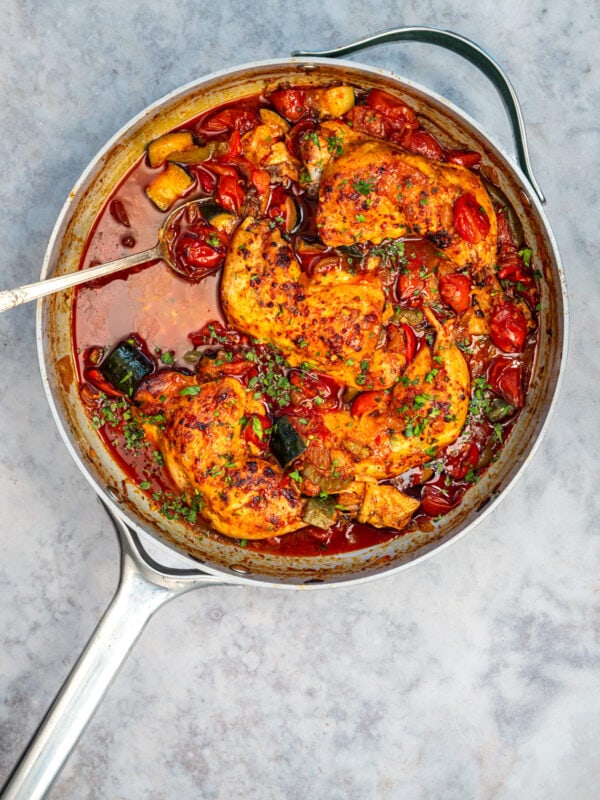
Chicken Normandy (Poulet à la Normande)

, Published Sep 07, 2026
This post may contain affiliate links. Please read our disclosure policy.

This easy Chicken Normandy is a French classic made in one pan – no Calvados needed! Just golden chicken thighs braised in cider with apples, bacon and cream. Super simple but full of flavor!
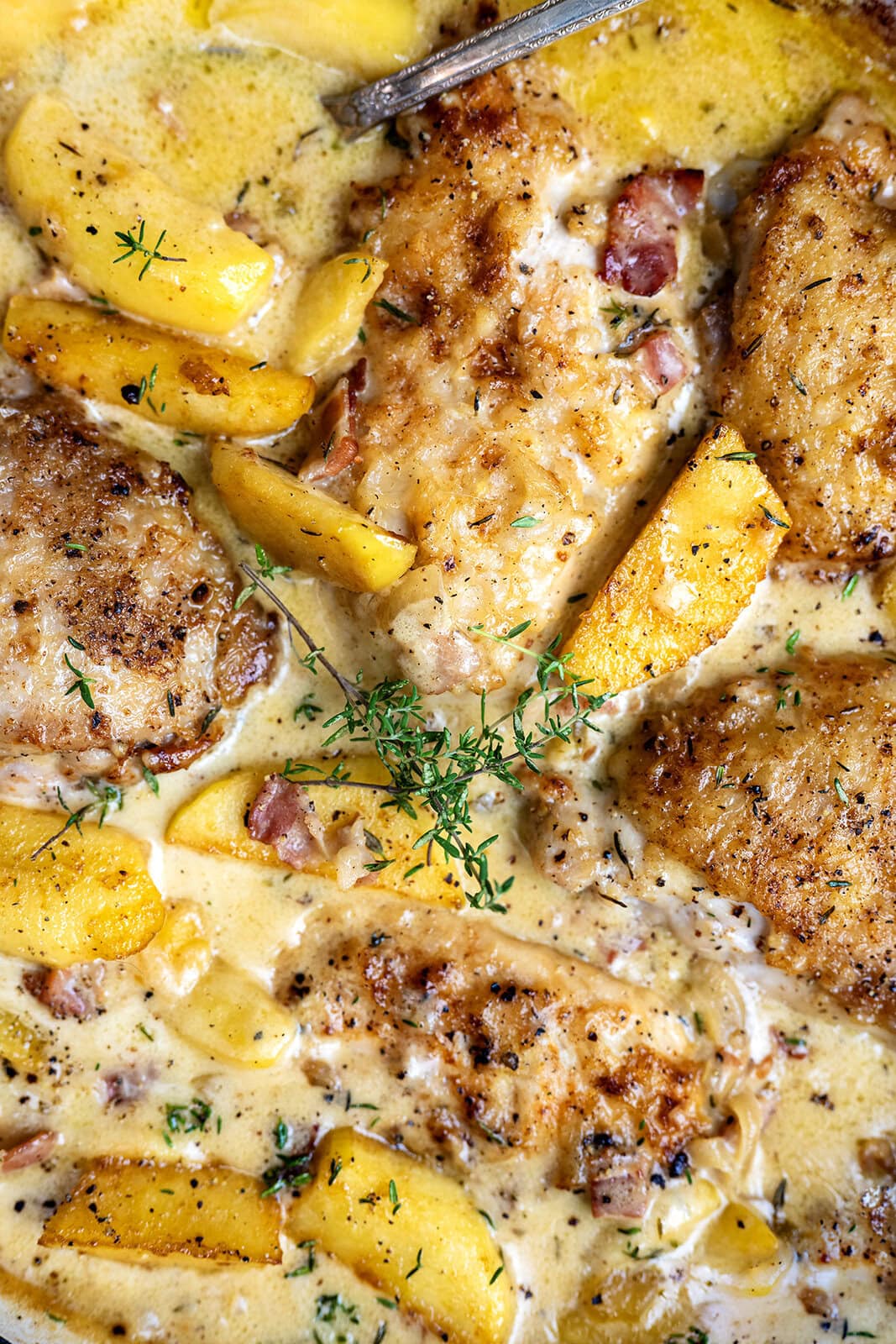
There’s a dish they make in Normandy that’s perfect for fall: Chicken braised in cider until the sauce turns silky, with soft apple wedges and a whisper of thyme. It is called Poulet Vallée d’Auge in its home region, or simply Chicken Normandy everywhere else, and it has been on my list for years.
The classic version uses Calvados, the apple brandy Normandy is famous for. Mine does not – and I promise you will not miss it. A bottle of dry hard cider does the heavy lifting, and what you save on brandy you spend on a handful of bacon instead (which I would argue is the better trade).
There are two things that make this version work. The first is dredging the chicken in cornstarch (= cornflour) before it hits the pan. It sounds fussy, but it takes 90 seconds and it gives the chicken the properly golden skin you want and it stays that way through the braise, while quietly thickening the sauce as everything simmers together.
The second is treating the apples separately – just a quick sauté, then setting them aside until the very end, so they arrive at the table with some bite left. You don’t want mushy apple slices dissolving into the sauce!
This is a one pan dinner that looks and tastes like you made an effort. Serve it with mash and something green, as well as a glass of the remaining cider and you have the kind of meal that makes the whole table go quiet while everyone digs in.
If you like the sound of this, you will also love my Creamy Pork Casserole with Apples and Cider – same flavor family, made with pork shoulder.

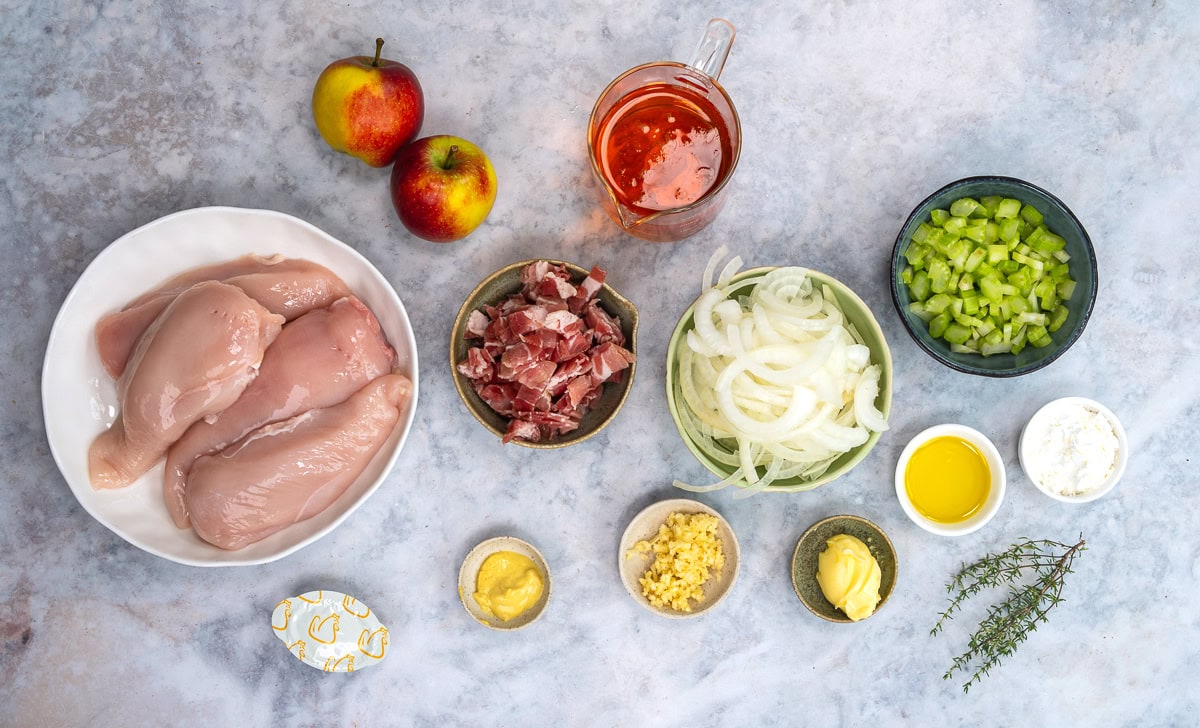
Here’s What You’ll Need
- Chicken breasts or thighs – We make this often and have tried both options so it’s up to you. Skin-on and bone-in thighs give you the best flavor and are more forgiving in a braise.
- Cornflour (cornstarch) – doing double duty here, as the dredge for the chicken and as an optional slurry at the end. If you would rather work with flour, there is a roux method in the recipe notes.
- Apples – you want something that holds its shape and brings a bit of tartness. Granny Smith, Honeycrisp, Braeburn or Cox all work beautifully. Avoid apples that are soft or very sweet.
- Hard cider – dry cider, the alcoholic kind, and there are lovely English and French bottles to choose from. Use something you would happily drink – not too sweet or the sauce may be cloying.
- Streaky bacon or pancetta – not traditional, but entirely worth it. This is where the smokiness comes from.
- Dijon mustard – a small amount does a lot for the dish. It sharpens the cream and keeps the sauce from tasting flat.
- Pouring cream (single cream) – lighter than heavy (double) cream, which keeps this on the right side of rich. It does need a gentle hand at the end, so see the tips below.
- Fresh thyme – this is the herb that 100% belongs with apples and cider. Dried thyme will do at a push, but use half the quantity.
How to Make Chicken Normandy
- Preheat the oven to 325°F (160°C). Toss the apple slices with the lemon juice in a bowl to stop them browning while you get on with everything else.
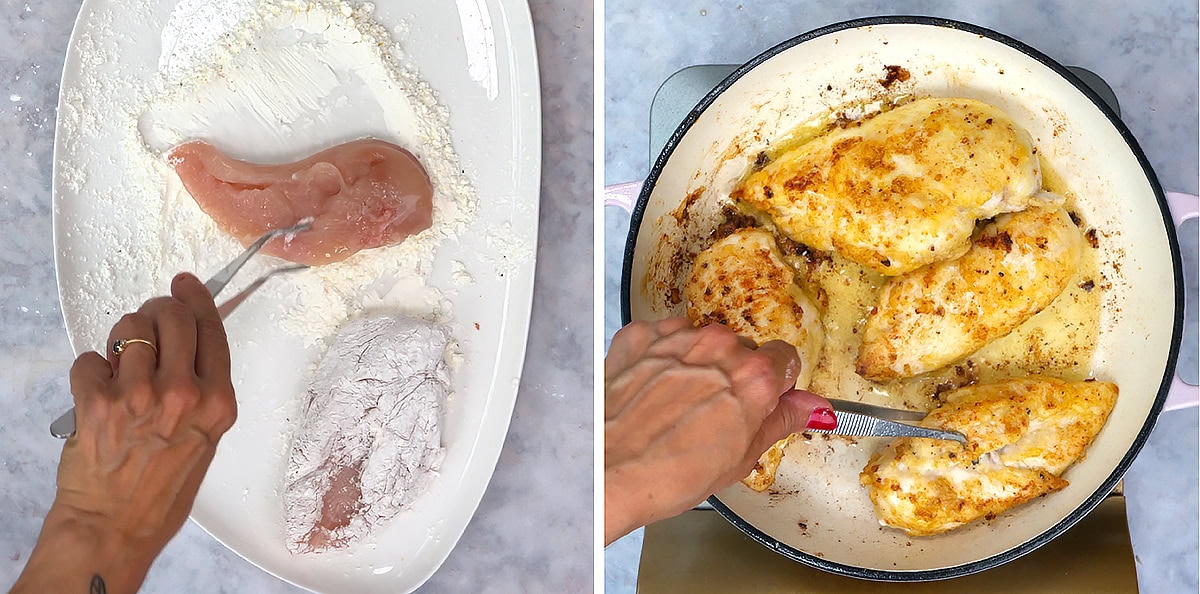
- Pat the chicken dry with paper towels and season with salt and pepper. Spread the cornstarch on a shallow plate and dredge the chicken on both sides, shaking off the excess. Set aside for now.
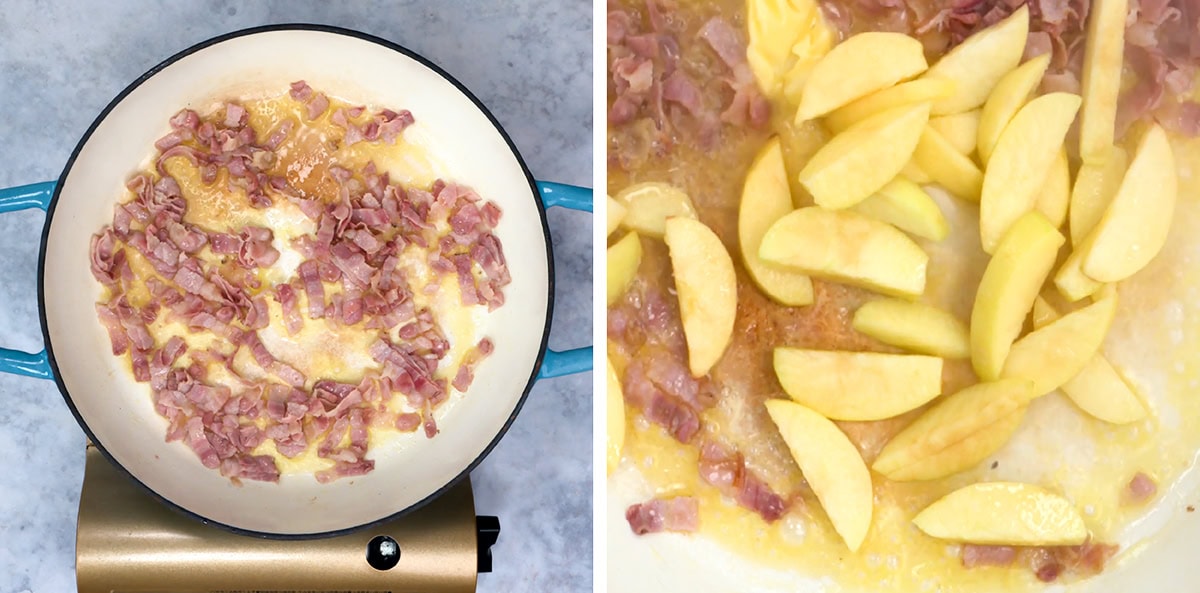
- Heat a tablespoon of the olive oil in a large ovenproof skillet and fry the bacon over high heat until it starts to render its fat and crisp at the edges. Lift out with a slotted spoon and set aside. Lower the heat to medium-low.
- Add a tablespoon of butter and the apple slices and sauté for 3-4 minutes until golden and slightly softened – they should still have some bite. Set aside with the bacon.
- Add the remaining butter and oil and turn the heat back up to medium-high. Fry the chicken skin side down for 5-6 minutes, until the skin is deeply golden and crisp. Flip and cook for another 3-4 minutes, then set aside.
- Reduce the heat to medium-low and add a splash of the cider to deglaze, scraping up all the browned bits from the bottom of the pan. Let it cook down.
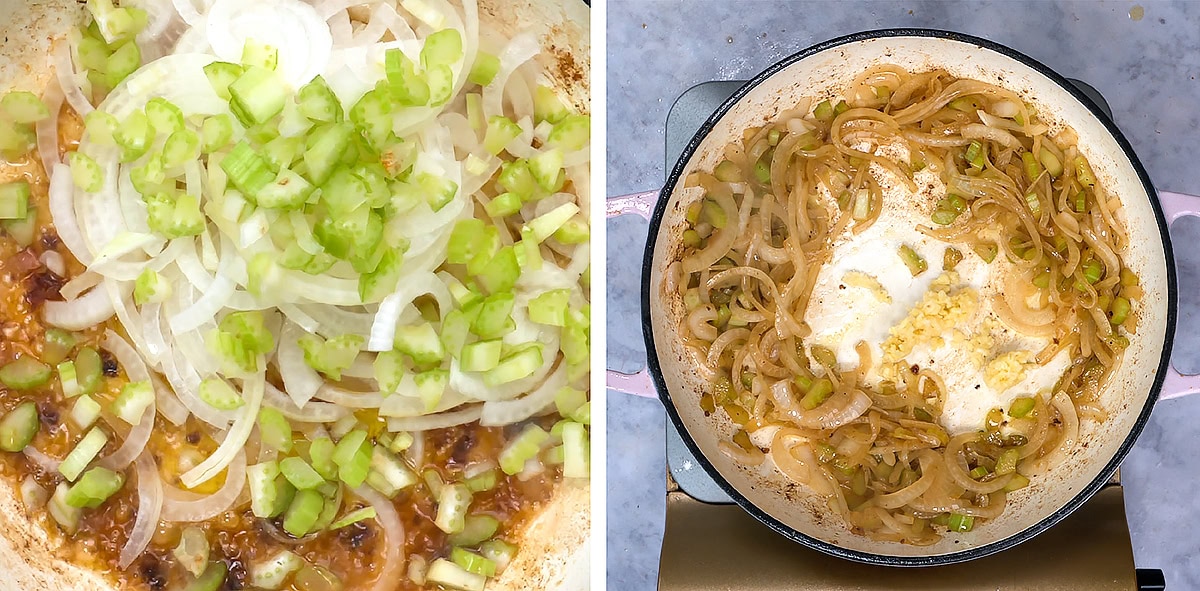
- Add a little more oil if the pan looks dry, then sauté the onion and celery for 5 minutes, seasoning with the salt, pepper and thyme leaves.
- Stir in the garlic and mustard and cook for 30 seconds, until fragrant.
- Pour in the remaining cider, turn up the heat and let it reduce by half, cooking off the alcohol.
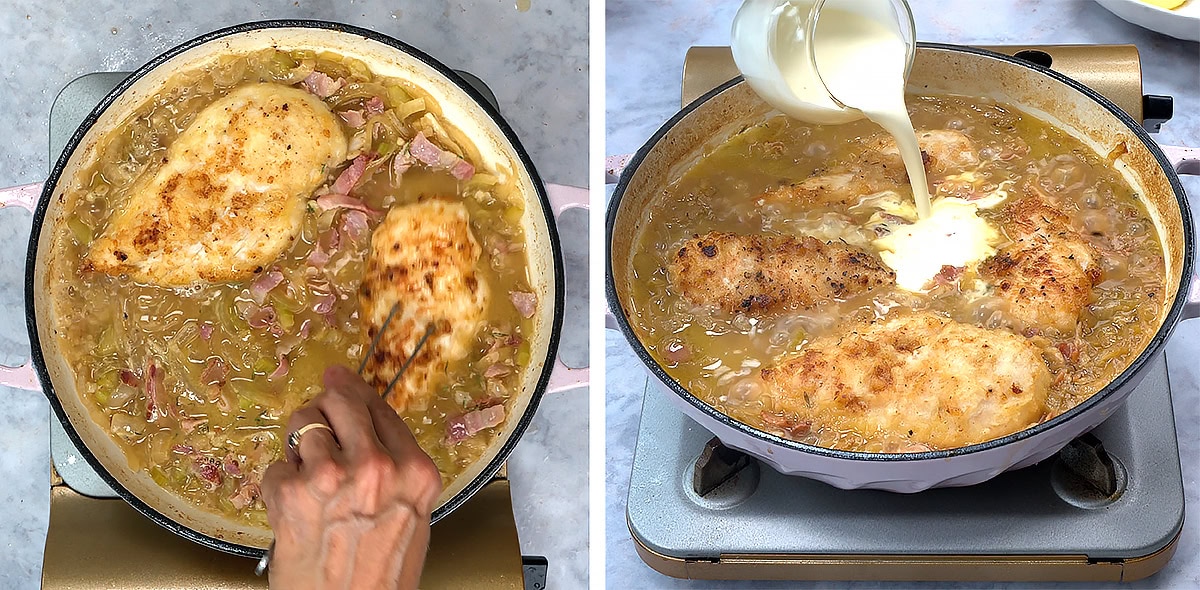
- Add the chicken stock and bring to a simmer. Return the chicken and bacon to the pan, cover with a lid and transfer to the oven for 25-30 minutes. No ovenproof pan? Just keep it at a gentle simmer on the stove instead.
- If the sauce needs thickening (though it often will not, thanks to the cornstarch already on the chicken) dilute the cornstarch in a little cold water and stir it in.
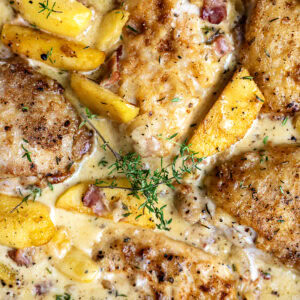
- Stir in the cream over low heat. Taste and adjust the seasoning. Return the apples to the pan, scatter with fresh thyme and serve.
Serving Suggestions
The sauce is the point, so serve something that will carry it. Creamy mashed potatoes are the obvious answer and the right one. Buttered new potatoes, celeriac mash or plain rice all work too.
For something green, keep it simple – steamed green beans, wilted spinach or a sharp green salad to cut through the richness of the sauce.
For more cosy autumn cooking, try my One Pan Autumn Chicken Dinner or Chicken and Leek Pie.
Lucy’s Pro Tip
Recipe Tip
- Dry the chicken properly. Wet skin steams instead of browning and the cornflour will not stick evenly. Paper towels, 30 seconds, totally worth it.
- Do not crowd the pan. Brown the chicken in two batches if your skillet is on the small side – crowded chicken stews rather than sears.
- Keep the heat low once the cream goes in. Pouring cream has less fat than heavy cream, which means it will split if you let it boil. Low heat with a gentle stir is all you need.
- Use a good dry cider. This is the backbone of the sauce, so invest in a decent one. Remember: A sweet, cheap cider will give you a sweet, cheap sauce and nobody wants that!
- Hold the apples back. Adding them at the end is the difference between apple wedges and apple purée.
Substitutions and Variations
- Different cuts – boneless skinless thighs, chicken leg quarters or breasts all work. Reduce the cooking time a little for breasts, which dry out fast.
- Mushrooms – the classic Vallée d’Auge usually includes them. Add sliced chestnut or button mushrooms with the onion and celery if you would like them.
- A splash of Calvados – if you do happen to have a bottle, add a tablespoon or two after the garlic and let it cook off before the cider goes in.
- Crème fraîche or sour cream – both work in place of the pouring cream and give a pleasant tang. Crème fraîche is the more stable of the two over heat.
Frequently Asked Questions
No. Calvados is traditional in Poulet Vallée d’Auge, but a good dry cider gives you the apple character you’re after. If you have a bottle of Calvados or Brandy, you can use it to deglaze the pan.
Yes. Replace the hard cider with non-alcoholic cider (unsweetened cloudy apple juice) mixed with a teaspoon of apple cider vinegar, which brings back some of the sharpness. You can also just use chicken stock, though you will lose the apple note that makes this dish so special. If you do so, remember to replace the quantity of cider with an equal amount of additional chicken stock.
Firm, slightly tart varieties – Granny Smith, Braeburn, Honeycrisp or Cox. They hold their shape rather than collapsing. Very sweet or very soft apples will turn to apple sauce.
Almost always because the cream boiled. Pouring cream has a lower fat content and will not take high heat, so stir it in over low heat and do not let it bubble. Crème fraîche is more stable if you would rather not worry about it.
Stir in a slurry of cornstarch and cold water and simmer for a couple of minutes. Often you will not need to, because the cornflour from dredging the chicken thickens the sauce as it braises.
Definitely. Reduce the cider to 1 cup (250ml) and the chicken stock to 3/4 cup (180ml) as the crockpot doesn’t allow for evaporation. Brown the chicken, bacon and apples first as written, then transfer everything except the cream and apples to the slow cooker and cook on LOW for 4-5 hours. Stir in the cream and apples at the end.
If you make this recipe, I’d love to hear how it turned out – leave a comment and a star rating below, it really helps other readers (and me!). And if you snap a photo, tag me on @Instagram or TikTok or pin it for your next cozy Sunday dinner inspo!
Chicken Normandy (Poulet à la Normande)
Ingredients
- 4 large chicken breasts skinless, or see note 1
- 5 tbsp cornstarch (= cornflour), for dredging, or see note 2
- salt and pepper , a few turns of the mill
- 3 medium apples , peeled and sliced
- 1 tbsp lemon juice , for the apples
- 6 strips streaky bacon or pancetta, sliced
- 2 tbsp olive oil
- 2 tbsp unsalted butter
- 1 large onion , sliced
- 1 rib celery finely diced
- 3 cloves garlic , minced
- 1 tbsp fresh thyme leaves
- ½ tsp salt
- ½ tsp ground black pepper
- 1-2 tsp Dijon mustard
- 1 ½ cups (360ml) hard cider
- 1 ¼ cups (300ml) chicken stock
- 3 tsp cornstarch (= cornflour), for the slurry
- ½ cup (120ml) pouring cream (= single cream), or see note 3
- fresh thyme leaves , to garnish
Instructions
- Preheat the oven to 325°F (160°C) and place a rack in the middle.
- Pat the chicken dry using paper towels and season with salt and pepper. Spread the cornstarch on a shallow plate and dredge the chicken so it is covered on both sides, shaking off the excess.4 large chicken breasts, 5 tbsp cornstarch, salt and pepper
- Place the apples in a bowl and toss with the lemon juice to prevent them from browning.3 medium apples, 1 tbsp lemon juice
- Heat 1 tablespoon of the olive oil in a large ovenproof skillet and pan fry the bacon over high heat until it starts to render its fat and crisp at the edges. Use a slotted spoon to set aside in a bowl. Lower the heat to medium-low.2 tbsp olive oil, 6 strips streaky bacon
- Add a tablespoon of the butter and the apple slices to the pan and sauté for 3-4 minutes until golden and a little softer – they should still retain some bite. Set aside.2 tbsp unsalted butter
- Stir in the remaining butter and oil and turn the heat back to medium-high. Pan fry the chicken, skin side down, for 5-6 minutes until the skin is beautifully golden and crisp. Flip over and cook for 3-4 minutes on the other side, then set aside with the bacon.
- Reduce the heat to medium-low and add a splash of the cider to deglaze the pan, scraping up any browned bits. Cook until reduced.1 ½ cups (360ml) hard cider
- Add a splash more oil to the pan if needed and sauté the onion and celery for 5 minutes, sprinkling with the salt, pepper and thyme leaves.1 large onion, 1 rib celery
- Stir in the minced garlic and mustard and cook for 30 seconds, or until fragrant.3 cloves garlic, 1 tbsp fresh thyme leaves, ½ tsp salt, 1-2 tsp Dijon mustard, ½ tsp ground black pepper
- Pour in the remaining cider, increase the heat and cook until reduced by half and the alcohol has burned off.
- Add the chicken stock and reduce to a simmer. Return the bacon and chicken to the pan, cover with a lid and transfer to the oven for 25-30 minutes, or continue to simmer on the stove.1 ¼ cups (300ml) chicken stock
- Dilute the cornstarch in a little cold water to make a slurry. Add to the pan if the sauce needs thickening (it may not).3 tsp cornstarch
- Stir in the cream over low heat. Taste and adjust the seasoning if needed.½ cup (120ml) pouring cream
- Add the apples, garnish with fresh thyme and serve.fresh thyme leaves
Notes
- Note 1: You can use boneless skinless chicken thighs, chicken leg quarters or chicken breasts. Reduce the cooking time slightly if cooking chicken breasts.
- Note 2: Instead of cornstarch, you can use 2 tablespoons of flour to make a roux. Stir into the pan after step 9. Gradually pour in the cider, stirring constantly to incorporate the flour, and simmer for 2 minutes. Stir in the stock and proceed with the recipe.
- Note 3: You can use crème fraîche or sour cream instead of cream if preferred.
- Note 4: If your skillet is not ovenproof, keep the pan at a gentle simmer on the stove for 25-30 minutes instead.
- Fridge – leftovers keep for up to 3 days in an airtight container. Reheat gently on the stove over low heat, adding a splash of stock or milk if the sauce has thickened too much.
- Freezing – I do not recommend freezing this once the cream is in, as cream sauces tend to split on thawing. If you want to prep this in advance, cook up to the end of the braise, then let it cool and freeze at that point. Defrost it when you’re ready to serve, reheat and stir in the cream and apples before serving. The whole dish can also be made a few hours in advance up to the cream stage and gently reheated, adding the cream and apples just before you serve.
Nutrition
Nutritional information is always approximate, and will depend on quality of ingredients and serving sizes.