
Vegan Macarons Step By Step

, Updated Aug 31, 2026
This post may contain affiliate links. Please read our disclosure policy.
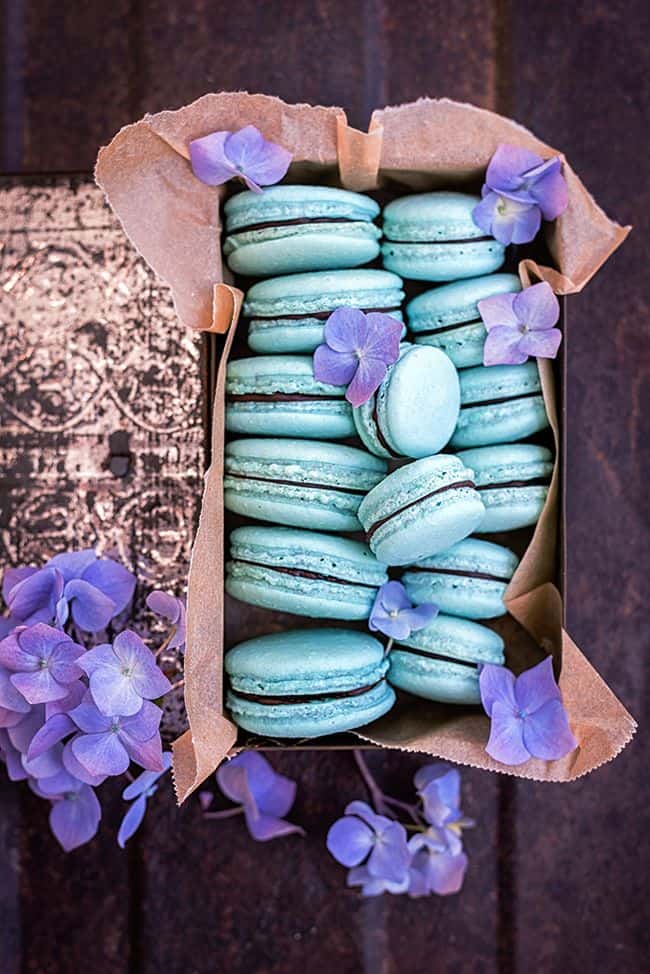
Did you know you can create picture-perfect vegan macarons using aquafaba (the liquid drained from a can of chickpeas) instead of egg whites?
Take a look at my How To Make Perfect Macarons and Chocolate Macarons posts for more macaron tips and troubleshooting.
Post may contain affiliate links. For more information, check my disclosure
In collaboration with Thermapen
Vegan Macarons
I first came across vegan macarons on Pinterest (where else?) and I was instantly intrigued. I mean egg whites and meringue are a pretty fundamental ingredient in macarons, so how on earth could they be vegan? This is where a magical ingredient called aquafaba comes in!
If you have never heard of it – I sure as hell had not – aquafaba is the cooking liquid of beans and other legumes like chickpeas. That’s right, these macarons contain chickpea water… but don’t let that put you off. (Put the chickpeas to great use in my fabulously healthy Vegan Chickpea Salad!).
After I read a little more about aquafaba, I discovered it had entire websites, Facebook groups and forums devoted to it.
I simply HAD to try it, not least because I was so curious as to whether it would work. After all, macarons can be fiddly little beasts without the added dimension of using an unknown ingredient.
My neighbour’s son (the eternally adorable Aiden) is allergic to eggs so she had already tried to bake with aquafaba – with less than successful results.
But that just made me more determined to try making these macarons. A recipe and science experiment all in one – who could resist the challenge?
I did my research and the suggestion was that you could either use the liquid drained from cans of chickpeas or make it yourself.
Take a look at Lazy Cat Kitchen‘s very informative blogpost that’s well worth reading – not to mention the entire blog is simply gorgeous.
I decided to take the lazy route – after all I wasn’t convinced this would work. So I drained the liquid from two cans of organic chickpeas and then reduced it on the stove to just less than half its original volume.
You need 150ml (5fl oz) of aquafaba (or egg whites) in my recipe and two 400g (14oz) cans will provide you with just the right amount after the reduction.
I won’t lie to you – aquafaba doesn’t look, or smell particularly pleasant. My doubts started to take root – I was more than a little worried about wasting expensive ingredients.
Aquafaba is best chilled overnight in the fridge where it takes a similar viscosity to that of egg whites. And it works in exactly the same way as they do – this is actually pretty much the same method as making traditional macarons. The only difference is now I finally have a new ally in the kitchen – my new Thermapen!
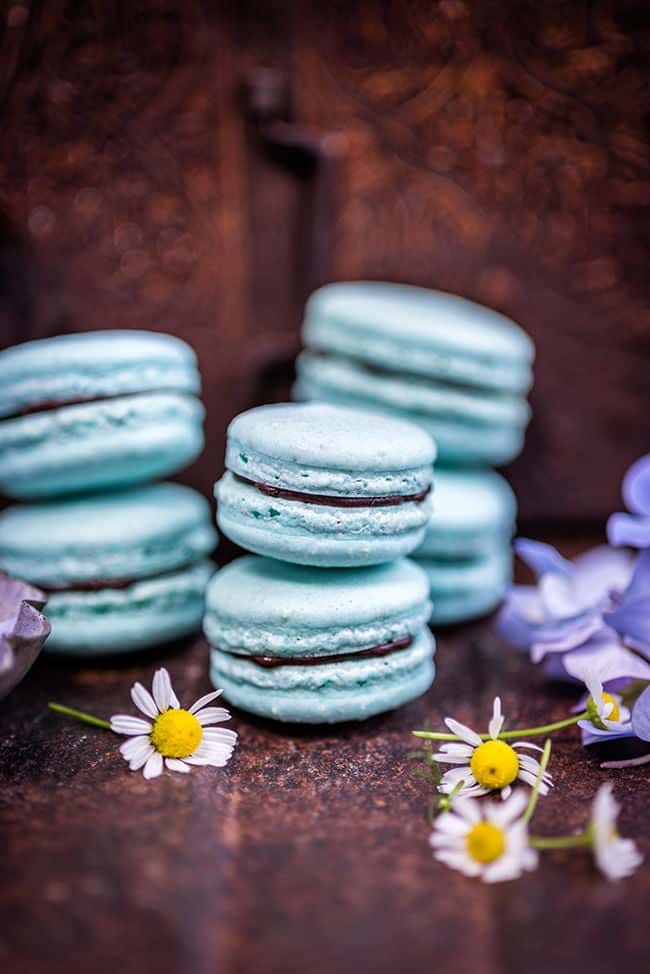
I guess that by sharing all these photos I have probably taken all the suspense out of ‘did it work?’… but I was still amazed and incredibly impressed by just how well it worked.
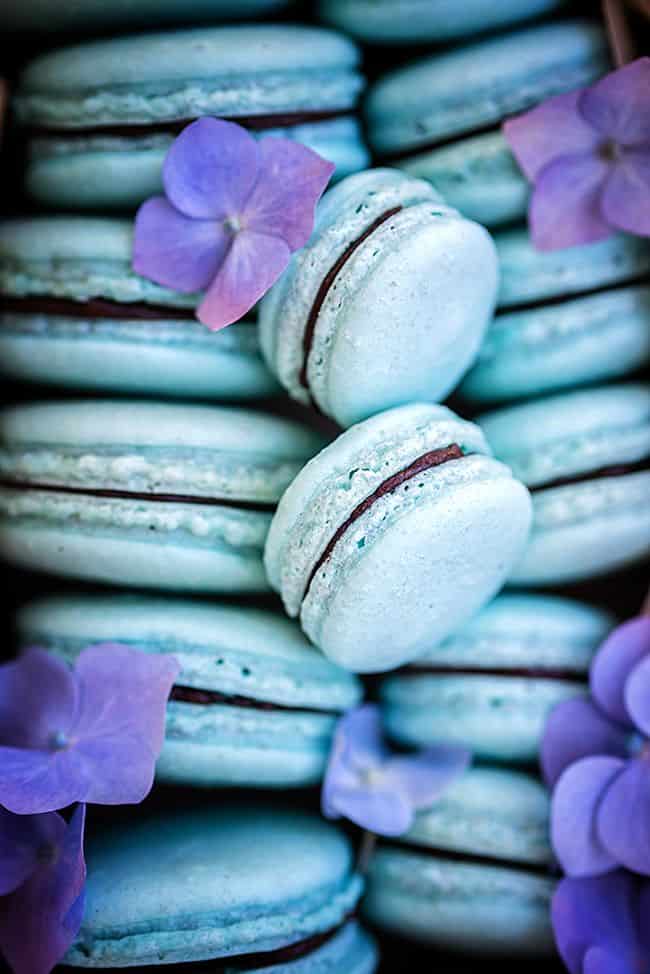
Not only were the macarons picture-perfect, they tasted exactly the same as regular macarons. The shells were a touch drier, perhaps, than traditional macarons, but once they were filled the shells soften and you get the same taste and mouthfeel.
But there are some differences to the method – mostly involving cooking time and oven temperature. The oven temperature has to be lower than traditional macarons – about 120C (250F) as opposed to 150C (300F).
Too hot and the macarons will easily burn, too low and they will be cooked on the outside but completely uncooked in the middle.
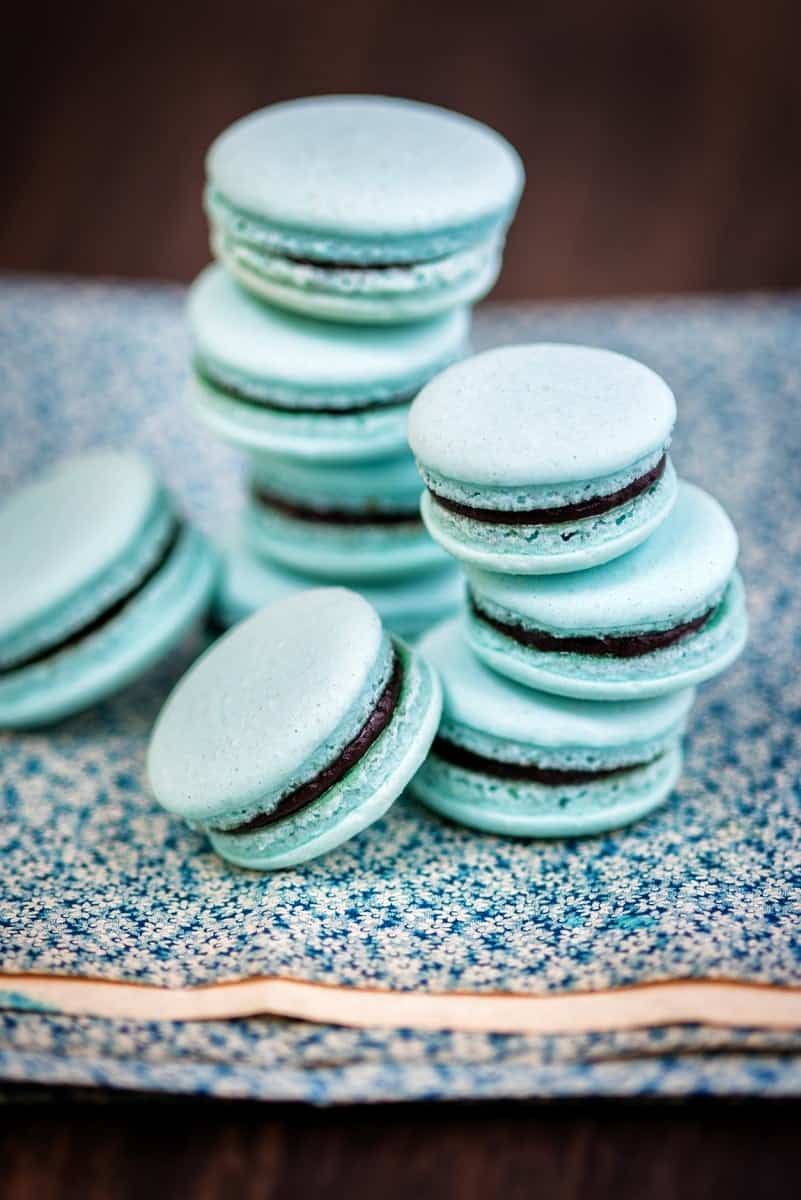
Vegan Macarons Tips and Troubleshooting
The macaron shells have need to dry out for at least an hour or longer and they have to cook for longer, between 20-30 minutes.
Do not bake more than one tray at a time – you will end up with unevenly baked macarons if you do – as I learned the hard way.
Vegan Macarons Fillings
I filled mine with avocado chocolate mousse (or ‘ganache’ in this case I guess) and they tasted amazing. Don’t be too heavy-handed with the coconut oil, it may cause it to deep into the shells.
An easier filling would be to make vegan ganache using dairy free dark chocolate chips and coconut cream or soy cream (try Alrpo Soy Single Cream Alternative).
You could use any fillings you like – and flavour the macarons any way you like. Vegan buttercream is another option – take a look at this vegan chocolate cake for the recipe.
Macarons Storing Tips
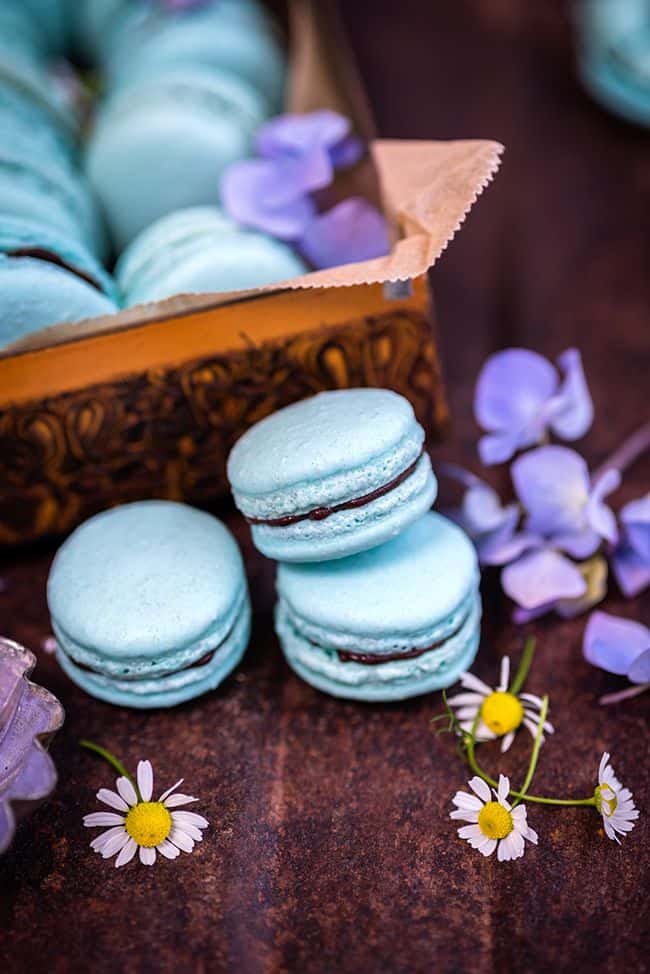
- It would be best to store the macarons shells in an airtight container, separated by grease proof paper.
- Once the macarons are filled they will start to soften – this is fine if you eat them within a day or so but would not advise it for much longer.
- Macarons can also be frozen but I haven’t tried this myself since they usually disappear pretty quickly!
Useful Tools for Macarons Perfection
- Digital scales – for best results it is important to weigh the ingredients
- Fine sieve
- Silicone spatula
- Piping bags
- Plain round piping tip (Wilton 1A)
- Silpat Silicon Macaron Mats or similar
- Cookie sheets (without rims)
More Aquafaba Recipes to Try!
- Vegan heart-shaped churros
- Five ingredient chocolate peanut butter mousse
- Vegan Chocolate and Coconut Mousse

Vegan Aquafaba Macarons
Ingredients
- 7 oz (200g) icing powdered sugar
- 7 oz (200g) ground almonds
- 5 oz (150g) aquafaba see method divided into 2 x 2½ oz (75g) quantities
- 7 oz (200g) superfine sugar (= caster sugar)
- 3 ½ tbsp (50ml) water
- ⅛ tsp blue coloring paste or coloring of your choice
Avocado chocolate ‘ganache’
- 2 medium ripe avocados
- 4-5 tbsp agave nectar more if needed
- 1 tbsp coconut oil melted
- ½ tbsp vanilla extract or paste
- 4 tbsp unsweetened cocoa powder
Instructions
- Drain the liquid from two 14 oz (400g) cans of chickpeas into a saucepan. Weigh the pot and make a note of the weight. Simmer over medium-low heat until the liquid is reduced by about half – since you need 5 fl oz (150ml) for the recipe it is best to reduce the liquid to just over that. It took about 10-15 minutes for the liquid to reduce, but best check it on a scale periodically as you don’t want to end up with too little! Cool completely, transfer to a jar and chill in the fridge overnight or use immediately.
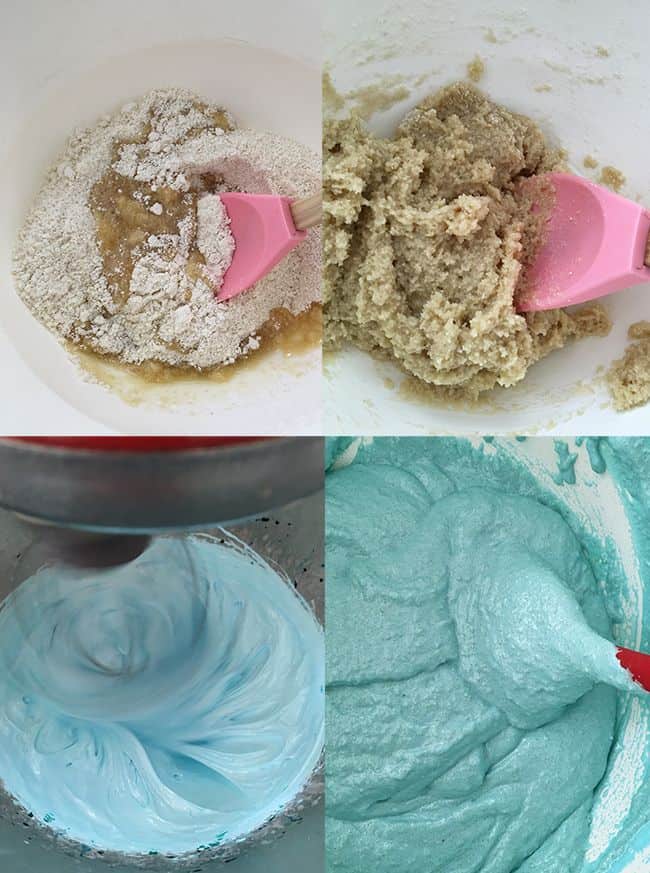
- Sift the ground almonds and icing sugar into a large bowl. Pour half the aquafaba into the bowl and mix together vigorously until the mixture forms a paste.
- Put the caster sugar and water in a saucepan. Put the rest of the aquafaba in the bowl of your stand mixer.
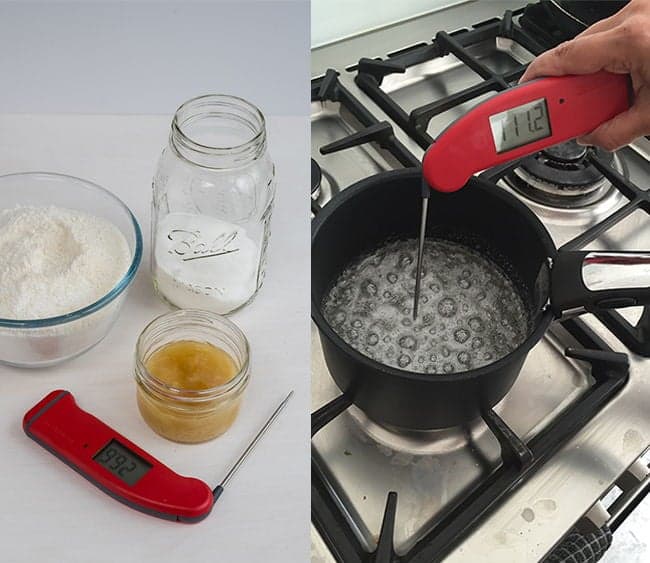
- Bring the sugar to the boil and have your Thermapen handy. When the sugar temperature reaches 230°F (110°C) start whisking the aquafaba on high speed. Keep checking the sugar with the Thermapen – once it reaches 242°F (117°C) pour it carefully down the side of your mixing bowl while still whisking on medium speed.
- Increase the speed to highest setting and continue whisking for 8-10 minutes till the mixing bowl is cool. You will have a very glossy ‘meringue’ (unlike egg whites my aquafaba meringue never formed firm peaks both times I made this recipe – this didn’t seem to have any adverse effects on the macarons however). Add the coloring paste and mix it in until you have the right color – best start with a tiny amount and increase if needed.
- Add the almond paste to the meringue bowl and mix it together until it’s well combined. Don’t be afraid to be quite forceful when mixing it and make sure you scrape the bottom and sides of the bowl. The consistency of the batter is very important – it needs to flow smoothly and when dropped back into the bowl it should spread slowly.
- Line 4 heavy trays with baking parchment – secure the paper by dotting a bit of macaron batter on each of the tray corners.
- Put the batter into a piping bag with a 1 cm / ½-inch plain round nozzle. Pipe small rounds of batter onto the baking parchment, spaced slightly apart as the macarons will spread when cooking. Use a template if you want absolute uniformity or draw circles using a cookie cutter.
- Carefully but forcefully knock the trays against your worktop to release any air bubbles. I found the vegan macarons actually were more uniform and had fewer imperfections than the regular kind.
- Leave them to dry out for an hour or longer until the tops are touch dry. Humidity and temperature can wreak havoc with this drying time so test them after 30 minutes just to be sure.
- Preheat the oven to 250°F (120°C). Once the shells are touch dry, bake the trays one at a time for 25-30 minutes, checking them after 20. If your oven tends to have hot spots, rotate the tray halfway through the baking time.
- The macarons are ready when they have a smooth, dry top and are firm to the touch. Leave them to cool down completely before carefully lifting off the baking paper.
- At this point you can transfer them to a cooling rack and leave them overnight, covered with a clean tea towel. Or store them in the fridge.
- Place all the ingredients for the filling in a blender or food processor and blitz until completely smooth. Test for sweetness, transfer to a pipping bag filled with a small round tip and chill until needed.
- Pair the macaron shells by size. Carefully pipe the filling around the edge of the shells and then fill the inside. Sandwich together and either serve immediately, or chill in the fridge overnight. This will make the shells softer and give the macarons the right mouthfeel.
Notes
- You need to reduce and chill the aquafaba before using. Start this recipe a day in advance so it has a chance to cool and thicken.
- For best results process the ground almonds and icing sugar together in a food processor and then sift into a bowl. Discard anything that doesn’t pass through the sieve and make sure you weigh the ingredients after you sift them.




So 200 grams of flour, 200 grams of icing sugar, and 75ml of aquAfaba? My paste is more like a dough and I don’t think it will folder in very well… Is this wrong?
The aquafaba is split into two parts. 75 ml is filed into the almond flour and icing sugar which will form a paste. The rest is whisked to form a meringue which is then mixed into the ‘paste’. Once the meringue is mixed in the macaron batter which loosen and you will be able to pipe it. Remember not to over-mix as that will cause it to become too flowing.
About weighing after sifting powdered sugar and almond flour together….it’s the almond flour that’s mostly left behind in the sieve. So can we just assume the powdered sugar went through and make up the difference in weight with just almond flour?
If there’s a lot left over then yes I would make it up with a bit more almond flour
Quick question: When you say icing sugar, do you mean powdered or confectioner’s sugar?
In the USA, confectioner’s sugar or powdered sugar are usually finely ground sugar with cornstarch added to it. I’m not sure if icing sugar in the UK is the same or is it just plain sugar with nothing added to it?
Thanks!
Yes icing sugar is confectioners sugar (very, very fine and powdery, usually some starch added so it doesn’t cake)
I would like to use fruit powder instead of liquid colour. I have a supply of raspberry powder, and blue butterfly pea powder in my pantry. How would this exchange go ?
Hi Rosemary fruit powder is an excellent idea. I would say because it is adding to the dry ingredients that you might need to mix the batter a little more to get the right consistency.
I would start with 1 tbsp and mix it with the ground almonds and aquafaba (before you add the whisked aquafaba). Although fruit powders lend a very bright colour to frostings and cheesecake they do tend to go a little dull/darker when baked and you might not get the bright result you would from food colouring.
Let me know how it goes!
Hi!! Sounds amazing! Love when you try vegan versions!! I wonder, can I use Maple syrup instead make the sugar boil? Or could I warm the Maple for some little time on the microwave or a pan, for it?
I haven’t tried it and I am not sure it would work – it has to be the same volume as the sugar and also come to the same temperature and soft ball stage. It’s worth experimenting.
I can’t seem to get mine to cook all the way through, I cook them for the 30min and have even added 10min when I see they are sticking to the parchment but still sticky?! Any suggestions? Maybe a higher temp?
Maybe your oven temperature is actually lower than the dial says. I find that if you increase the temperature the shells brown too much. I would do a test batch with only a few macarons at a slightly higher temperature and make a note of any changes. Half an hour seems very long to me – is your macaron batter spreading too much when you pipe (is it too wet)?
Is there any chocolate in the chocolate ganache?
Hi this recipe doesn’t have chocolate in it just cocoa powder. If you wanted a vegan chocolate buttercream you could use this recipe https://www.supergoldenbakes.com/vegan-chocolate-gingerbread-layer-cake/
I just made these and they are great! I was very surprised by the Aquafaba because it made a stunning meringue! I couldn’t get great feet on my Macarons though. Do you have any tips on how to get the best feet?
Thanks!
Hi Liz – the feet develop in the oven if the macarons have dried enough before going in the oven and also oven temperature is very important. It could be the temperature wasn’t high enough for the rise which creates the ‘feet’. Maybe when you make them again experiment by having a slightly higher oven temperature and a slightly longer drying period.
The shells should be matt and touch dry before going in the oven. Moisture in the air can affect the drying period too. You could do a tray after a certain drying period and a second tray a little later to see if it makes a difference
Were allergic to all nuts are the almonds necessary to the recipe? Wonder what I could substitute instead?
Almonds or other nuts are pretty integral to the recipe. I have heard of macaron recipes using pumpkin seeds as a nut replacement but I am afraid I haven’t tried this myself.
I just found out I’m allergic to almonds, peanuts, walnuts, dairy, soy and eggs; I’ve been wanting to make macarons.
Could I used wheat flour in place of the almond flour?
Hi Amber – the only replacement I have heard of is pumpkin seed flour – toasted pumpkin seeds ground with the icing sugar until they have the same consistency as ground almonds. I personally haven’t tried this but if you google it you might find some recipes. Alternatively hazelnuts (which you haven’t mentioned as being in your list of allergies) could be ground and used in place of ground almonds.