
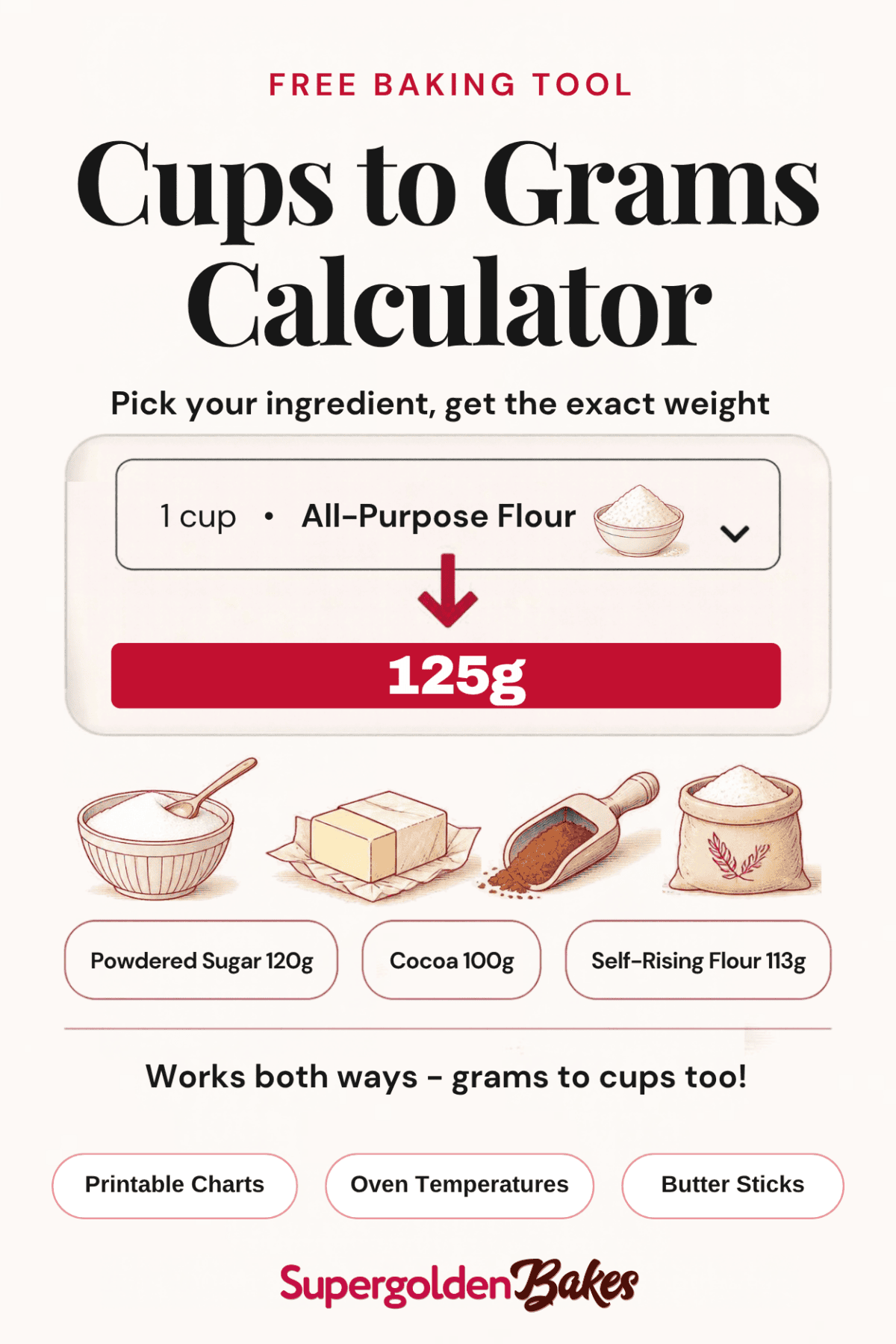
Convert baking ingredients between cups, spoons, grams and ounces. Choose an ingredient, type an amount and see every equivalent at once. Below the calculator you’ll find printable ingredient weight charts, a butter guide and oven temperatures.
Conversion Calculator
Every conversion on this page uses a US cup (236.6ml), the cup American recipes are written with. A tablespoon is 15ml and a teaspoon is 5ml.
Fractions work too: try 1 1/2 or ¾.
Baker’s tip
A note on accuracy
Cup measurements are not exact. Published weights for a cup of all-purpose flour range from about 120g to 136g depending on the source, and the way you fill the cup changes the weight again, so any conversion on this page can be 4–5% out either way. This page uses 125g per cup for flour, roughly the middle of that range.
For most cakes, cookies and everyday cooking that margin makes no difference. For bread, pastry, macarons and anything where the flour-to-liquid ratio matters, it does, so weigh your ingredients on a digital scale whenever you can.
How To Measure
- Cups are an American measure. A US cup holds about 240ml (236.6ml exactly), and every cup figure on this page uses it. A teaspoon is 5ml and a tablespoon is 15ml.
- Using metric cups or Australian spoons? Go by the grams. A metric cup, used in Australia, New Zealand and Canada, holds 250ml – about 6% more than a US cup. An Australian tablespoon is 20ml rather than 15ml, which is a third more again. Rather than convert twice, use the gram weights on this page: grams are the same wherever you are, and whatever your cups and spoons happen to hold.
- Spoon and level. For flour and other dry ingredients, spoon them into the cup and sweep off the excess with a knife. Scooping straight from the bag packs the flour down and can add 20g or more per cup. Brown sugar is the one exception: press it firmly into the cup.
- Weighing is most accurate. Ingredients vary by brand, grind and moisture, so treat cup measurements as a close guide. For bread, macarons and delicate cakes, a digital kitchen scale gives the most reliable results.
- Liquids. Milliliters measure volume, not weight. Water is 1g per ml, while honey and syrups are much heavier and oil is lighter, which is why the calculator treats each liquid separately.
Ingredient Weight Charts
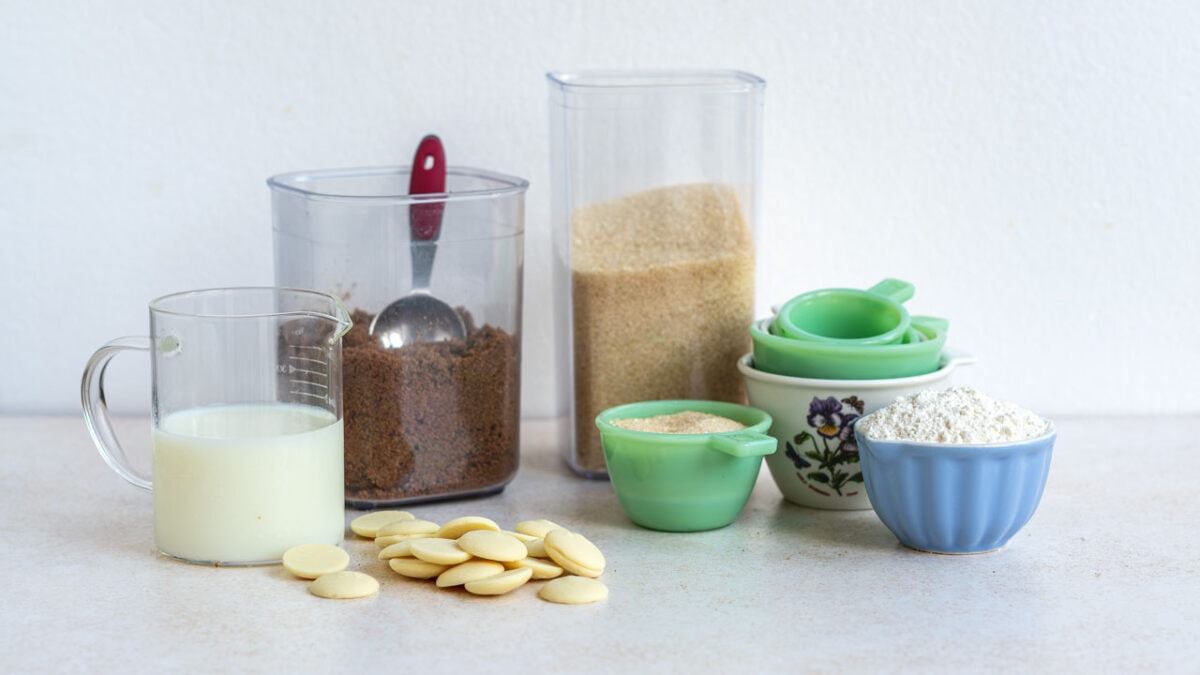
Every figure is for ingredients spooned into the cup and leveled off, not scooped from the bag. Weights are rounded to the nearest gram, and where published figures looked wrong I weighed the ingredient in my own kitchen and used that instead. Use the buttons below to switch to ounces, or to print all the charts.
Showing the gram conversions for 1 US cup.
Flour and Dry Ingredients
| Ingredient | 1 cup | ¾ cup | ½ cup | ⅓ cup | ¼ cup | 1 tbsp |
|---|---|---|---|---|---|---|
| All-purpose flour (plain flour) | 125g | 94g | 63g | 42g | 31g | 7.8g |
| Bread flour (strong flour) | 125g | 94g | 63g | 42g | 31g | 7.8g |
| Cake flour | 115g | 86g | 58g | 38g | 29g | 7.2g |
| Self-rising flour | 113g | 85g | 57g | 38g | 28g | 7.1g |
| Whole wheat flour (wholemeal) | 120g | 90g | 60g | 40g | 30g | 7.5g |
| Rye flour | 105g | 79g | 53g | 35g | 26g | 6.6g |
| Almond flour (ground almonds) | 100g | 75g | 50g | 33g | 25g | 6.3g |
| Coconut flour | 112g | 84g | 56g | 37g | 28g | 7g |
| Cornstarch (cornflour) | 120g | 90g | 60g | 40g | 30g | 7.5g |
| Cornmeal | 145g | 109g | 73g | 48g | 36g | 9.1g |
| Semolina | 165g | 124g | 83g | 55g | 41g | 10g |
| Rolled oats | 90g | 68g | 45g | 30g | 23g | 5.6g |
| Cocoa powder (unsweetened) | 100g | 75g | 50g | 33g | 25g | 6.3g |
| Long-grain rice (uncooked) | 185g | 139g | 93g | 62g | 46g | 12g |
| Panko breadcrumbs (fine) | 65g | 49g | 33g | 22g | 16g | 4.1g |
| Panko breadcrumbs (coarse, Japanese style) | 50g | 38g | 25g | 17g | 13g | 3.1g |
| Fresh breadcrumbs (soft) | 55g | 41g | 28g | 18g | 14g | 3.4g |
| Dried breadcrumbs (golden) | 110g | 83g | 55g | 37g | 28g | 6.9g |
Self-rising flour: US self-rising flour already contains salt as well as baking powder, so leave out any salt the recipe calls for. UK self-raising flour has the raising agent but no added salt. It is also a softer, lower-protein flour than plain flour, which is why it weighs less per cup.
Panko: panko varies more between brands than almost anything else on this chart. Kikkoman’s own label puts a half cup at 30g, and finer crumbs pack heavier again, so weigh yours if the coating matters.
Sugars and Syrups
| Ingredient | 1 cup | ¾ cup | ½ cup | ⅓ cup | ¼ cup | 1 tbsp |
|---|---|---|---|---|---|---|
| Granulated sugar | 200g | 150g | 100g | 67g | 50g | 13g |
| Superfine sugar (caster sugar) | 200g | 150g | 100g | 67g | 50g | 13g |
| Brown sugar (packed) | 213g | 160g | 107g | 71g | 53g | 13g |
| Powdered sugar (icing sugar) | 120g | 90g | 60g | 40g | 30g | 7.5g |
| Honey | 340g | 255g | 170g | 113g | 85g | 21g |
| Maple syrup | 315g | 236g | 158g | 105g | 79g | 20g |
| Golden syrup | 340g | 255g | 170g | 113g | 85g | 21g |
| Light corn syrup | 328g | 246g | 164g | 109g | 82g | 21g |
| Molasses (black treacle) | 337g | 253g | 169g | 112g | 84g | 21g |
Butter, Oils and Fats
| Ingredient | 1 cup | ¾ cup | ½ cup | ⅓ cup | ¼ cup | 1 tbsp |
|---|---|---|---|---|---|---|
| Butter | 227g | 170g | 113g | 76g | 57g | 14g |
| Vegetable oil | 218g | 164g | 109g | 73g | 55g | 14g |
| Olive oil | 216g | 162g | 108g | 72g | 54g | 14g |
| Coconut oil (melted) | 218g | 164g | 109g | 73g | 55g | 14g |
| Vegetable shortening | 190g | 143g | 95g | 63g | 48g | 12g |
| Peanut butter | 258g | 194g | 129g | 86g | 65g | 16g |
Butter Conversions
In the US, butter comes in sticks. One stick is ½ cup, 8 tablespoons or 4 ounces (113g), and a standard 1lb box holds four sticks.
| US sticks | Cups | Tablespoons | Grams | Ounces |
|---|---|---|---|---|
| ⅛ stick | – | 1 tbsp | 14 g | 0.5 oz |
| ¼ stick | – | 2 tbsp | 28 g | 1 oz |
| ½ stick | ¼ cup | 4 tbsp | 57 g | 2 oz |
| 1 stick | ½ cup | 8 tbsp | 113 g | 4 oz |
| 1½ sticks | ¾ cup | 12 tbsp | 170 g | 6 oz |
| 2 sticks | 1 cup | 16 tbsp | 227 g | 8 oz |
| 3 sticks | 1½ cups | 24 tbsp | 340 g | 12 oz |
| 4 sticks | 2 cups | 32 tbsp | 454 g | 16 oz |
Egg Sizes
Egg sizes are not the same on both sides of the Atlantic, and the gap is wider than most people expect. A UK large egg weighs 63–73g in its shell. A US large weighs about 57g. So a UK large is really closer to a US extra large, and a US large is closer to a UK medium. In a recipe calling for three or four eggs, that difference adds up to most of an extra egg.
| Size | US, in shell | US, shelled | UK, in shell | UK, shelled |
|---|---|---|---|---|
| Small | 43 g | 38 g | under 53 g | under 47 g |
| Medium | 50 g | 44 g | 53–63 g | 47–56 g |
| Large | 57 g | 50 g | 63–73 g | 56–65 g |
| Extra large / very large | 64 g | 57 g | 73 g and over | 65 g and over |
| Jumbo | 71 g | 63 g | – | – |
US figures are the USDA minimum weights per egg. UK figures are the official size bands. Shelled weights assume the shell is about 11% of the egg.
Swapping between them: if a US recipe calls for large eggs and you are shopping in the UK, buy medium. If a UK recipe calls for large eggs and you are in the US, buy extra large. When it really matters – custards, macarons, a sponge that has to rise evenly – crack the eggs into a bowl, beat them lightly and weigh out what you need. A US large egg is 50g of actual egg, so three of them is 150g.
One more thing worth knowing: almost all of the difference between a medium and a large egg is white, not yolk. A yolk weighs around 18g whichever size you buy. So egg size matters most in meringues, angel food cake and light sponges, and least in custards, curds and enriched doughs.
Dairy and Liquids
| Ingredient | 1 cup | ¾ cup | ½ cup | ⅓ cup | ¼ cup | 1 tbsp |
|---|---|---|---|---|---|---|
| Water | 237g | 178g | 119g | 79g | 59g | 15g |
| Milk | 245g | 184g | 123g | 82g | 61g | 15g |
| Buttermilk | 245g | 184g | 123g | 82g | 61g | 15g |
| Heavy cream (double cream) | 238g | 179g | 119g | 79g | 60g | 15g |
| Sour cream | 230g | 173g | 115g | 77g | 58g | 14g |
| Greek yogurt | 245g | 184g | 123g | 82g | 61g | 15g |
| Cream cheese | 232g | 174g | 116g | 77g | 58g | 15g |
| Mascarpone | 240g | 180g | 120g | 80g | 60g | 15g |
| Ricotta | 246g | 185g | 123g | 82g | 62g | 15g |
| Evaporated milk | 252g | 189g | 126g | 84g | 63g | 16g |
| Sweetened condensed milk | 306g | 230g | 153g | 102g | 77g | 19g |
| Cheddar cheese (grated) | 113g | 85g | 57g | 38g | 28g | 7.1g |
| Parmesan cheese (finely grated) | 100g | 75g | 50g | 33g | 25g | 6.3g |
Fruit, Nuts and Chocolate
| Ingredient | 1 cup | ¾ cup | ½ cup | ⅓ cup | ¼ cup | 1 tbsp |
|---|---|---|---|---|---|---|
| Chocolate chips | 170g | 128g | 85g | 57g | 43g | 11g |
| Chopped walnuts | 117g | 88g | 59g | 39g | 29g | 7.3g |
| Chopped pecans | 109g | 82g | 55g | 36g | 27g | 6.8g |
| Sliced almonds (flaked almonds) | 92g | 69g | 46g | 31g | 23g | 5.8g |
| Raisins | 150g | 113g | 75g | 50g | 38g | 9.4g |
| Dried cranberries | 120g | 90g | 60g | 40g | 30g | 7.5g |
| Shredded coconut (sweetened) | 85g | 64g | 43g | 28g | 21g | 5.3g |
| Pumpkin puree | 245g | 184g | 123g | 82g | 61g | 15g |
| Mashed banana | 225g | 169g | 113g | 75g | 56g | 14g |
| Applesauce | 245g | 184g | 123g | 82g | 61g | 15g |
| Blueberries (fresh) | 148g | 111g | 74g | 49g | 37g | 9.3g |
Leaveners, Salt and Flavorings
| Ingredient | 1 tbsp | 1 tsp | ½ tsp | ¼ tsp |
|---|---|---|---|---|
| Baking powder | 12g | 4g | 2g | 1g |
| Baking soda (bicarbonate of soda) | 15g | 5g | 2.5g | 1.3g |
| Table salt | 18g | 6g | 3g | 1.5g |
| Kosher salt (Diamond Crystal) | 8.4g | 2.8g | 1.4g | 0.7g |
| Kosher salt (Morton) | 14g | 4.8g | 2.4g | 1.2g |
| Instant or active dry yeast | 9.3g | 3.1g | 1.6g | 0.8g |
| Ground cinnamon | 7.8g | 2.6g | 1.3g | 0.7g |
| Vanilla extract | 13g | 4.2g | 2.1g | 1.1g |
| Cream of tartar | 9g | 3g | 1.5g | 0.8g |
Swapping salts: kosher salt has larger, lighter flakes, so a teaspoon of it is nowhere near a teaspoon of table salt. As a rule of thumb, 1 tsp table salt = 1½ tsp Morton kosher = 2 tsp Diamond Crystal. Measure salt by weight if you can, and taste as you go if you cannot.
Essential Tools
A few inexpensive tools make every conversion on this page more reliable. These are the ones I’d recommend for home bakers.
Digital kitchen scale
The most accurate way to bake. Look for one that switches between grams and ounces and has a tare (zero) button.
Measuring cups and spoons
A sturdy stainless steel set with a leveler, so you can spoon and level dry ingredients properly.
Glass measuring jug
For milk, water and other liquids. Read it at eye level on a flat surface.
Oven thermometer
Many ovens run hotter or cooler than the dial says. A thermometer inside the oven tells you the real temperature.
Instant-read thermometer
Takes the guesswork out of bread, cakes and custards. A loaf is baked at 190–200°F (88–93°C) in the middle.
As an Amazon Associate I earn from qualifying purchases.
Oven Temperature Conversions
If you have a fan (convection) oven, use the Celsius fan column, which is about 20°C lower. Temperatures are rounded to the numbers you’ll find on an oven dial.
| Fahrenheit | Celsius | Celsius fan | Gas mark |
|---|---|---|---|
| 250°F | 120°C | 100°C | ½ |
| 275°F | 140°C | 120°C | 1 |
| 300°F | 150°C | 130°C | 2 |
| 325°F | 165°C | 145°C | 3 |
| 350°F | 180°C | 160°C | 4 |
| 375°F | 190°C | 170°C | 5 |
| 400°F | 200°C | 180°C | 6 |
| 425°F | 220°C | 200°C | 7 |
| 450°F | 230°C | 210°C | 8 |
| 475°F | 240°C | 220°C | 9 |


